Why not appoint a nurse as the U.S. surgeon general?
Appointing the first doctorate-prepared nurse as surgeon general would leverage the trust that everyday people already have in nurses.
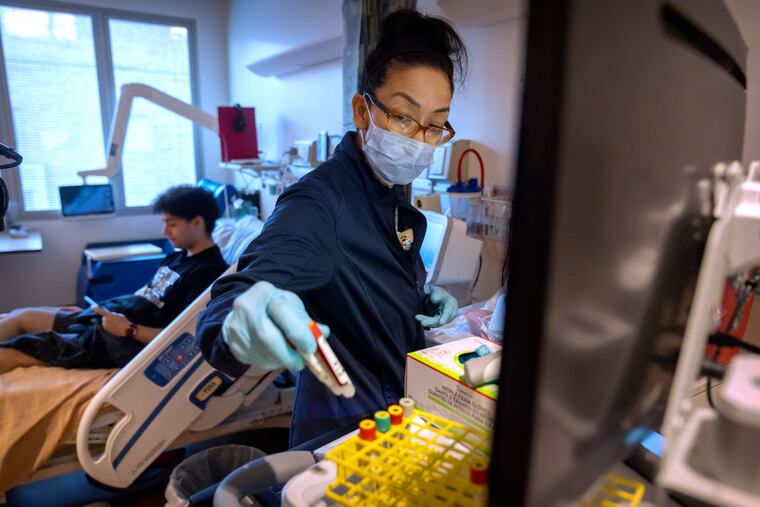
The U.S. surgeon general is the nation’s doctor, but what the nation needs is a nurse.
Everyday people rely on nurses, the largest and most trusted healthcare profession in the United States, to help them, their families, and communities regain their health or stay healthy.
The Trump administration’s stated priority is to improve the health and well-being of all people, with the goal of limiting the impact of aging and chronic diseases. At this critical time in our nation’s history, who better than a nurse to lead the country in addressing the challenges of health promotion and disease prevention?
The surgeon general is charged with providing Americans with the best scientific information available on how to improve their health and reduce the risk of illness and injury. This science is the science of nursing, and nurse scientists have delivered on this agenda even though the National Institute of Nursing Research (NINR) is allocated only 0.4% of the overall National Institutes of Health (NIH) budget.
If the mission of the U.S. Public Health Service is to protect, promote, and advance the health of our nation, why not appoint a nurse surgeon general?
Nurses are the glue that holds healthcare together.
In the past, many surgeons general have stewarded the American public through challenging health-related issues: the AIDs crisis, the epidemics of obesity and tobacco-related diseases, the destigmatization of mental illness, the prevalence and consequences of loneliness, and the need for increased organ donation — to name a few.
Although America’s healthcare system spends more on healthcare than most developed countries, its return on investment has been less than stellar. As noted by Walter Cronkite almost 30 years ago, America’s healthcare system is neither healthy, caring, nor a system, and little has changed.
Nurses are the glue that holds healthcare together.
Nurse scientists have led the way in partnering with health systems and communities to transform care. Research led by nurses has opened the door to needed conversations at the end of life and the value of palliative care for those with serious illness.
Nurse-led research has identified the physical and emotional burdens of people living with chronic diseases and has focused on how best to help patients as they transition from hospital to home — and the economic impact of such transitions on patients, families, institutions, and society.
Nurse-led research has addressed the workforce staffing needs that are critical to patient safety and quality care, and the ethical complexities of health across the life span.
Let’s promote the health and well-being of the American public by giving nurses a seat at the table. To start, one need only look to the National Academy of Medicine as a potential pool for nationally recognized nurse scientists, experts in public health policy at the state or federal level, and leaders in influencing positive change in health behaviors.
For example, Matthew McHugh, senior scientist and director of the Center for Health Outcomes and Policy Research at the University of Pennsylvania, would be an excellent candidate given his long-standing policy interests and research on nursing and patient-related outcomes.
Or Suzanne Miyamoto, who is currently the chief executive officer of the American Academy of Nursing, with two decades of leadership and health policy experience.
Or Betty Rambur, who is a leader in statewide health reforms and has focused on reducing costs and reconceptualizing models of value-based care.
Appointing the first doctorate-prepared nurse as surgeon general would surely be a disruptive decision — one that would shock the nation, but one that would earn respect for appointing as a leader a member of the profession that the public already trusts with their care and well-being.
Connie M. Ulrich, Mary Naylor, and Martha A.Q. Curley are senior nurse scientists at the University of Pennsylvania School of Nursing.