Republicans cannot successfully pit disabled people against trans folks
Paving the way for one marginalized group paves the way for all.

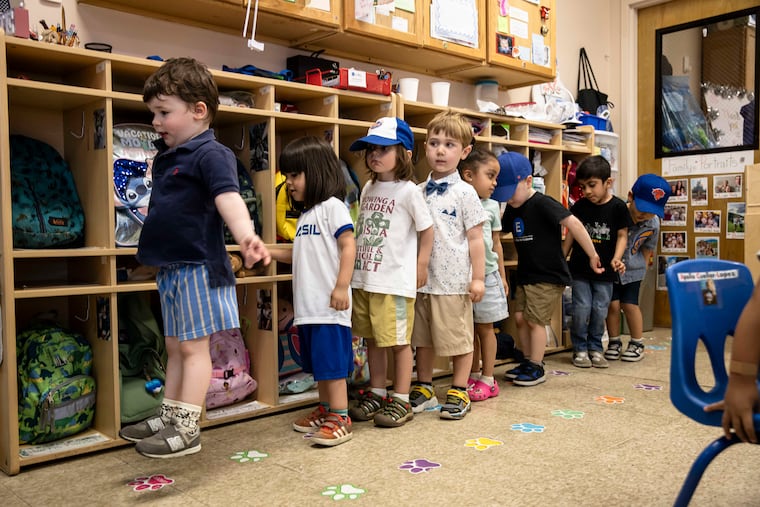
My 13-year-old daughter needs a lot of help in school. Due to developmental disabilities, she can’t quite return a volleyball like her peers in gym class. She can’t open a snack bag on her own at lunchtime. While she’s learning to identify words found in Dr. Seuss, her eighth-grade peers are reading novels like The Giver.
None of this is a tragedy. She has an aide to help her with snacks. She has an occupational therapist who visits gym class and modifies activities for her. She has a special educator who reads The Giver aloud and shows her the film version of the book. And she loves school. (She might be the only teen who gets excited on Sunday night for her Monday return.)
Thanks to federal disability law, her public school is required to adapt to meet her needs, because the federal government says people like her belong in school.
In June 2024, the Biden administration ruled that her transgender peers also belong in school. Specifically, it ruled to include gender dysphoria on the list of conditions covered under Section 504 of the Rehabilitation Act. This gave trans kids the legal right to bathrooms and uniforms and other elements of school life that fit their bodies and gender identities. It also made discrimination against trans people unlawful in institutions that receive federal funding.
This month, the attorneys general in 17 red states filed a lawsuit, arguing that this new rule was unconstitutional. Protecting trans kids, they argued, would steal precious resources from kids with disabilities. The Nebraska Attorney General’s Office said in a statement that the Biden administration had attempted to “hijack” Section 504.
Any disability rights activist knows this is false logic. Paving the way for one marginalized group paves the way for all. When curb cuts were required on sidewalks for wheelchair users, the smoother ride benefited skateboarders, rollerbladers, and tired parents pushing toddlers in strollers. When my daughter needed extra support in the school bathroom, she used the “handicap” accessible bathroom, which was also the gender-neutral bathroom. These examples illustrate the principles of universal design, when a space is designed so it can be accessed to the greatest extent possible by all people.
But protecting disabled lives is not the purpose of the lawsuit, despite claims from the 17 attorneys general. Buried in the suit, on Page 37, is a demand that the entirety of Section 504 be deemed unconstitutional.
This would have devastating consequences on civil rights. Hospitals could discriminate against people with conditions they didn’t think were worthy of treating. Schools wouldn’t be required to accommodate kids who break their foot or develop severe allergies. Discrimination against people with disabilities would be legal. And because all of us can become disabled at any time, discrimination against any of us would be legal.
Thanks to disability advocacy organizations, parents learned of the lawsuit’s devastating implications and pushed back. Attorneys general in several states told voters the lawsuit only challenged gender dysphoria. But that’s not what the lawsuit stated, in plain black ink. Either the states didn’t read the lawsuit they signed, or they were lying.
Now that they’ve either been caught — or schooled — the states modified their lawsuit in late February. They insist their goal was never to strip rights away from disabled kids, even though they signed their names under words that stated just that. Currently, they’ve returned to their initial target: trans kids.
But disabled folks and their allies will not be duped. Republican politicians cannot successfully pit disabled people against trans folks.
That’s because disability activists know disability is created not just by a body, but by a society that is inaccessible to it. A wheelchair user can access a building just fine when there are ramps. Similarly, a culture that acknowledges the spectrum of gender eagerly makes bathrooms and uniforms that suit all bodies. A culture obsessed with the false gender binary is not just scientifically inaccurate, it turns the normal experience of nonbinary and transgender identity into a disability. There have always been, and always will be, trans people.
Naysayers hold up the bottom lines of school budgets. Resources are scarce, they say. A uniform for a nonbinary athlete will take away from another kid’s occupational therapy. But disability advocates reject this scapegoating and scarcity rhetoric. We remember where our scarcity of resources comes from.
When Congress passed the Individuals with Disabilities Education Act (IDEA), originally known as the Education for All Handicapped Children Act, in 1975, it committed to funding 40% of the average cost to educate a child with disabilities. It currently funds less than 13% of IDEA state grants. And Congress recently voted to slash Medicaid, which disabled folks rely on to remain in their homes and out of institutions. Congress holds the purse and then points the finger at a vulnerable population just trying to exist.
Arguing that a vulnerable population like transgender youth is to blame for a lack of special education services is like blaming the winds of a hurricane on the flap of a butterfly’s wings.
Meanwhile, more than a quarter of all transgender kids feel unsafe attending school, and as a result skip classes. The Trevor Project found that 37% of transgender and nonbinary youth reported having been physically threatened or harmed due to their gender identity, roughly two-thirds experience anxiety or depression, and around half consider suicide. These statistics are reduced when trans kids are in affirming environments. Arguing that a vulnerable population like transgender youth is to blame for a lack of special education services is like blaming the winds of a hurricane on the flap of a butterfly’s wings.
My daughter, who is the size of someone five years younger, has needed a special adaptive chair to reach school tables and join her classmates. Other kids don’t use her chair, but they still benefit from it, because they benefit from her enthusiastic presence at the table.
Pitting one person’s needs against another perpetuates the false belief that we are not all a part of one community. When we include everyone, the only people who lose are small-minded folks who believe some people don’t belong. When my daughter pulls her chair up to the table, I want her trans peers among her.
Heather Lanier is the author of the memoir “Raising a Rare Girl,” a New York Times Book Review Editor’s Choice.