We are failing Black youth in Philadelphia
If we continue to ignore our youth’s trauma, to mislabel their struggles, and to medicate their pain, we will squander their potential.
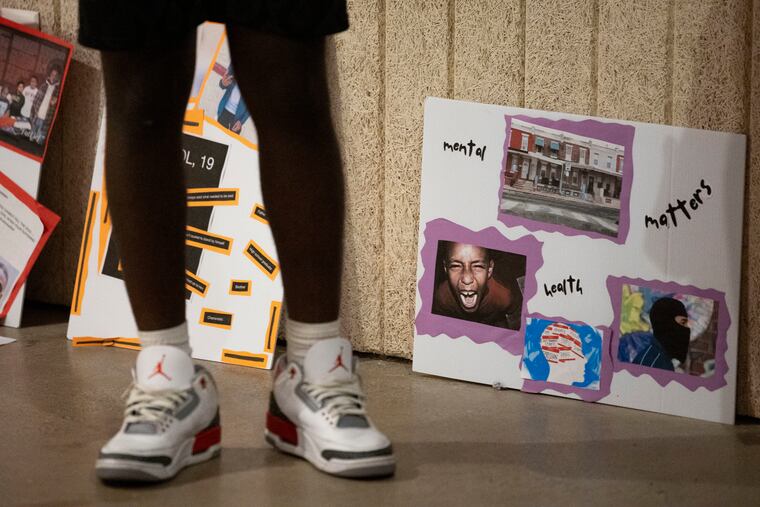
Black youth across our city are crying out in ways that are often loud, sometimes violent, and almost always misunderstood.
Too often, when Black children show signs of distress, like when they act out in school, shut down emotionally, or defy authority, medical professionals rush to label them. Oppositional defiant disorder. Attention-deficit/hyperactivity disorder (ADHD). Mood dysregulation disorder. Conduct disorder. The diagnoses roll off the tongues of clinicians.
These disruptive behavior disorders share common clinical threads, including difficulties in self-control, emotional regulation, and navigating the demands of authority. The risk factors for oppositional defiant disorder, for example, often overlap with the realities many Black children face, such as lower socioeconomic status, harsh or inconsistent discipline, and family stress or instability.
But what’s too often missing from the clinical picture is the context of inequities, racialized trauma, and the chronic stress of navigating a world where their very identity can be treated as a threat.
Diagnosis bias makes the picture even starker. In one study of 1,173 youth in residential treatment, African American and Hispanic youth were vastly overrepresented, with 77.7% of those diagnosed with conduct disorder, compared with their non-Hispanic white peers.
In another study of justice-involved youth, 17% of 519 adolescent males in a juvenile detention center had been given a sole diagnosis of conduct disorder. Yet, when these same youth were assessed for other mental health needs, an overwhelming 92% met criteria for conditions like major depressive disorder, generalized anxiety disorder, post-traumatic stress disorder (PTSD), or had a history of manic episodes or panic attacks.
These findings reveal a troubling pattern: The labels given to Black youth often pathologize behavior without addressing its roots. Instead of being met with trauma-informed care or sustained emotional support, they are frequently met with prescriptions for powerful medications like antipsychotics and mood stabilizers. These tools may quiet behaviors, but rarely heal wounds.
And these children carry more than the daily weight of being misunderstood. They bear the labels in their medical charts, their school files, and the way future educators, doctors, and even employers may see them.
The label becomes part of their identity in the eyes of others, shaping opportunities and expectations long before they have the chance to define themselves. A diagnosis becomes not just a moment, but a new identity that follows them through every system.
When I tried to remove a bipolar I diagnosis from the insurance records of a justice-involved youth, I was told it could not be erased. The only allowable action was to add a note in the chart stating disagreement with the diagnosis, yet the original label would remain.
Let’s be clear: Mental health diagnoses and treatment can be lifesaving. But what we are seeing in Philadelphia isn’t trauma-informed care, it’s trauma-ignorant labeling. We are quick to pathologize normal responses to abnormal conditions.
What happens when a child grows up hearing gunshots at night? When they see a parent overworked and underpaid, or incarcerated for petty offenses? What happens when school feels more like a battleground than a safe space? This is the daily reality for too many Black children in our city.
And what about the parents? We expect them to lead by example, to help their children self-regulate, to provide emotional support, structure, and discipline. But many of these parents are navigating their own unprocessed trauma. They’re dealing with job instability, eviction notices, grief, and a lack of access to basic resources like quality healthcare and childcare. When they reach out for help, they’re often met with judgment, bureaucracy, and more labels.
The system doesn’t ask what support these parents need; it asks why they haven’t done better. This cycle is not just unjust, it is unsustainable. We cannot continue to medicate our way out of collective trauma.
To the mental health professionals working in our communities: You are trusted. Families come to you vulnerable, hopeful, desperate for something better. That trust comes with responsibility. You are not just treating people; you are shaping how entire communities heal.
This means culturally competent mental health services that see children in context, not just through a diagnostic manual. It means family support that honors the complexity of raising kids in structurally violent environments.
Above all, it means listening. Listening to young people when they tell us, through words or actions, that they are hurting. Listening to parents when they say they’re overwhelmed.
Philadelphia has no shortage of talent, resilience, or brilliance among its Black youth, as well as organizations like YEAH Philly, which are really reaching Philly teens.
YEAH Philly is providing a space for the Black youth to not only come together but participate in workshops that focus on areas such as understanding and managing stress, healing from trauma, conflict resolution, career readiness, and healthy relationships.
Its 2024 annual report shows that its program has supported more than 500 teens in Philadelphia with a goal to continue expansion and connection with local resources. These are the types of programs that mental health professionals need to be aware of, support, and encourage youth to participate in.
Another organization located in Philadelphia with a mission to support teens and parents is the Federation of Neighborhood Centers (FNC). It offers a Parent Empowerment Program that supports multiple classes, such as general parenting classes, autism in the family class for parents/caregivers of kids on the autism spectrum, parenting your teenager, and classes for LGBTQ parents.
The FNC offers classes virtually, hoping to increase accessibility to Philadelphia communities. So often, mental health professionals feel obligated to give something to a client, but please consider simply giving a referral to a great organization.
We, as clinicians, are educated on adverse childhood experiences and the negative effects they can have on our clients. Consider adding an adverse childhood experience questionnaire to your assessment tools. Ask the questions. Get the whole picture. When treatment extends beyond individual and community support, consider the goal of treatment. Pause. Think. How will a diagnosis help this child, the family? Psychiatry is a very interpretive field. Meeting checklist criteria in the Diagnostic and Statistical Manual of Mental Disorders does not, on its own, require or even justify a diagnosis.
But if we continue to ignore our youth’s trauma, to mislabel their struggles, and to medicate their pain, we will squander that potential. We are not failing because we don’t know what to do; we’re failing because we aren’t doing it.
Victoria Fisher is a Philadelphia-based psychiatric mental health nurse practitioner working in juvenile justice.