Experts warn about the effects the cruelty and moral ambiguity of the news has on all of us
It’s not solely the cumulative effect of a cascade of negative news that is messing with our minds and bodies. We may also struggle with events that don’t seem to reflect our values.
You can check out any time you like, but you can never leave. Turns out that’s not just the lyrics of an old Eagles song. It’s the story of our lives in an age of social media, the endless churn of news notification apps, and a national government in which the current president doesn’t let a thought — or an insult — go unsaid (and possibly retracted the next day).
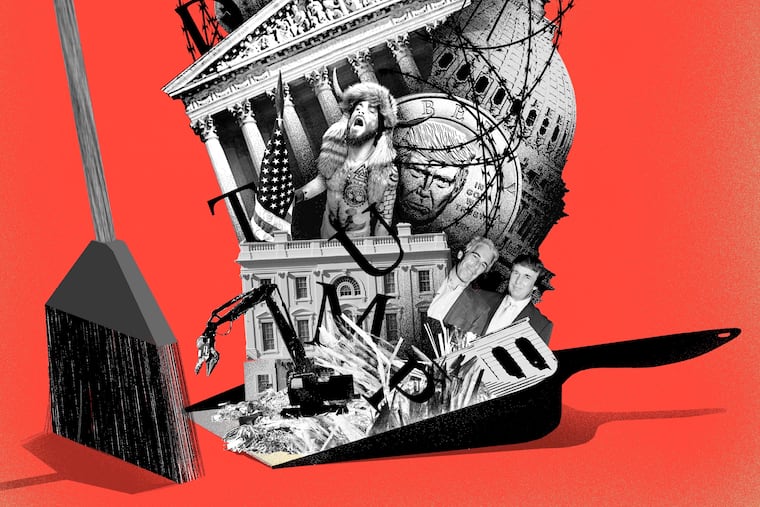
Whether it’s President Donald Trump’s threat to wipe out an entire civilization, an increased risk of potentially devastating wildfires, or surging gas prices, the news comes at us with nightmarish intensity: everything, everywhere, all at once.
I knew I was on overload, and that the endless stream of emergencies, the constant uncertainty, and the (let’s face it) cruelty and moral ambiguity of what I was consuming was affecting my mental health (and not in a good way, thanks for asking).
So, I spoke with a few friends.
Some of them have just stopped keeping up with the latest news. It makes them too anxious, they tell me. Others consume it in small doses via social media (reflecting the biases of your friends and contacts, which often trend partisan), in which they may not get beyond the headlines.
But many residents don’t have the relative luxury of tuning out: Their futures depend on knowing where U.S. Immigration and Customs Enforcement (ICE) agents are operating today, or whether their sons or daughters are heading to a potential land war overseas.
Then I reached out to some experts. To say they are concerned about where we find ourselves would be an understatement.
Let us count the ways.
A political science professor at the University of Nebraska-Lincoln, Kevin Smith has been researching politics (and partisanship) for almost a decade. Politics is not just bad for our mental health, he told me, but “also for our physical and social health. It can do everything from increase the likelihood of a heart attack to increase substance abuse. It can fracture friendships and family relationships. So, it’s not just mental health. It’s sort of like well-being broadly conceived.”
Some of the people he polled weren’t sleeping. Some started to wall themselves off from the news. Others were making comments they later regretted — and, he said, he was shocked to find that one in 20 had some suicide ideation. “It’s a little scary,” he said.
The measures the researchers used didn’t change significantly during the Biden administration, he said — and there were certainly other times in American history that also reflected profound cultural divisions.
Our complex human systems weren’t made for this kind of stress, some experts suggest.
“I know social media gets blamed for everything these days, but one of the things that might make it worse today is that, you know, politics is simply more likely to be a chronic stressor in people’s lives because it’s much harder to escape or ignore.”
Clinicians are seeing that angst show up in their offices — even among clientele in relatively affluent areas.
“We are seeing heightened anxiety and stress related to politics and to the events happening locally, nationally, and globally related to the current administration’s policies,” reported Shelby Riley, a therapist in Chester Springs. “Clients are reporting distress related to social injustices, as well as family conflict when family members’ political ideologies aren’t aligned.”
Counselors who work with vulnerable populations like immigrants, particularly those who face the possibility of having a family member deported, confront an even harsher reality. For them, staying on top of the news is crucial.
Melanated Women’s Health, which has a home base in Center City, specializes in working with diverse communities, according to founder and clinician Nicola Pierre-Smith. As the Trump administration has intensified its deportation campaign locally, some of the organization’s “mixed-status” clients are reporting increased anxiety, stress, depression, and sleep disturbances, as well as intrusive thoughts.
That’s a change from before the election, when conversations about the dynamics of life in a mixed-status house weren’t generally happening in therapy, she said. “They may not want to engage in a conversation. Someone may be bringing the conversation to them.”
The Phoenix Center for Experiential Trauma Therapy in Media works with immigrants, among many other clients impacted by trauma, said director of operations María José Sotomayor-Giacomucci.
“People are on edge, either out of concern for themselves or family members,” she said, with clients reporting increased incidences of hypervigilance, nightmares, and a tendency to avoid both certain places and certain topics.
Not only are clients directly affected, she added, but so are supporters, advocates, and even locals who witness neighbors being removed from their communities.
Immigrants and other vulnerable groups may be struggling with an amped-up version of what many of us are also experiencing — our complex human systems weren’t made for this kind of stress, some experts suggest.
A professor at Temple University’s Fox School of Business, Crystal Reeck has a doctorate in neuroscience and psychology, and spends a lot of time studying how people make decisions. Animal research suggests, she said, that a high degree of uncertainty doesn’t have a good effect on the systems that regulate our well-being.
» READ MORE: The real ghosts of Pennsylvania | Opinion
Sometimes, as in games of risk with low stakes, this effect may be mitigated by a high potential upside. But in an environment in which there is a high degree of both risk and negativity (Iran war, anyone?), she said humans can struggle.
“It’s part of how we’re built. We seek to avoid bad things happening. We’ve got whole systems in our bodies and our brains that are built around avoiding negative things.”
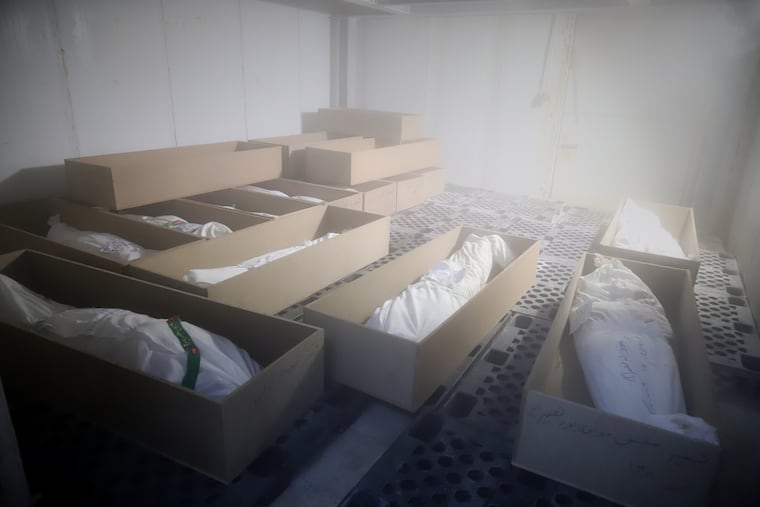
But it’s not solely the cumulative effect of a cascade of negative news that is messing with our minds and bodies. We may also struggle with events, like the treatment of immigrants in massive detention centers and the bombing of a school in Iran (currently still under investigation, but likely caused by American weaponry), that don’t seem to reflect our values, or how we want others to see us.
When Michael Valdovinos began to think about writing Moral Injuries: When Good Conscience Suffers In A World of Hurt back in 2015, the psychologist and veteran said he could not have imagined we would find ourselves where we are in 2026. But due to a toxic combination of factors, many beyond our personal control, “we are facing what I argue in the book is unprecedented levels of moral distress and moral injury. There’s really no end to the runway.”
Moral injury, a malady of the conscience, may show up as anxiety or depression, suggests Valdovinos. Healthcare professionals, including counselors, don’t always have experience in treating it. But the pace of exposure (what he calls the crescendo effect) is increasing, so it may not be possible to integrate one experience before the next one shows up.
“So, each time you rationalize not doing ‘the right thing’ — however you personally define ‘right’ — you’re adding to your moral burden,” he writes in Moral Injuries.
I asked Valdovinos what seemed like an unavoidable question: Is there something particularly egregious about the assaults on conscience facing Americans during the Trump administration?
Though he didn’t single this administration out (he clearly sees the problems we are facing as more systemic, and his book provides many examples outside the realm of politics), he said that people who hold powerful positions may not themselves be immune to mental health challenges. “As human beings, we’re all susceptible to mental health challenges, and if you have certain mental challenges, a moral compass may be compromised.”
In the meantime, these experts have some (remarkably similar) advice. In addition to limiting the flood of news notifications, invest in activities where you feel you can make a difference.
Riley suggested narrowing your lens. “Combating compassion fatigue often entails focusing on a few issues that are incredibly important to you and giving yourself permission to let others carry the weight and lead the charge on other issues,” she said.
“We are inundated with horrifying news from every corner of the world, and it is simply too much for one person to hold at any given time. Focusing on a few core issues and a handful of strategic actions you can take allows you to care deeply while preserving and protecting your heart and mind from feeling constantly overwhelmed.”
If you are in a group that is being directly affected, Pierre-Smith told me, don’t let yourself get too isolated. Instead, seek out communities that are supportive and encouraging.
If there is something you can do, then do it, suggested Valdovinos, whether it’s supporting something or someone you care about, or showing up differently in your environment. If you can’t act on something, it’s OK to limit how much you take in, he advised. “Not everything that reaches you requires sustained activation.”
» READ MORE: A pilgrim at Brandywine Creek | Opinion
While the tone of Moral Injuries is one of urgency, the book ends on a more hopeful, if challenging, note — as does our conversation.
“I think that what’s happening as a consequence of all of the reality that we’re dealing with is that it’s really pushing people to evaluate their moral compass,” said Valdovinos. That calculus includes evaluating which organizations they support, what products they use, and who they spend time with.
“One thing I know: We’re not going to be in this situation forever. We have to endure a lot of pain, but a moral reckoning is coming.”
Elizabeth Eisenstadt Evans is a freelance journalist in Chester County. Her writing has appeared in Religion News Service, the National Catholic Reporter, Sojourners, Christian Century, the Washington Post, and The Inquirer.

Inquirer Opinion Newsletter