There are many things wrong with Trump calling antifa a terror group. Here are a few of them.
Antifa does not meet an important legal criterion for terrorist designation, namely, it's more a way of thinking than it is an organized group.
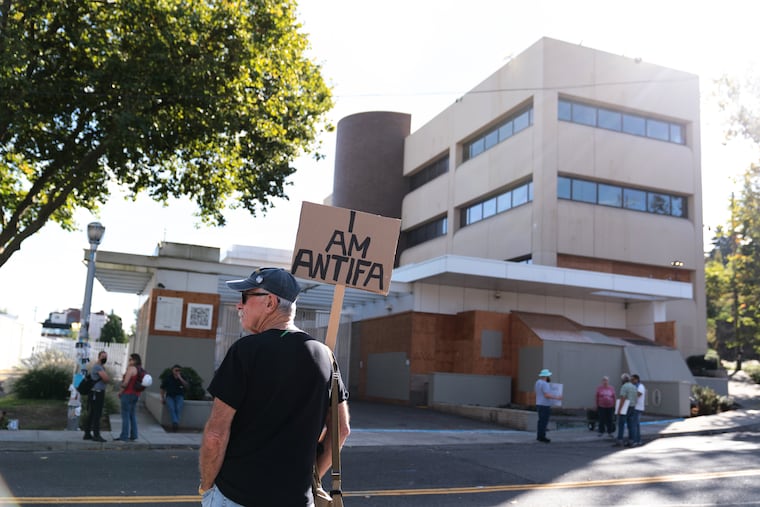
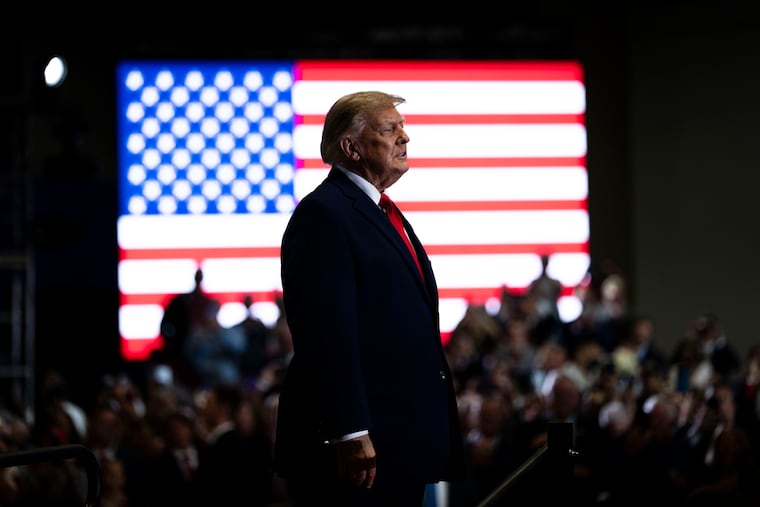
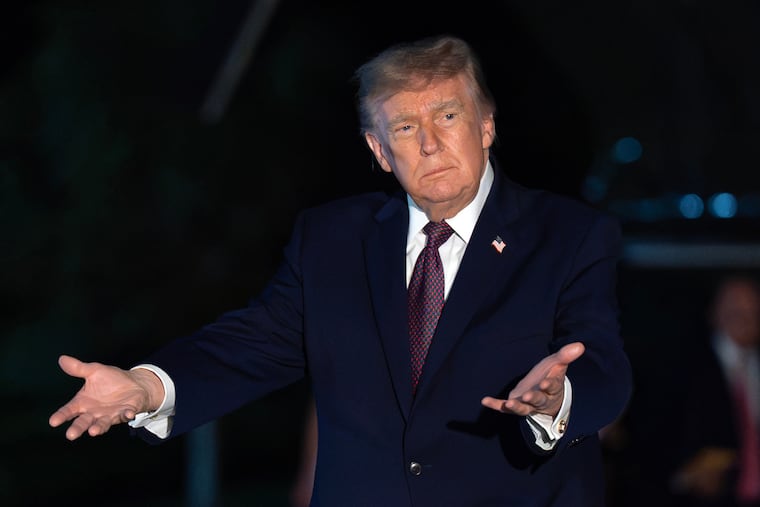
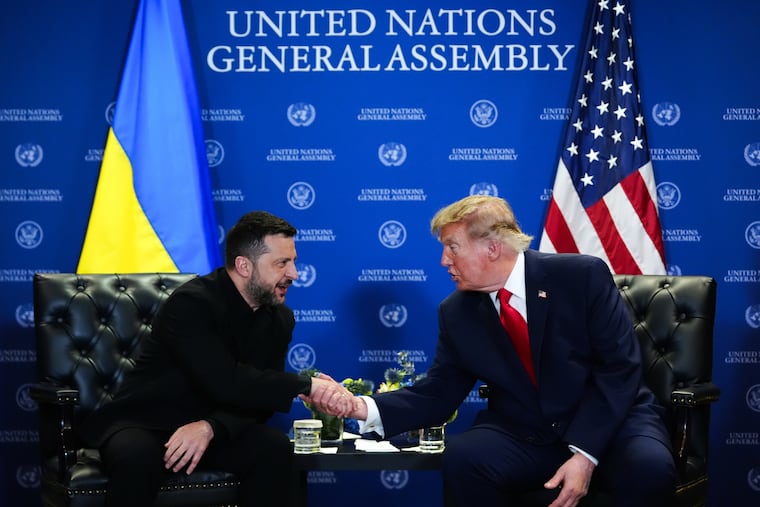
President Donald Trump has signed a new executive order labeling antifa a “domestic terrorist organization,” reviving a push he initially floated during his first term — and drawing immediate questions from legal experts about what practical effect the move will have.
The order follows the Sept. 10 killing of conservative commentator Charlie Kirk, which authorities have described as politically motivated; investigators have not presented evidence linking the suspect to antifa. Still, that hasn’t stopped the Trump administration from taking the unprecedented step of trying to label a purely domestic movement of anti-fascists as terrorists.
Indeed, the White House order directs federal agencies to “investigate, disrupt and dismantle” illegal activity tied to antifa, and to probe purported funding streams — with a focus on foreign funding.
The Trump administration had only two realistic options for affixing the terrorist label on the antifa movement: Get Congress to pass a new law that provides the State or Treasury Departments, the two national authorities for terrorist designations in the United States, to identify domestic groups as terrorists.
Or, as the president did, issue a new executive order. These were the only two practical options because the United States has no statutory framework for designating domestic groups as terrorist organizations; the formal designation system Congress created in 1996, with the advent of the State Department’s foreign terrorist organization (FTO) list, applies to foreign groups only.
Executive Order 13224, a legal authority shared by the State and Treasury Departments, was signed by President George W. Bush 12 days after the 9/11 terror attacks. For the most part, with relatively few exceptions, that tool has focused on foreign-based terrorists who have been labeled as specially designated global terrorists. Antifa would not be a good fit for either a State or Treasury Department designation pursuant to President Bush’s 2001 order.
Thus, President Trump had very few options to back up his social media missives related to radical left-wing actors whom he believed were conspiring to tear apart the fabric of the United States. Hence, a new executive order — one which, frankly, does very little new to combat anarchist-motivated violence.
The president’s directive, very simply, shapes agency priorities and rhetoric. It signals an expectation that federal law enforcement will bring existing statutes — including conspiracy, rioting, assault, arson — to bear on cases officials associate with antifa-linked violence. It also puts the administration on record, pressing for aggressive financial investigations around any organized support.
Unlike other authorities, President Trump’s executive order targeting antifa does not create a binding domestic terrorism list akin to the State Department’s FTO list, which triggers asset freezes and bars immigration, among other steps. Those tools apply only to foreign entities unless Congress changes the law. Trump’s new executive order cannot rewrite that framework.
As I’ve previously argued, antifa also does not meet another important legal criterion for terrorist designation, namely, it’s more a way of thinking than it is an organized group.
Simply put, antifa is best understood as a loose, decentralized movement rather than a formal group with leaders and membership rolls.
Every group on the State Department’s FTO list, for instance, has a clearly identifiable structure and leadership figures.
The president’s new executive order, frankly, does very little new to combat anarchist-motivated violence.
That distinction has long shaped how federal officials talk about terrorist groups, and why antifa didn’t get designated as a terrorist group in 2019 when Trump originally hatched the idea during his first term.
For example, in 2020, FBI Director Christopher Wray told Congress the bureau viewed antifa “as more of an ideology or a movement than an organization.” The new Trump order also does not resolve that tension.
This does not mean, however, that we should dismiss Trump’s new order as insignificant.
Civil liberties groups, such as the American Civil Liberties Union, and some former government officials, including me, the former head of the State Department’s terrorist designations office, argue the order is largely symbolic, but may chill protected speech and association by blurring the line between violent conduct — which is already illegal — and nonviolent political activity.
As such, the Trump administration should expect litigation that challenges the order’s legal basis and its potential use as a predicate for broad investigations.
News outlets and analysts will also be watching whether prosecutors rely on standard criminal counts, as before, or try to test new theories under the order’s umbrella, to include domestic terrorism charges for anyone perceived to be in antifa’s camp, or seen as a potential financier of the movement.
In my view, Trump’s antifa order changes the conversation more than the law.
Violent acts remain chargeable under existing federal and state statutes. The sweeping designation label does not, by itself, unlock the foreign terrorism tools Congress reserved for overseas organizations.
Nonetheless, the administration’s order against antifa is a natural extension of the battle against President Trump’s perceived political enemies. This was made all the more clear when President Trump posted his “Dear Pam” letter over social media.
That, coupled with the Federal Communications Commission’s strong-arming of ABC to muzzle comedian Jimmy Kimmel, and the antifa order, means the war against political enemies will be weaponized in new and deeply problematic ways.
President Trump’s possible order to move the military into Portland, Ore., may be the first shoe to drop. That’s just one of the reasons why a seemingly toothless executive order may result in government overreach that violates core constitutional protections, such as free speech and freedom to assemble.
Jason Blazakis, who spent a decade as the director of the State Department’s Counterterrorism Finance and Designations Office, is a professor of the practice of terrorism studies and the executive director of the Middlebury Institute of International Studies Center on Terrorism, Extremism, and Counterterrorism.