Why Trump’s refusal to recognize the Armenian genocide matters
More than a century after 1915, the deaths of 1.5 million Armenians cannot be denied — yet Washington is once again choosing ambiguity over clarity.
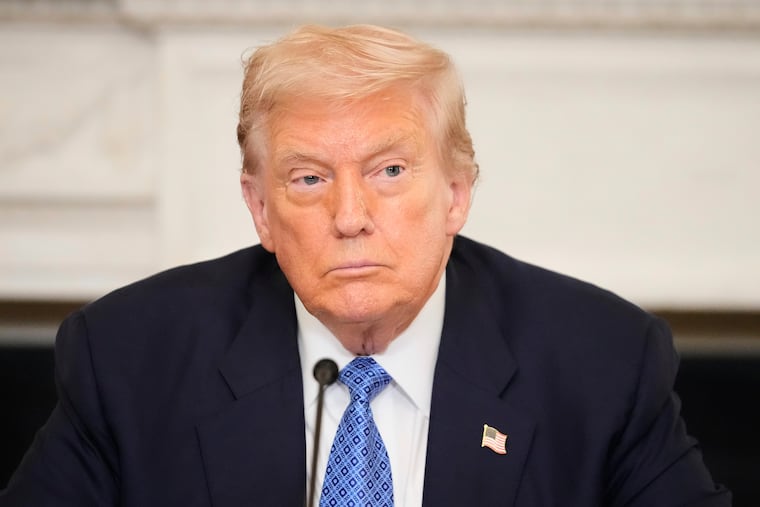
On Friday, the world commemorates what is widely recognized as one of the first genocides of the 20th century: The destruction of the Armenians by Turks in the final years of the Ottoman empire. Sadly, however, in the United States, recognition of this genocide is now ensnared in the politics of the Trump administration.
The very word genocide was coined in 1944 by Raphael Lemkin, a Polish Jewish legal scholar whose work was deeply influenced by the Armenian case. It was the slaughter of Armenians, in fact, that drove him to devote his life to creating a law that would help prevent this crime. Today, the Lemkin Institute for Genocide Prevention — which bears his name — continues that legacy from its base in the Philadelphia area, carrying forward a mission rooted in the belief that such crimes must be named clearly if they are to be prevented.
This is not abstract history in Philadelphia. Roughly 15,000 people in the Greater Philadelphia region trace their lineage to historical Armenian lands, especially in western Armenia, now known as eastern Turkey. On this day of remembrance, we stand with them in a shared commitment to truth, memory, and the dignity of those who were lost.
More than a century after the genocide, the historical record is clear. Scholars, international bodies, and dozens of governments have recognized that the mass deportations, killings, rape, and starvation of Armenians in 1915 and 1916 constituted a deliberate attempt to destroy a people. Around 1.5 million Armenians perished. Which is why it is both surprising and deeply troubling that the administration of Donald Trump appears to be backsliding on this issue — after President Joe Biden seemed to close the discussion by joining in recognition.
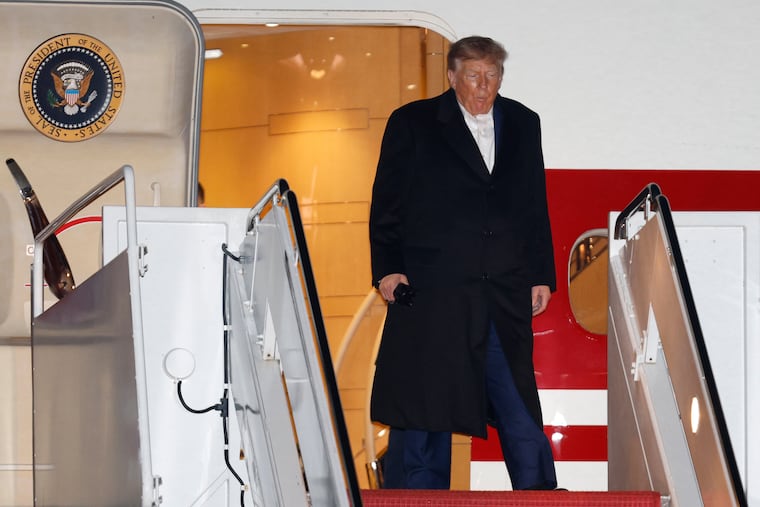
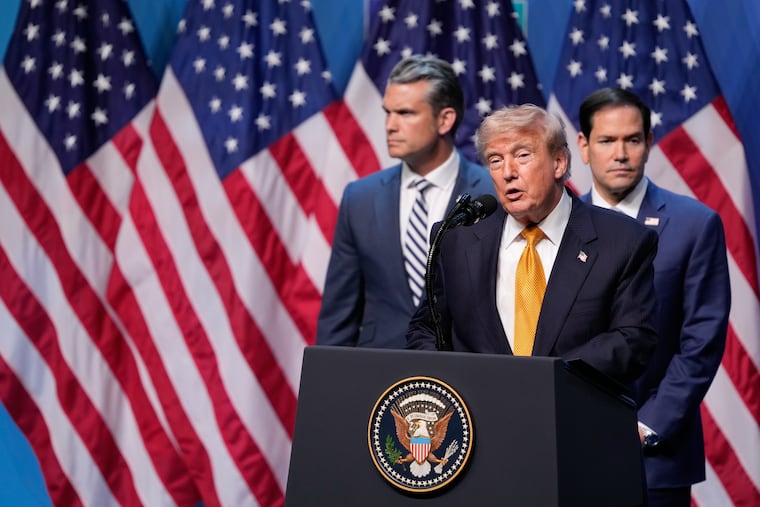
On the 110th anniversary of the Armenian genocide, last year, the administration issued a statement that referred to the events of World War I, but once again avoided using the word genocide. Officials declined to explain the omission. Soon after, Vice President JD Vance visited the Tsitsernakaberd genocide memorial in Yerevan, Armenia. A post on his social media account briefly referred to “the victims of the 1915 Armenian genocide” — before being quietly deleted and replaced with more neutral language.
This terrible sign reflects a pattern.
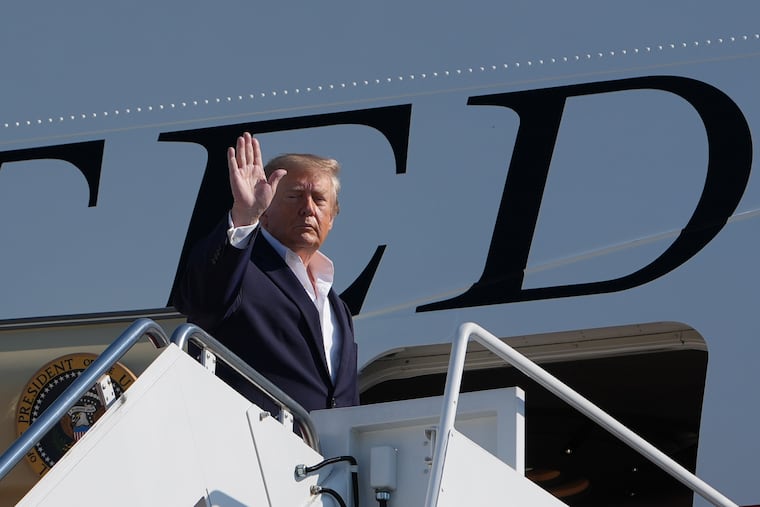
During his first term, Trump consistently declined to recognize the Armenian genocide, even as Congress passed resolutions affirming it. His administration spoke instead of “mass atrocities,” urging Armenians and Turks to “reckon with their past,” while avoiding the legal and moral clarity that the word genocide provides.
That position marked a return to a long-standing American reluctance to upset Turkey — but it also stood in contrast to a significant shift that followed. In 2021, Biden became the first U.S. president to formally recognize the Armenian genocide, using the term explicitly and breaking with decades of careful euphemism. The move was widely seen as a moral and historical correction — an acknowledgment that strategic considerations should not override truth.
What we are now seeing is a reversal of that progress.
To understand why this matters, it is important to be clear about what is at stake. Recognition of genocide is not merely symbolic. It is a statement about the nature of historical truth, the obligations that flow from it, and the threats that endure in the absence of recognition. The word itself carries legal, moral, and political weight. It affirms that what occurred was not simply tragedy or chaos, but a systematic attempt to eliminate a people.
Avoiding the term does not change the facts. But it does change the signal.
Recognition of genocide is not merely symbolic. It is a statement about the nature of historical truth.
It suggests that even in cases where the historical record is clear, truth remains negotiable — subject to diplomatic convenience and geopolitical calculation. In this case, the calculation is not difficult to discern.
Turkey, the successor state to the Ottoman empire, has long rejected the genocide designation and remains a strategically important ally for the United States. Successive administrations have weighed that relationship against historical recognition, often choosing caution.
But there is a cost to that caution.
The Armenian genocide occupies a singular place in modern history not only because of its scale, but because of its role in shaping our understanding of the genocidal process. It stands as an early warning — an example of how a state can radicalize over time and eventually mobilize ideology, bureaucracy, and violence to destroy a minority population. To recognize it is not simply to honor its victims, but to affirm a principle: that such crimes must be named clearly, without equivocation.
Elisa von Joeden-Forgey is executive director of the Lemkin Institute for Genocide Prevention. She was formerly the endowed chair in Holocaust and genocide studies at Keene State College.