Amid Trump’s attacks on higher ed, professors need to keep standing up for our democracy
Across the nation, there has been a groundswell of academics who have decided to speak out for their institutions — and we all must keep doing so.
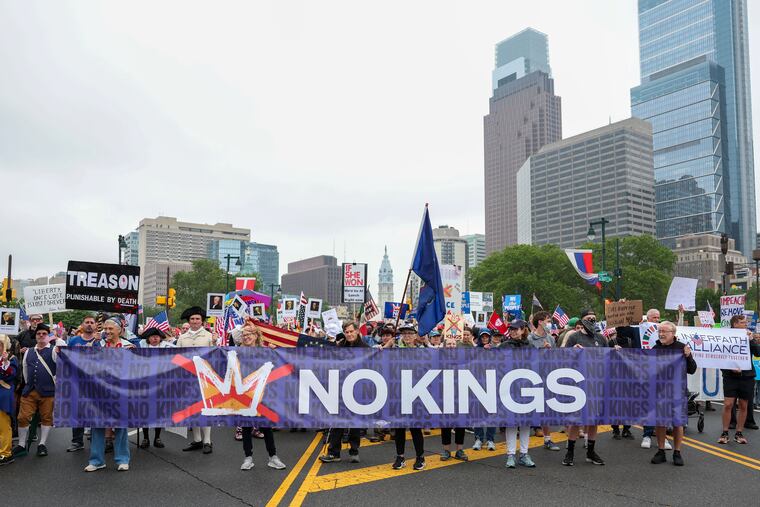
Our democracy and our institutions are under attack, but educators in higher education have been fighting back — and we must continue. As scholars, researchers, and people who care about our students and our democracy, it is our duty to speak for diversity and pluralism, scholarship and learning, academic freedom, and democracy itself.
In February, as the Trump administration ramped up its attacks on higher education, I desperately wanted to hear college and university leaders simply say: “You know what, democracy is actually good. Diversity is good, equity is good, inclusion is good. Education and knowledge and research are good. This is not controversial.”
It should not have been controversial, but I did not hear academic leaders affirming the values we all should share — with a few exceptions. So I found a group of like-minded academics, and together we drafted a letter that called on colleges and universities to protect those values.

Under a regime hostile to academia, educators must walk an ideological tightrope.
College professors and administrators from across Greater Philadelphia share nine essays on the tectonic shifts in higher education through the first six months of President Donald Trump’s second term.
Read more in Inquirer Opinion:
It’s getting harder to champion diverse learning, but we must persevere. | David W. Brown
It’s time to put politics in STEM. | Philip T. Gressman
I worry for children with Trump’s attacks on public media. | Amy Jordan
Professors need to keep standing up for democracy. | Daniel Laurison
What it’s like to run an academic department in 2025. | Jessa Lingel
Community colleges can be pivotal to fighting attacks on higher education. | Marissa Johnson Valenzuela
Trans students are under attack. Universities must respond. | A. Tai Simpson and Stephanie M. Hernandez
How student journalists can help save their universities — and journalism. | Barbie Zelizer
Trump’s executive orders put reliable science at risk. | Matt Zucker and Kendra Albert
All of us believed it was important to publicly affirm our commitment to the enterprise of higher education in a democratic and free society, and to the values and practices that facilitate the production, advancement, and sharing of knowledge.
Professors are not known for our ability to easily find common ground on language, but we agreed that:
The democratic ideals of free thought, free speech, free association, freedom of assembly, and the right to dissent are worth fighting for.
Education is a fundamental pillar of a democratic society.
Diversity is essential, and democracy requires that we invest fully in the rich array of our differences.
Education, knowledge, and science are intrinsically worthwhile.
Academic freedom is necessary to the pursuit of knowledge.
No amount of accommodation or compliance with the Trump administration’s demands will protect us.
I desperately wanted to hear college and university leaders simply say, “You know what, democracy is actually good.”
We urged campus leaders and every American who believes in democracy and education to stand up for the values we share.
Across the country, there was a groundswell of academics who also decided to stand up and speak out for our values and the value of our institutions.
In the course of a few weeks in March: Jewish academics released a statement laying bare the hypocrisy and harm of the administration’s use of “antisemitism” in its vendetta against academia; more than 1,000 faculty, staff, and students at the University of Pennsylvania called on their institution to uphold research and the rights of students; and members of the National Academies of Science and scholars at the University of Massachusetts Amherst, the University of California, Berkeley, and beyond all wrote public letters and gathered signatures.
Since March, there has been a wave of academics organizing to resist the unethical, antidemocratic, and frequently illegal and unconstitutional demands of the Trump administration.
The Rutgers University senate passed a Mutual Academic Defense Compact (MADC) and supported other campuses to do the same; 58 campuses have now passed these resolutions.
The group I am part of, We Are Higher Ed, put together a website to collect and disseminate news and resources for the fight for higher education; we estimate that at least 23,000 academics signed at least one public statement.
In April, hundreds of college and university leaders finally spoke out against “the unprecedented government overreach and political interference now endangering American higher education.”
As we weather ongoing attempts to destabilize, if not destroy, our institutions, all of us with a stake in higher education — which includes everyone who values knowledge, research, or democracy itself — must work together in defense of the values of academic freedom, scholarship, and research.
We need to protect students, faculty, and our communities from government reprisals, and to fight attacks on our institutions and democracy in the public sphere, in the legal arena, and through nonviolent civil disobedience and protest.
To do that, we will need to be organized. We should all work on our campuses and beyond, with organizations like the American Association of University Professors, Stand Up for Science, and Stand Together for Higher Ed. Use your voice and your expertise to keep one of the pillars of a free and functioning democracy as intact as possible.
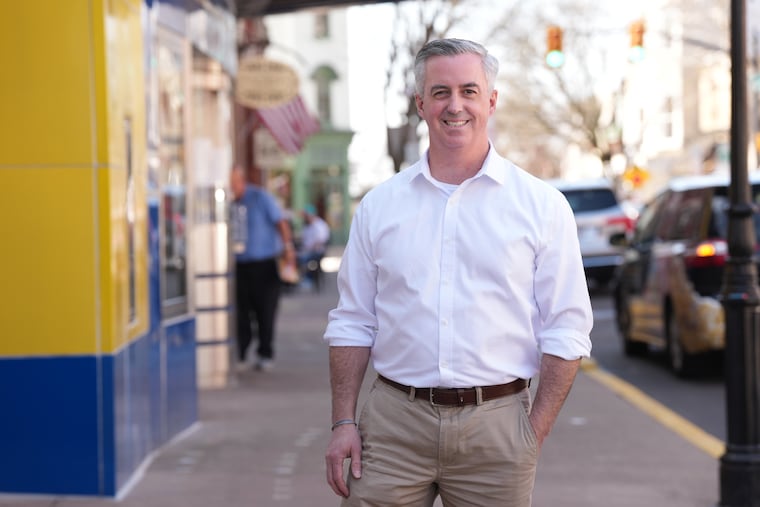
Daniel Laurison is an associate professor of sociology at Swarthmore College and director of the Healthy, Equitable, and Responsive Democracy Research Initiative (HEARD).