Despite Trump’s disdain, Black History Month matters
The celebration should focus on how Black and white people coexist in an America that continues to struggle with racism.
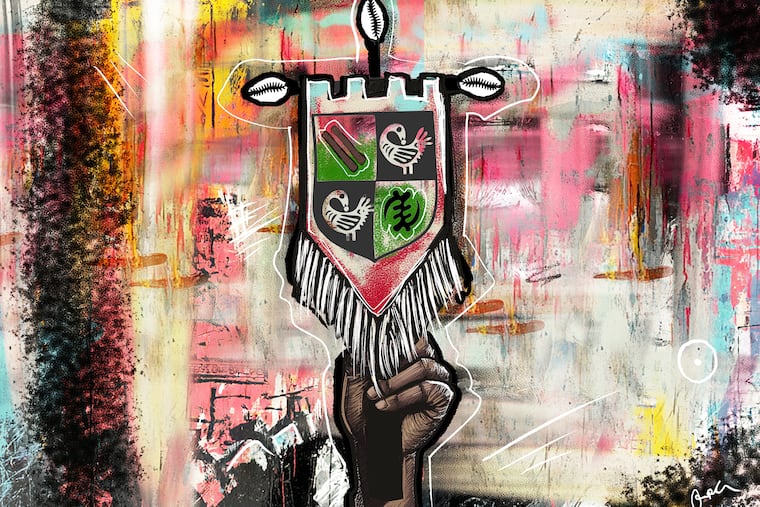
I doubt Black History Month will be paid any attention this year by a president who no longer feels the need to be so hypocritical that he would stand among Christians with a smile on his face and a Bible in his hand, only to later confess his ever passing through the pearly gates of heaven is highly unlikely.
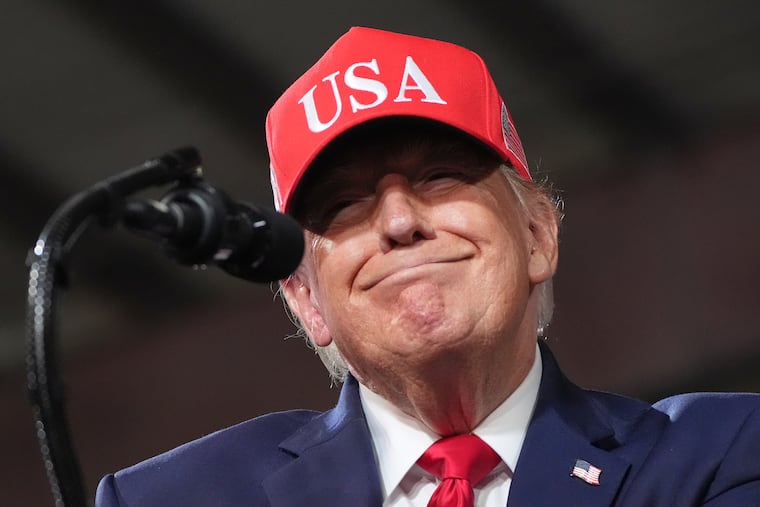
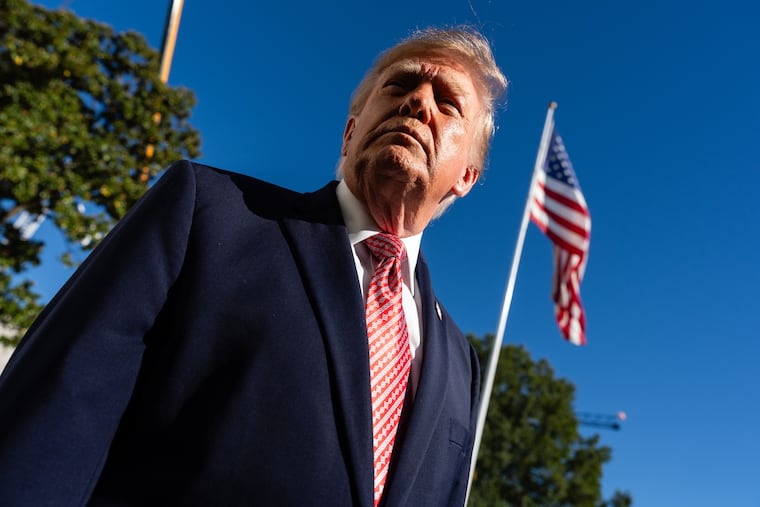
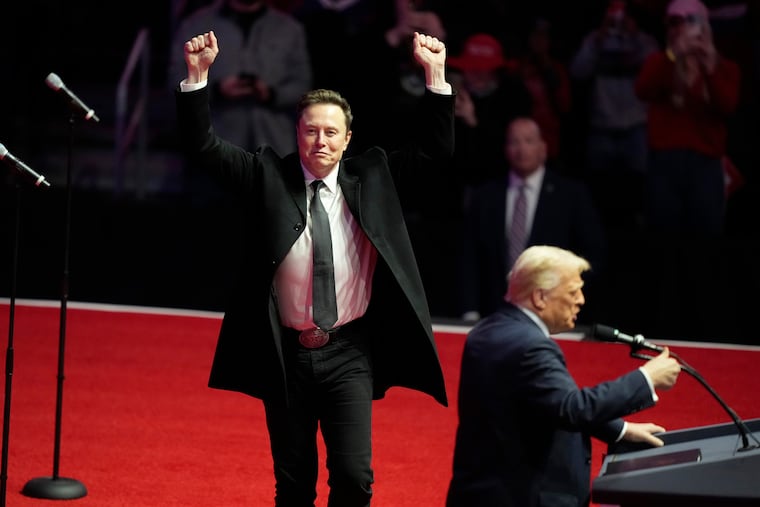
Donald Trump no longer feels compelled to go through the motions of pretending to be something he never was. With age 80 rapidly approaching, he knows he’s never going to run for another political office. So why should he put on another performance to cull votes from demographic groups he never really cared about anyway?
Trump fell only 3% short of winning the Hispanic vote in the 2024 presidential race, a 21% improvement from the 2020 election. I wonder how many of Trump’s Hispanic supporters regret voting for him after having family members or friends detained by U.S. Immigration and Customs Enforcement police and possibly deported?
President’s disdain
More Black folks were enticed by Trump’s blarney, too. He nearly doubled his Black support from 8% in 2020 to 15% in 2024. Trump repaid Black voters by signing the One Big Beautiful Bill Act that he pushed through a Republican Congress, which cut taxes for higher-income households by slashing funding for food and medical assistance programs sorely needed by disproportionately poor Black families.
Trump signaled with his recent criticism of the 1964 Civil Rights Act that he wouldn’t be adding his voice to a chorus of “Lift Every Voice and Sing” during Black History Month. He said the law unfairly discriminated against white people.
“White people were very badly treated,” he said. “People that deserve to go to a college or deserve to get a job were unable to get a job. So it was, it was a reverse discrimination.”
Such an uninformed statement being made by a president of the United States is exactly why this country still needs Black History Month. Trump’s comment, however, also underscores the need to change how that 100-year-old celebration has been observed.
Trump isn’t wrong to call the Civil Rights Act a reversal, but he failed to put that assessment in context. He may drive nothing more powerful than a golf cart these days, but nonetheless, he should know that sometimes you have to put a vehicle in reverse to stop it from going in the wrong direction.
The Civil Rights Act was needed to reverse the course of both the legal and traditional segregation that persisted in America decades after the Civil War ended slavery. It was hoped that affirmative action laws would, in time, become unnecessary and could end when all Americans were assured of equal treatment regardless of their race.
In fact, Justice Sandra Day O’Connor opined in a 2003 college admissions case before the U.S. Supreme Court “that 25 years from now, the use of racial preferences will no longer be necessary.” But in too many respects, the need for policies designed to reverse the significantly diminished but nevertheless enduring racism in this country has not gone away.
I remember my mother walking me to an alley to relieve myself because no white store downtown would let a Black person use its bathrooms.
More people might accept that reality if they had a better understanding of American history and realized that laws such as the Civil Rights Act of 1964 and the Voting Rights Act of 1965 were passed by Congress on a bipartisan basis and upheld again and again by a nonpartisan Supreme Court because it was the right thing to do. Context is important, which brings us back to Black History Month.
Honoring people and ideas
What began as Negro History Week in 1926 was created by Howard University professor Carter G. Woodson to instill a greater sense of pride among African American students who mostly attended all-Black schools.
That week saw teachers place greater emphasis on historical figures such as Phillis Wheatley, who, even as an enslaved woman, became one of the best-known poets in colonial America; George Washington Carver, who, after leaving slavery, became an esteemed botanist whose agricultural research improved farming across America; and, of course, the Rev. Martin Luther King Jr., who until his assassination in 1968 led the American civil rights movement.
Focusing on these and other historically significant African Americans, including Sojourner Truth, Booker T. Washington, W.E.B. Du Bois, Malcolm X, and Mary McLeod Bethune, may have been fine when I attended segregated public schools in Alabama in the 1960s and ‘70s. But now, with white students attending integrated schools also observing Black History Month, it’s time to move beyond Woodson’s effort to instill pride among African American students.
Instead of celebrating individuals, Black History Month should focus more on the events and ideas that continue to impact how Black and white people coexist in an America that continues to struggle with both covert and subtle racism. Projects and book reports should explore the arguments made when the Civil War began, consider why Reconstruction failed to place African Americans on even footing with whites, and note the similarity of racist rhetoric 60 years ago and now.
Sixty years ago, I was a 12-year-old attending an all-Black school in Birmingham, Ala. Two years earlier, 16th Street Baptist Church was bombed by Ku Klux Klansmen, and a child who attended my elementary school was one of the four little girls killed. Four years prior to that, I remember my mother walking me to an alley to relieve myself because no white store downtown would let a Black person use its bathrooms.
Birmingham is so much better than that now. America is better, too. But some days it seems to have prematurely shifted to reverse. Remedies to discrimination are being prematurely discarded even as racist rhetoric rises to levels that are uncomfortable reminders of what America was, and not what we want it to be. Black History Month is a good time to reflect on that reality and take steps to avoid slipping into a past we need to remember but not repeat.
Harold Jackson, who served as editorial page editor for The Inquirer from 2007 to 2017, was awarded the Pulitzer Prize for editorial writing in 1991 and retired from the Houston Chronicle in 2020. His memoir, “Under the Sun: A Black Journalist’s Journey,” was published in April by the University of Alabama Press.

This essay is part of a series exploring the 100th anniversary of the creation of Black History Month.
- How Black History Month endures | Rann Miller
- The fraught politics behind the creation of Black History Month | Solomon Jones
- Black media: Our voice is our most potent weapon and our most sacred sanctuary | Sara Lomax
- Despite Trump’s disdain, Black History Month matters | Harold Jackson
- African American personal faith and organized traditions have had historic impact | Anthea Butler
- Democracy, engineered in the Black metropolis | Michiko Quinones
- Preserving Black history must start in the classroom | Sharif El-Mekki

Inquirer Opinion Newsletter