It’s official: Trump is the anti-FDR
Can the New Deal’s values survive despite Trump? Hungary offers an answer, write FDR’s grandson, James Roosevelt Jr., and Henry Scott Wallace, the grandson of FDR’s vice president.
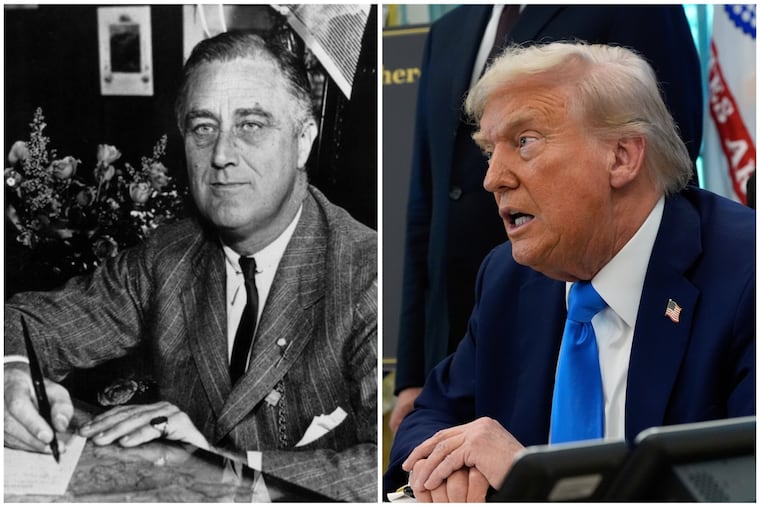
President Franklin D. Roosevelt inherited a do-nothing federal government and radically expanded it to help ordinary people. President Donald Trump inherited an active, pro-people government and took a chain saw to it. Federal spending today, he says, should prioritize the military — for which he seeks the largest budget in modern history — but not “little scams” like Medicare or Medicaid.
FDR convinced his coequal branch of government, Congress, to legislatively create his boldly reimagined government. Trump dismantles it by executive fiat.
FDR embraced foreign allies to fight authoritarians. Trump embraces authoritarians and ridicules allies.
FDR asked Congress for a declaration of war immediately after the devastating provocation of the Pearl Harbor attack. President Donald Trump started a war on Iran with neither imminent provocation nor authorization by Congress.
The trend has appeared inexorable — toward an all-powerful executive branch, and government by and for the wealthy few.
But the people can yet rise up and demand their government back. Just ask Hungary, where a 16-year-old autocracy has finally been overwhelmingly unseated by popular vote.
What are the core values of the New Deal that are under assault? One is respect for the Constitution. Its framers, fresh from a rebellion against an English king, were wary of all-powerful rulers. They conspicuously established Congress in Article One, and subordinated the presidency in Article Two, tasked primarily with “faithfully executing” the laws passed by Congress, as the elected representatives of all the people.
They explicitly gave Congress the sole power to declare war.
Another core value is concern about the welfare of all Americans, not just the wealthy and privileged.
FDR’s landslide electoral victory in 1932 came when ordinary people were suffering extraordinary pain and unemployment in the Great Depression, and FDR responded with an alphabet soup of programs to create jobs, protect workers, rescue family farms, and rein in the excesses of rapacious corporations and banks.
Trump narrowly won a second term on a promise of reducing inflation and putting Americans first, but promptly headed in the opposite direction.
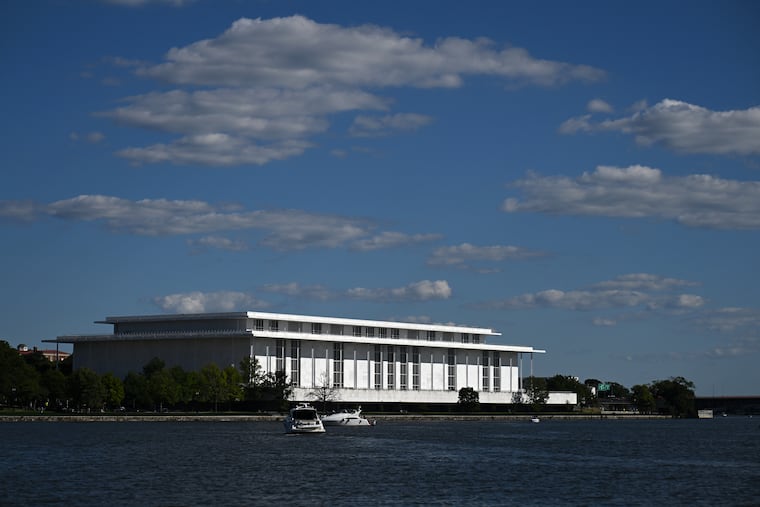
Trump gave huge tax cuts to corporations and the wealthiest among us, stripped healthcare and food stamps from tens of millions of Americans, and dramatically raised the cost of consumer goods and energy through his all-by-himself tariffs and Middle East war. All this while using his office to enrich himself and his cronies, and indulge vanity projects like a palatial ballroom, a triumphal arch, putting himself on currency, and naming the Kennedy Center after himself.
Our appreciation for the New Deal stems as much from our respect for America’s altruistic spirit as it does from lived experience: One of us, James Roosevelt Jr., is a grandson of Franklin and Eleanor Roosevelt; the other, Henry Scott Wallace, is a grandson of Henry A. Wallace, one of FDR’s vice presidents.
Unlike in the 1930s and ’40s, the Oval Office today is focused almost exclusively on serving the 1%. Yet, looking back across history, we don’t think the values of the other 99% have changed much since the time of our New Deal grandparents.
The American people aren’t clamoring for preferential treatment for the rich and powerful, or for foreign entanglements that make their lives less safe and less affordable.
What people crave today is the same as back then: reasonable security against what FDR called “the hazards and vicissitudes of life,” and a government committed to the greatest good for the greatest number.
In furtherance of his “new deal for the forgotten man,” FDR pledged: “The test of our progress is not whether we add more to the abundance of those who have much; it is whether we provide enough for those who have too little.”
Where did the New Deal come from?
Consider March 25, 1911, when a young social worker named Frances Perkins witnessed a fire at a 10th-floor shirt factory in New York. She saw 146 workers, mostly immigrant women and children, plunge to their deaths because the factory’s owners liked to keep the exits blocked to prevent workers from leaving.
Perkins led New York’s investigation into that fire, and eventually went to Washington as FDR’s labor secretary, the first female cabinet member in U.S. history.
The ultimate result: legislation outlawing child labor, establishing a minimum wage and maximum work hours (essentially creating the weekend), unemployment insurance, protections for workers to organize into unions, and the crown jewel of the New Deal, the program of retirement insurance called Social Security, the most popular government program ever.
The day of the shirt factory fire was, Perkins later said, the day “the New Deal began.”
The notion of government working for ordinary people, not empowering the unbridled greed of the elites, is the essence of the New Deal — the vision of FDR, and of his longest-serving lieutenants like Perkins, Wallace, and Harry Hopkins.
It’s a vision still resonant with Americans — and now, apparently, Hungarians, too. It’s the reason the New Deal has survived the better part of a century, driven by an overwhelming shared commitment to a level playing field and basic economic security.
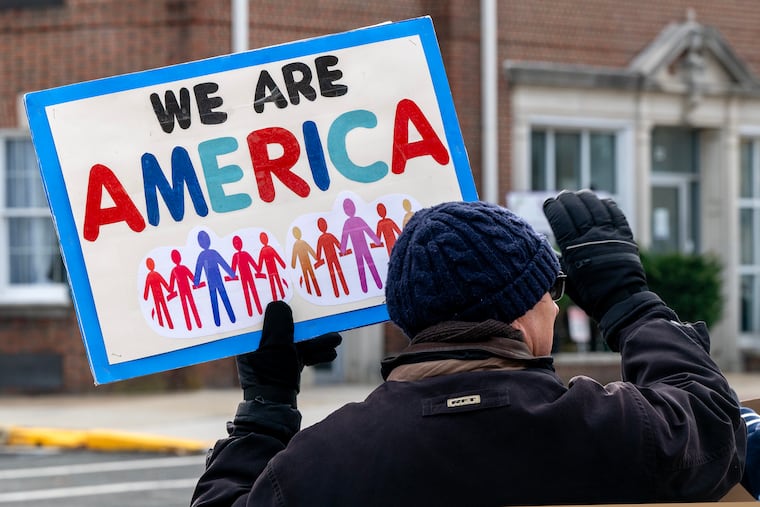
The New Deal is under threat today, but ordinary people are noticing and taking to the streets as never before.
We are increasingly confident that our grandparents’ vision will endure, and emerge renewed, reenergized, and reimagined.
James Roosevelt Jr. is an attorney and former associate commissioner of the Social Security Administration, and grandson of Franklin and Eleanor Roosevelt. Henry Scott Wallace is an attorney and grandson of Henry A. Wallace, FDR’s vice president from 1941 to 1945 and secretary of agriculture and commerce, and was the 2018 Democratic nominee in Pennsylvania’s 1st Congressional District.