Threat to prosecute lawmakers for speech is scary (and probably unconstitutional)
Under modern First Amendment doctrine, the government cannot punish speech because it conveys a message the government dislikes.
“I do solemnly swear that I will support and defend the Constitution of the United States against all enemies, foreign and domestic … and that I will obey the orders of the President of the United States and the orders of the officers appointed over me,” according to law.
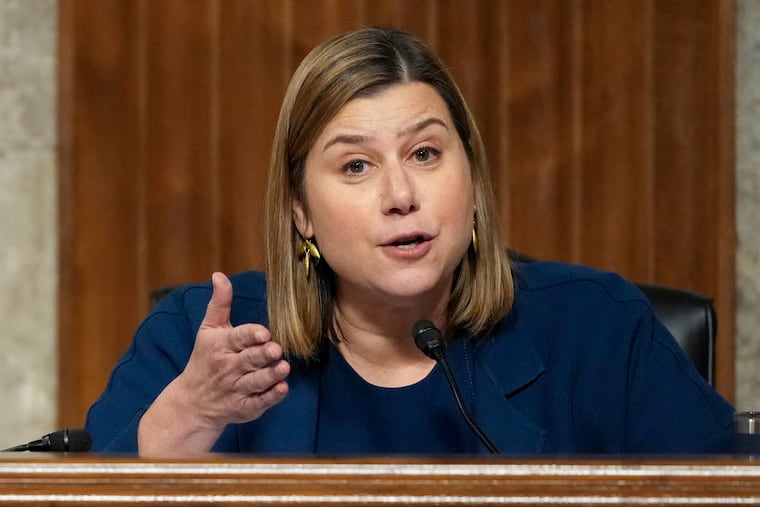
Military and intelligence community members were recently reminded of this oath when, on Nov. 18, six members of Congress released a direct-to-camera video, telling service members that they “can refuse illegal orders.”
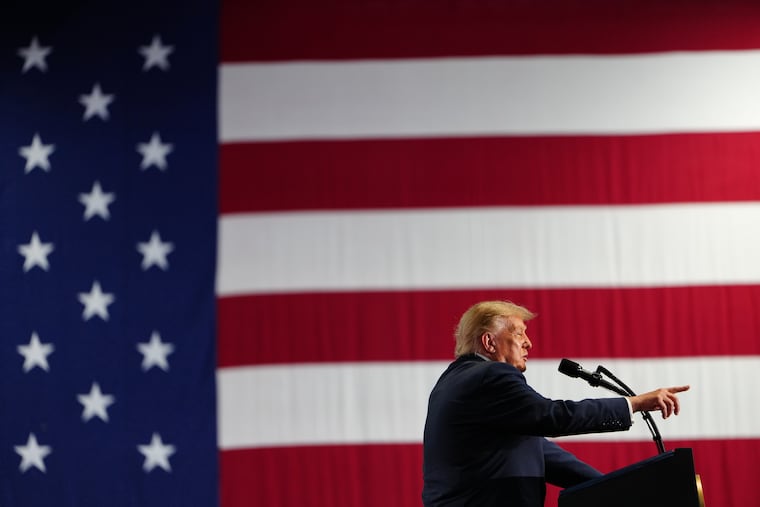
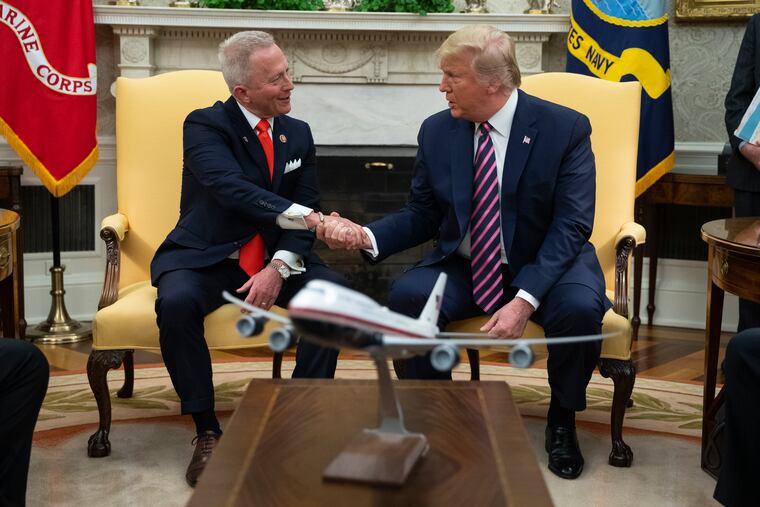
In response, the president unleashed a spate of social media posts calling for the lawmakers to be jailed, charged, and even executed. He subsequently doubled down on his threats of arrest and prosecution.
If there were any doubt whether the president’s words were empty rhetoric, look no further than the just-dismissed case against former FBI Director James Comey, who, after the president directed Attorney General Pam Bondi to pursue Comey via a Truth Social post, found himself under federal indictment weeks later.
With a U.S. Department of Justice willing to pursue political prosecutions, another round of charges is almost certainly coming. The question is whether the Constitution’s protections will hold.
First Amendment barriers
Under modern First Amendment doctrine, the government cannot punish speech because it conveys a message the government dislikes. The law is especially protective of “core political speech,” i.e., speech advocating for sociopolitical change.
Meanwhile, speech loses protection when it is “directed to inciting or producing imminent lawless action and is likely to [cause] such action.” The standard — set intentionally high by the U.S. Supreme Court — comes from a 1969 case, Brandenburg v. Ohio, reversing a Ku Klux Klan leader’s conviction over his Klan rally speeches. As the court explained it, the First Amendment does not permit punishment for “mere advocacy,” no matter how abhorrent.
In other words, just like the government could not prosecute someone for using a vulgarity to describe the draft to protest the Vietnam War (Cohen v. California) or the KKK for saying that “there might have to be some revengeance taken” (Brandenburg), the First Amendment does not permit the government to prosecute lawmakers for telling service members to hold the line against unlawful orders.
Vindictive prosecution
Prosecuting these lawmakers would also present a textbook case of “vindictive prosecution.” As lawyers in the Comey case recently argued, the due process clause forbids prosecutions based on “a government official’s animus” or “personal spite” toward a person. Showing that, here too, the government acted because of “genuine animus,” as is required, would not seem difficult.
And although most grand jury proceedings come with a “presumption of regularity,” as one federal court recently put it, that may no longer be the case: “the irregular is now the regular.” Take the Comey case, for example. While the charges were just dismissed, recall that days before Comey was indicted, the then-head prosecutor for the Office of the U.S. Attorney for the Eastern District of Virginia declined to charge him.
In response, the president installed his own attorney, Lindsey Halligan, who had no prosecutorial experience, as interim chief of the office. Halligan then personally presented Comey’s case to the grand jury, days before the statute of limitations ran out, and recently admitted the final indictment was never reviewed by the full grand jury.
Now, one federal judge has ruled that Halligan’s appointment was invalid, requiring dismissal, while another federal judge seems primed to dismiss the charges for good on vindictive and selective prosecution grounds, among others. Talk about unprecedented.
Even assuming the president found a prosecutor to pursue charges, and a grand jury indicted — neither of which is guaranteed — it seems highly unlikely the charges would survive against the growing backdrop of this administration playing fast and loose with the grand jury process to exact political retribution on the president’s perceived enemies.
Going on offense
But bracing for an onerous — even if legally faulty — investigation is not the only option. The president’s next political target to catch wind of a grand jury investigation against him or her could take a page from Ealy v. Littlejohn.
In that post-civil rights movement era case, a Black organization in Mississippi, which came under investigation for accusing local officials of failing to investigate the suspicious death of a young Black man, sued and got a court order to stop the investigation in its tracks.
The federal court determined that the investigation was being carried out for “the purpose of harassing and intimidating the plaintiffs in violation of their First Amendment rights,” and said it would be a “sorry day” for the country “were we to allow a grand jury to delve into” protected First Amendment activity “on the pretext that” it might reveal “some information relevant to a crime.” If ever there was a case to test out this affirmative strategy, this would seem to be it.
David Axelrod, a partner at Ballard Spahr, is a former Securities and Exchange Commission supervisory trial counsel in Philadelphia and a former assistant U.S. attorney in the Eastern District of Pennsylvania. Isabella Salomão Nascimento is a senior associate in Ballard Spahr’s Media and Entertainment Group. Before joining the firm, she was a staff attorney at the ACLU of Minnesota, where she specialized in civil rights and constitutional law.