Trump isn’t battling crime — he’s stress-testing the state
The president is probing the architecture of American federalism and seeing which walls are load-bearing — and which ones will crumble under the weight of authoritarian pressure.
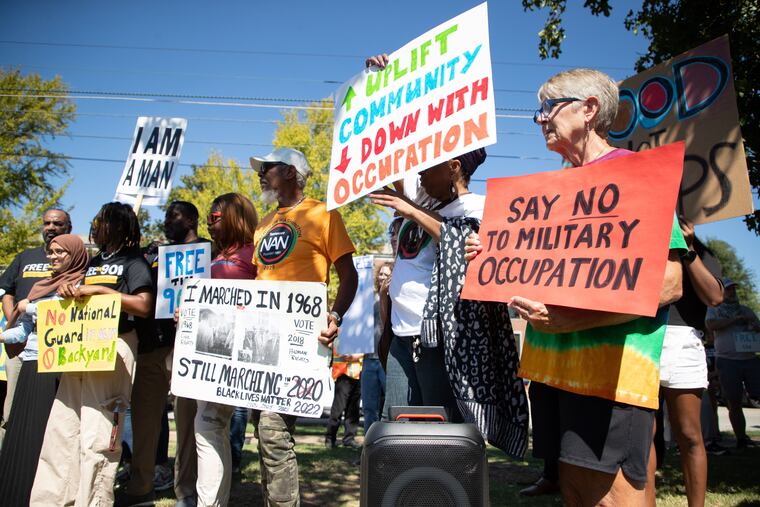
Let’s not delude ourselves here. Donald Trump’s impulse to deploy the National Guard into American cities isn’t fundamentally about crime. Nor is it, as some critics allege, just a cynical strike against Black mayors or progressive leaders. These are, at best, secondary consequences — politically useful smoke screens. What Trump is doing, more than anything, is testing how far he can stretch the muscular power of the state before it snaps.
He’s probing the architecture of American federalism and seeing which walls are load-bearing — and which ones will crumble under the weight of authoritarian pressure.
The danger here is subtle, and thus more insidious. We have a tendency in American politics to fight the obvious battle — to ask whether a mayor is soft on crime, or whether protests are peaceful or not — while ignoring the deeper structural realignments happening in the background.
This is not about a particular riot or a particular city. It’s about reshaping the norms that keep the armed machinery of the state at bay from civilian life.
We’ve seen this playbook before, though in other contexts. A strongman leader announces he is “restoring order” or “draining the swamp,” but behind the patriotic language is a strategy of creeping normalization — using the tools of democracy to unmake democracy. The uniforms look the same. The flags wave as usual. But the function of the institutions shifts.
In sending the National Guard into cities — or at least threatening to do so with increasing ease and theatrical bravado — Trump is reframing the role of the military in civil society. He’s testing whether the American public, long accustomed to the post-Watergate norms of civilian control and local autonomy, still has the civic antibodies to resist a more centralized, more militarized executive.
Let’s be clear: The Constitution, our founders, and centuries of jurisprudence were deeply skeptical of military involvement in domestic affairs. The Posse Comitatus Act is not just some outdated relic. It is a constitutional firewall against precisely this kind of executive overreach. Trump treats it like a speed bump.
We should also note the symbolic theater of these deployments. The trucks. The fatigues. The floodlights over peaceful crowds. This isn’t just policy; it’s pageantry. Authoritarianism doesn’t arrive in America wearing jackboots. It comes with a reality-show sensibility, with slogans about law and order, with cameras rolling, with polls showing “strength” surging among a certain subset of voters. It arrives draped in the American flag, not in defiance of it.
And yes, the racial dynamics are real. The history of state force in Black communities is long and double-edged — from the slave patrols of the antebellum era to the National Guard assisting in the integration of the University of Alabama. Trump’s choices play directly into this legacy. But to stop the analysis there would be a mistake. What Trump is really testing is not just the limits of racial justice or urban policy, but the public’s tolerance for using military force as a routine tool of governance.
This should alarm conservatives most of all. The conservative tradition, at its best, is about limits — limits on power, limits on executive whim, limits enforced by a reverence for constitutional structure and cultural restraint. Burke, not Bannon.
But Trumpism is not conservative in any meaningful sense. It is impulsive, centralizing, and dangerously comfortable with state force as a tool of political messaging — directly or indirectly.
So we must ask ourselves: What happens the next time a president wants to send troops into cities? What if it’s not about protests or crime, but about enforcing a disputed election result? Or cracking down on a media outlet? The precedent, once set, becomes a tool for every successor.
This is the real battle — not against crime, but for the soul of a constitutional republic. The question before us is not whether you support law enforcement or public safety. The question is whether you’re comfortable watching the walls between civilian and military life crumble in real time.
Jack Hill is a diversity consultant, child advocate, journalist, and writer.

- Let’s talk about blagony: What it means to be the only Black person at work
- Trump isn’t battling crime — he’s stress-testing the state
- Charlie Kirk and the unbearable cost of political violence in America
- The American history of Black fatherhood demands a new narrative
- Let’s talk about Carla Hayden and America’s discomfort with Black women in positions of authority