Greenland, Denmark, NATO: Breaking the world we built
The alliance that has underpinned global stability since 1945 could fracture, not because of Moscow or Beijing, but because of decisions made in Washington by Donald Trump.
Out of the ashes of the Second World War, the United States led the creation of several global institutions to ensure we would never again have to fight such a war. We created the United Nations, the World Bank, the International Monetary Fund, and, most importantly, the North Atlantic Treaty Organization.
Decades ago, NATO’s first secretary general, Hastings Ismay, remarked that the purpose of the alliance was “to keep the Soviet Union out, the Americans in, and the Germans down.” Then, aside from the threat of Soviet aggression, the other major threat was that the U.S. would turn its back on European allies and return to the isolationist posture it disastrously pursued in the early 20th century.
Today, NATO faces its greatest threat from an entirely new source: a belligerent United States that may attack a fellow NATO nation.
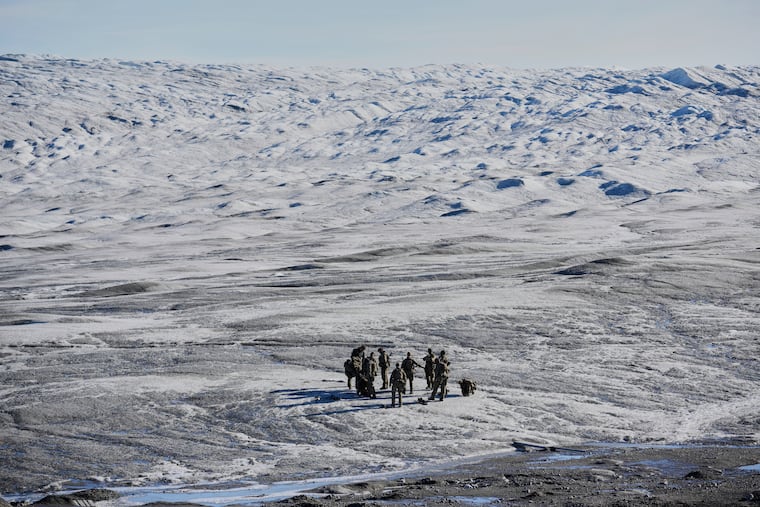
The White House has said President Donald Trump is weighing “a range of options,” explicitly including the use of the U.S. military, in his efforts to control Greenland. If that threat ever becomes reality, NATO as we know it will not survive.
I write this as the lead Democrat for the U.S. congressional delegation to the NATO Parliamentary Assembly, which brings together lawmakers from every NATO member country to provide democratic oversight of the alliance and coordinate on shared security threats.
I also write as someone who believes deeply that NATO is the bedrock of the post-World War II world. It is why Americans and Europeans have avoided a great-power war for nearly 80 years.
NATO endures because of trust: The shared belief that allies do not threaten one another, and that borders are not rewritten by force.
Greenland is a part of the Kingdom of Denmark, a founding member of NATO. A U.S. attack on Greenland would mean the United States using military force against a member of its own alliance.
There is no playbook for that scenario because it was always unthinkable. The moral authority of Article 5 — the pledge that an attack on one is an attack on all — would collapse overnight.
No country on NATO’s eastern flank would ever again fully trust American guarantees. Estonia, Latvia, Poland, and others would be forced to reconsider their security in a world where Washington seizes territory from a smaller ally.
The Trump administration’s rhetoric also plays directly into the hands of our fiercest adversaries.
Beijing and Moscow have spent years trying to fracture the transatlantic partnership through disinformation, coercion, and intimidation. Every hint that America might use force against an ally becomes propaganda for authoritarian regimes that insist the rules-based order is a fiction, and that power — not law — is what matters.
The administration argues that Greenland is strategically vital because of rising Russian and Chinese activity in the Arctic. But that reality is precisely why the United States must deepen cooperation with Denmark and Greenland — not threaten them.
This moment is a choice between partnership and coercion.
America already maintains a robust security presence in Greenland. A critical U.S. base supports missile warning, missile defense, and space surveillance under a long-standing defense agreement with Denmark that grants extensive U.S. access.
Danish leaders have made clear they are open to strengthening that cooperation, and Greenland’s elected government has welcomed dialogue conducted with respect for international law and democratic self-determination.
That is the path forward. The United States must expand joint Arctic operations, invest alongside Denmark in new capabilities, and work directly with Greenland’s leaders to protect shared security interests. Partnership strengthens deterrence while preserving the alliance that makes deterrence possible in the first place.
This moment is a choice between partnership and coercion. America must choose partnership.
The consequences of coercion would be devastating: European allies would begin preparing for a world in which U.S. commitments no longer carry weight. Some nations would pursue independent nuclear deterrents. Others would seek alternative security arrangements. Critical partnerships — including Trump’s own agreement with Finland to build polar icebreakers vital to deterring Russian aggression in the Arctic — would collapse.
The alliance that has underpinned global stability since 1945 would fracture, not because of Moscow or Beijing, but because of decisions made in Washington.
After the disastrous Iraq War, Americans are already uneasy about another prolonged foreign war. Now they are being told military force against a NATO ally is under consideration, an act that would inevitably risk escalation and could drag the United States into a costly, dangerous occupation.
At home, families are trying to afford healthcare, keep their jobs, and provide for their children. They do not want to bankroll another unnecessary conflict that risks American lives and diverts attention from urgent needs here.
Congress must draw a clear line. No funding for military action against a NATO ally. No ambiguity about America’s commitments. The United States must reaffirm — in law and in action — that its power is exercised through its alliances, not against them.
An invasion of Greenland would not make America safer. It would end the alliance that has kept Americans safe for generations and plunge us into a new, dark world.
Brendan F. Boyle represents Pennsylvania’s 2nd Congressional District and is the lead Democrat for the U.S. congressional delegation to the NATO Parliamentary Assembly. He is also a visiting lecturer at Princeton University’s School of Public and International Affairs.