Exactly what does Trump imagine is within Pope Leo’s proper purview?
It’s a circular argument at best: that faith and morals are meant to direct how I should pray and worship, but not how I manage my life outside the walls of the church.
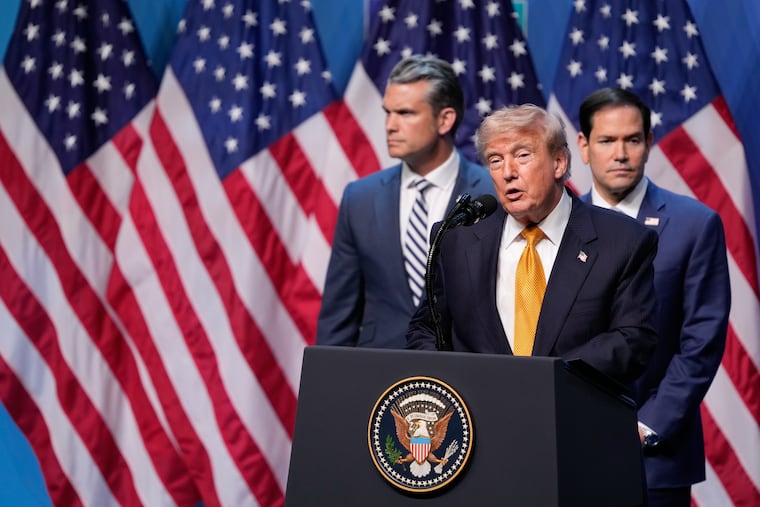
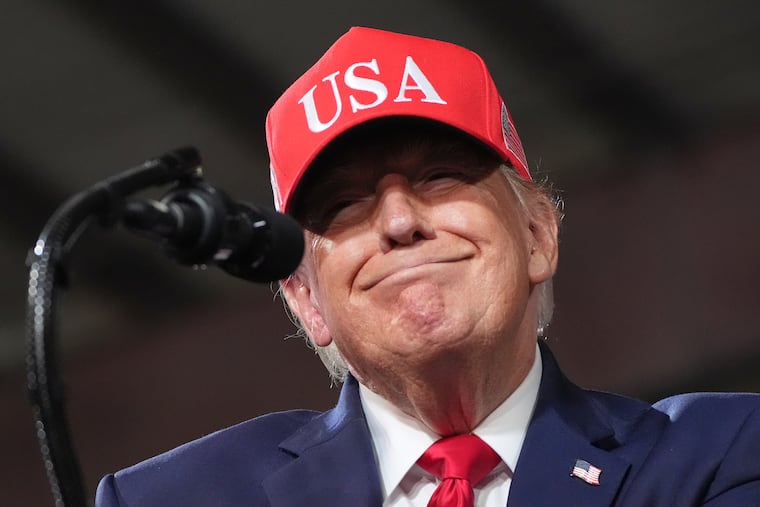
Pope Leo XIV should stick to his lane. President Donald Trump has said it, loudly. Pete Hegseth’s Pentagon staff called the pope’s ambassador to the U.S. on the carpet to make it clear. Vice President JD Vance is so convinced of it that he tried to school the Augustinian pontiff on Augustine’s just war theory. Exactly what does the current administration imagine is within the pope’s proper purview?
According to Secretary of State Marco Rubio, it is not the pope’s positions on politics, science, or economics that we should pay attention to. We — or at least Roman Catholics like Vance and Rubio — should only look to the pope in matters of faith and morals.
As a lifelong Catholic, scientist, and theologian, I wonder how they think this division is supposed to work.
Am I supposed to park my moral compass — formed by my faith — at the door of the laboratory? How then should I make decisions about my research area?
» READ MORE: Pope Francis’ approach to science and faith emphasized our duty to wield both with care | Opinion
I could choose based on what it would do for me: bring in a lot of grant money for my lab, make me famous, make me rich. Or I could choose what it might do for the world and its people. I could worry about what use my research could be put to. The methods I developed have been used both to design better drugs and to create better weapons of mass destruction. These decisions are not always clear-cut. I value multiple perspectives, including those drawn from my faith, as I struggle to choose wisely.
It’s a circular argument at best: that faith and morals are only and ever about faith and morals. That they are meant to direct how I should pray and worship, but not how I manage my life outside the walls of the church. I struggle to imagine there is a separate set of morals I should turn to in the rest of my life that are utterly unmoored from my faith.
Faith and morals are precisely what inform my politics, what guide my thinking about economics and social policy and climate change.
In his Book of Hours, the poet Rainer Maria Rilke says, “When I go toward you, it is with my whole life.” I am not one person in the lab and another in church, and yet someone else walking down the sidewalk.
I do not rely on a Magic 8 Ball to decide whether it is immoral to work on weapons; I turn to my conscience.
The Catholic Church teaches that our own conscience is the ultimate arbiter of our choices, in and out of church. Not professors or pundits or presidents or even popes have the right to override our consciences. As Cardinal Joseph Ratzinger, who would become Pope Benedict XVI, noted, “Over the pope … there still stands one’s own conscience, which must be obeyed before all else.”
» READ MORE: 5 Philly Catholics on the greatest challenges Pope Leo XIV faces | Opinion
The church is also clear that the dictates of conscience we must follow are not just vague feelings, nor excuses for justifying whatever behavior we want to engage in.
Conscience must be carefully and seriously formed. We must be open to the truth, seeking the facts. We must have one ear out for what is happening in the world, but likewise be listening to what the Scriptures and Catholic teaching have to say. Our experiences matter. Our prayer matters. This is a lifelong process, approached in humility, not tossed off in a midnight social media post.
Pope Leo has said his primary job is not politicking, but preaching the Gospel, and I’m listening with the ears of my conscience. That Gospel says feed the hungry, care for the sick, and welcome the stranger. Not only the deserving hungry, not only the sick who can afford healthcare, not only the immigrants who worship as I do, without limitations.
It demands I recognize the dignity inherent in every human life. It may not be practical or even possible to do this in the current world, but any solutions will require that both the personal and the political be brought to bear. It is not possible to disentangle one from the other.
I hear this administration saying that our morals are supposed to be detached from our everyday lives. That our beliefs — or our unbeliefs — are an entirely private matter. If we aren’t making our choices based on our own well-formed consciences, whatever tradition has formed them, then are they our choices at all?
» READ MORE: Cutting NIH funding puts my life on the line — and maybe yours, as well | Opinion
Faith and morals are precisely what inform my politics, what guide my thinking about economics and social policy and climate change. It’s why I support my local food bank, advocate with my representatives for more funding for the National Institutes of Health, and use public transportation. Are there any decisions I make where my faith doesn’t play a role? Sure. Do I want mango or lemon water ice at Rita’s? But for the rest of it, I want my moral compass to help me navigate these challenging times.
Conscience isn’t a lane; it is the map that lets us find our way through all the lanes. Pope Leo is reminding us to not leave it behind.
Michelle Francl-Donnay is a professor of chemistry at Bryn Mawr College, an adjunct scholar at the Vatican Observatory, and a parishioner at Our Mother of Good Counsel Church in Bryn Mawr. Her two most recent books are “Prayer: Biblical Wisdom for Seeking God” and “Steeped: The Chemistry of Tea.”