Fearmongering does not deserve a platform in medicine
Misinformation about vaccines from the highest levels of government is putting children at risk, even killing them.
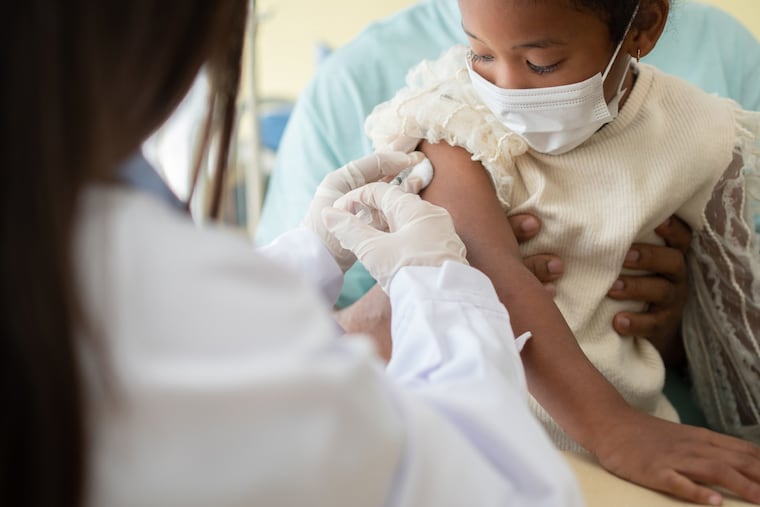
In February 2025, I lost a little girl with sickle cell to the flu.
For patients with sickle cell, minor infections can progress to severe illness and even death. Aware of this risk, the child’s parents were immensely cautious during viral seasons and diligent in ensuring she received regular vaccines.
Despite their best efforts, the flu was strikingly rampant in the wake of decreased vaccination trends: In the 2024-2025 season, 289 children died from the flu, making it one of the deadliest outbreaks of recent times. The flu vaccine rate among children during that time was reported at less than 50%, a rate that continues to decline.
A little more than a year later, I went on to care for the girl’s little brother, also a patient with sickle cell, whose parents now live in perpetual fear after having faced the worst possible outcome once already.
As of January 2026, 52 children have died of the flu — 90% of these children were unvaccinated. For my patients and many other children with immunocompromising conditions, herd immunity, access to immunizations, and infection control is truly a matter of life and death.
Vaccines, quite literally, save their lives.
In the same week, I cared for an otherwise healthy little boy with multifocal bacterial pneumonia who required a lengthy admission and a chest tube to help control the infection. Because of parental choice, he was not immunized and therefore not protected against the bacteria that caused this infection.
Despite the significant distress that this prolonged hospitalization brought upon the child and his parents, they continued to refuse immunizations at the time of discharge, citing the new Centers for Disease Control and Prevention (CDC) recommendations as the reason for their refusal.
We do not take lightly any ounce of health information, clinical recommendation, or preventive health guidance that we provide.
While these stories center around vaccines, at their core, they’re really about something much bigger.
When I decided I wanted to be a pediatrician, all I wanted was to take care of children and make their lives just a little bit better, a little bit longer, and a little bit safer. I never could have imagined that practicing pediatrics would turn into political warfare in which the only casualties, in the long run, are the children themselves.
As a pediatrician, I have spent countless sleepless nights worried about your children, reading about ways to help your children, and staying up to date with the research that allows me to best care for your children. I have cried, holding tiny hands and tiny feet, feeling sorrow and gratitude all in one to simply have had a moment to exist in their orbit.
The reality is, pediatricians are underpaid, undervalued, underestimated, and undersupported. Despite all of that, we show up every day because we care, wholly and genuinely, about your children. We do not take lightly any ounce of health information, clinical recommendation, or preventive health guidance that we provide. And we certainly reap no benefits by continuing to encourage the evidence-based information that allows us to keep your children safe.
Again: Vaccines save lives — this is a fact.
Just as importantly, we understand that politics and fearmongering do not deserve a platform in medicine, not when the cost is children’s lives.
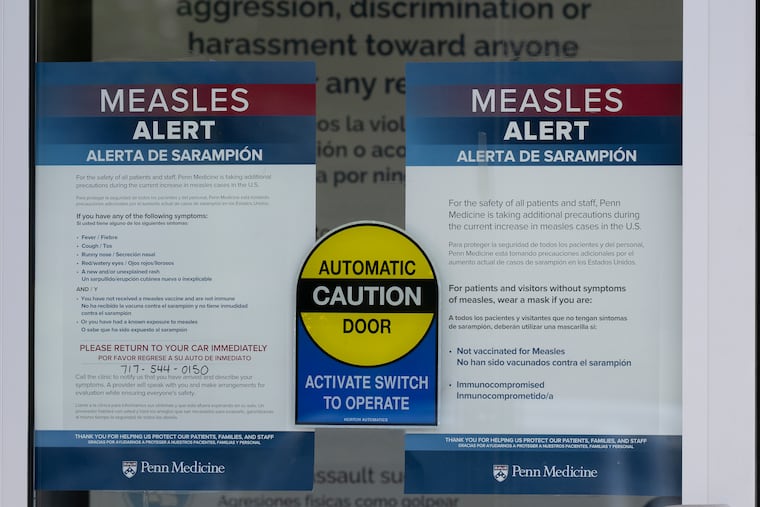
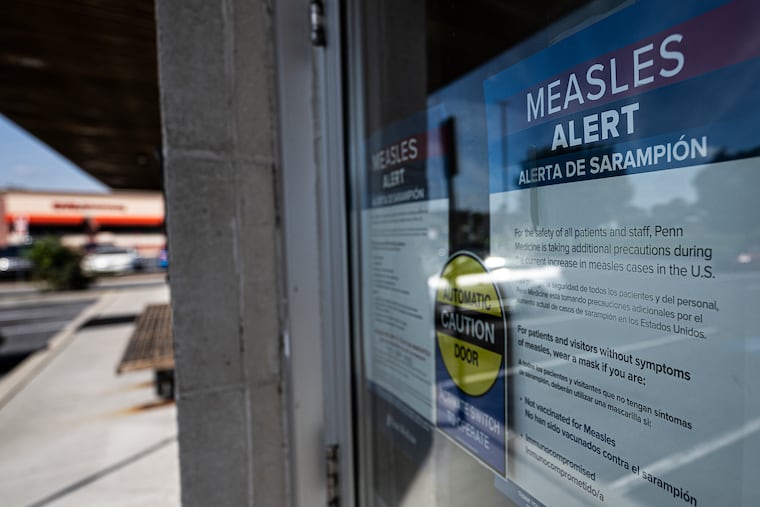
As a result of deviation from guidelines recommended by the American Academy of Pediatrics, the rate of vaccinations has continued to decline, with exemptions reaching an all-time high of 3.6% in the 2024-2025 cycle. These immunization gaps have resulted in the reemergence of previously controlled diseases, including measles, which reached a historic high since its elimination in 2000.
Such staggering statistics infiltrate pediatric practices nationwide, as providers continue to advocate and educate families to believe that our years of training and scientific research is trustworthy.
When I became a pediatrician, I never imagined that I’d have to plead to be allowed to save children’s lives. Now, it is a part of the job we never anticipated, but one we will not shy away from because your children and the possibility of giving them long, healthy, joyful lives is worth it.
If only you will allow us.
Gloria M. Gutierrez is a pediatric resident in Philadelphia. She is a first-generation physician and immigrant. Her work focuses on health disparities and minority patient populations.

Inquirer Opinion Newsletter