Finding a trickle of hope for Pennsylvania’s streams in 2026
The commonwealth’s waterways are less healthy, but a new focus on small creeks could turn things around.
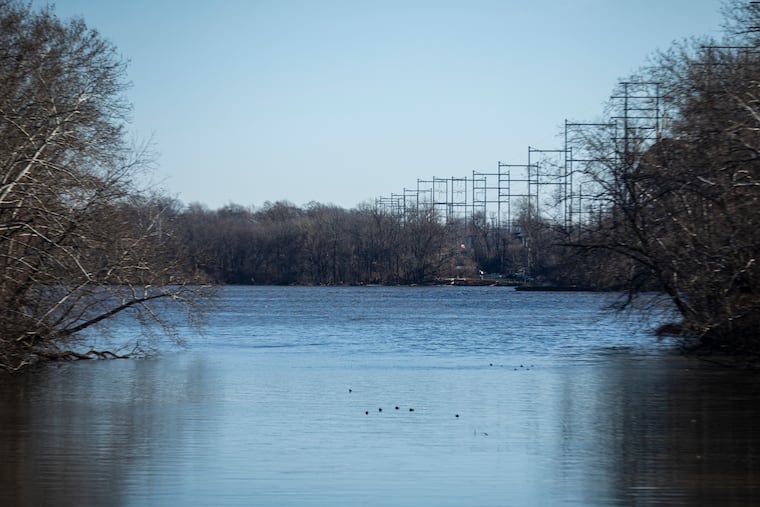
The Delaware River, the Chesapeake Bay, and other flagship waterbodies make news headlines with stories of the long and costly struggles to restore their fish and other wildlife.
But while these high-profile efforts grind on, the real story of the Delaware River’s health hits closer to home.
Beneath the ice on small streams across Pennsylvania, thousands of species of fish, insects, snails, and mussels are waiting quiescently for spring, just as fishers, kayakers, and water lovers wait out the cold winter months, eager for spring.
Poor report card
Alarmingly, Pennsylvania’s recent river report card indicates that some of those streams are likely to wake up in the spring more degraded than last year. The tally of impaired streams and rivers in Pennsylvania grew by 852 miles since 2024 (longer than a round-trip drive from Philadelphia to Erie), while only 154 miles of streams (shorter than a round trip to Lancaster) were removed from that list.
Overall, our rivers are worse off than they were two years ago, and 37% of the state’s waterways remain impaired. If there were a hospital for polluted streams, five patients would have entered for every one patient discharged. And the larger the river and the broader the watershed, the bigger the challenge of bringing back fish and wildlife.
While the report isn’t uplifting, we are fortunate that the state Department of Environmental Protection produces a thorough and transparent analysis of the facts on where and why improvement and degradation have occurred. The report shows us that the key to faster success is focusing efforts around small headwater streams.
These streams, the ones our roads carry us over every day in our communities and that often go unnoticed, are where we find a trickle of hope: Watershed improvements lead to cleaner streams and healthier fish and wildlife populations. They are also the streams that can bring communities together to protect open space, strengthen zoning laws, and form partnerships to target local sources of pollution.
Restoring health
Usually, the science shows us that streams don’t need invasive repairs with backhoes and chain saws akin to a surgeon’s curette and bone saw; they need, like many people making New Year’s resolutions, to go on a diet — for streams, one that’s lower in pollution and higher in leaf litter.
Practically, this means aggressive reduction and treatment of stormwater runoff, eliminating sewer overflows, upgrading sewage treatment, preserving and planting forests, restoring the healthy agricultural soils that benefit farmers, and reducing the use of chemicals on our own properties.
Just as evidence-based medicine improves health outcomes and lowers costs, evidence-based restoration improves biological outcomes for our streams and rivers.
We expect 2026 will bring news of the important progress being made to the Delaware River, as the Philadelphia Water Department will soon be required to meet new water quality standards. Cheer for the Delaware and other superstar rivers, but remember that progress starts at the source of pollution.
Therefore, in 2026, we hope to see a new focus on clustering pollution reductions and protections in smaller watersheds, where measurable improvements in fish and wildlife communities are faster, cheaper, and easier to achieve. That will require more DEP staff to make those measurements, more engaged citizens to champion local actions, and more science to guide the rehabilitation of our streams and watersheds.
Just as evidence-based medicine improves health outcomes and lowers costs, evidence-based restoration improves biological outcomes for our streams and rivers.
The list of potential pollutants is long, so research is needed, now more than ever, on how to restore fish and wildlife at the lowest cost.
Scott Ensign is the assistant director and a research scientist at Stroud Water Research Center. David Arscott is the executive director and a research scientist at the Stroud Center.

Inquirer Opinion Newsletter