Trump should follow George Washington’s example and let the new East Wing ballroom be designed by the people
In 1792, the nation’s first president opened up the design of the White House to a public architectural competition. Why shouldn’t the 47th president do the same with his new pet project?

In 1792, President George Washington held an architectural competition for what would become the White House. Having dismissed French engineer Pierre L’Enfant, the man responsible for the layout of the federal city, who wanted to build a vast palace for the chief executive, Washington called for a democratic, open competition to design the President’s House.
None other than Thomas Jefferson himself submitted a proposal for the project, which was eventually won by Irishman James Hoban. The White House as we know it today is largely the result of Hoban’s submission, which was modeled on the neoclassical Leinster House in Dublin, and informed by Washington’s egalitarian sensibilities.
Design competitions for important public commissions are a time-honored architectural tradition. Ideas from all sectors of the design community can inform decision-making and inject new ideas into the public discourse about architecture.
Architecture, after all, is a direct reflection of who we are, our values, and our aspirations. Enabling a robust public discussion for signal public projects is an essential way to keep architecture relevant.
Think of how Maya Lin’s evocative pastels upended the architectural status quo in her winning submission for the Vietnam Veterans Memorial in Washington, D.C.
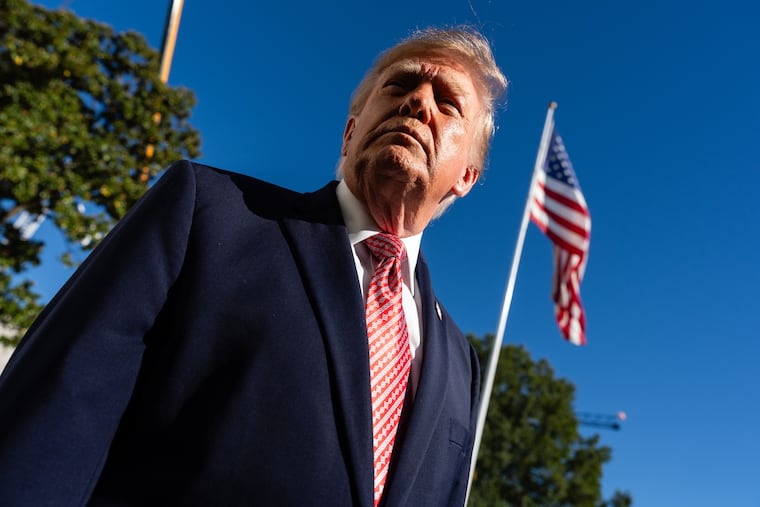
This comes to mind as we debate the future of the East Wing of the White House under President Donald Trump’s proposal to add a 22,000-square-foot ballroom to the rest of the structure.
All told, the new East Wing will encompass 90,000 square feet. In addition to the banquet space, the updated extension will also include new offices for the first lady and a movie theater.
As of this writing, the National Capital Planning Commission, which was expected to rubber-stamp the proposal, has postponed its meeting due to the 9,000 pages of predominantly scathing public comment it received.
It’s important to note that the White House has been altered from the jump, as it has adapted to the changing nature of the presidency and the times.
Jefferson, working with Philadelphia architect Benjamin Latrobe (think Centre Square Pump House), added the flanking colonnades to screen stables.
Teddy Roosevelt engaged noted architect Charles McKim of McKim, Mead & White (think of the 1910 masterpiece that was New York’s original Penn Station) to rationalize and modernize the interior while adding the West Wing.
And the entire interior was completely rebuilt by Harry S. Truman, who replaced a jury-rigged structure that had evolved over the years with a completely new steel frame.
And who can forget Jacqueline Kennedy’s Blue Room, which she introduced to us in hushed tones on TV in the early 1960s.
President Trump has the same right to add his stamp to the house and accommodate what he sees as a pressing need for a proper ballroom space. And we can debate what that means and what the look, feel, and scale of the space should be, and how it integrates with the rest of the campus.
And therein lies the rub: The debate about the East Wing has been essentially stifled.
The president is not a man to sit still, nor does he hold much truck with process. His vision for the ballroom emerged whole cloth last summer, and before we knew it, the East Wing had come down, and the steel had been ordered. Just like that. No public debate. No professional review process.
In all honesty, President Trump’s proposal deals a devastating blow to a building that, despite the enormity of its significance, is still very much of a residential scale.
The ballroom addition dwarfs the main house by a factor of two, and as a recent modeling by the New York Times demonstrates, completely subsumes the delicacy of the campus. It’s as if the main concourse of 30th Street Station in Philadelphia were grafted onto Independence Hall.
Which brings us back to Washington and his democratic instinct to eschew a presidential palace for the chief executive in favor of an open call for ideas for a President’s House.
What if we were to create a competition for the new East Wing and ballroom? How would we frame the problem statement? What needs must be met? What should be the relationship between the new addition and the historic core? What role do architectural style, language, and vocabulary play? What does the new wing say about our values and principles?
These are important questions that a competition could surface, and — like Lin’s dark-horse submission for the Vietnam Veterans Memorial — could surprise us with new ideas, new ways of seeing the world, and new ways of communicating.
The White House is too important a symbol of who we are as a nation to be consumed by President Trump’s East Wing addition. Let the people speak, and let Washington’s precedent of open competition inform our next steps.
Harris M. Steinberg is a fellow of the American Institute of Architects. He was the founding executive director of PennPraxis at the University of Pennsylvania’s Weitzman School and the Lindy Institute for Urban Innovation at Drexel University.