Let’s celebrate the first female physicians trained in Philly, but recognize that gender challenges remain
Women constitute approximately 50% of U.S. medical school matriculants — a milestone that reflects tremendous progress. But the representation of women in medicine does not always translate to equity.
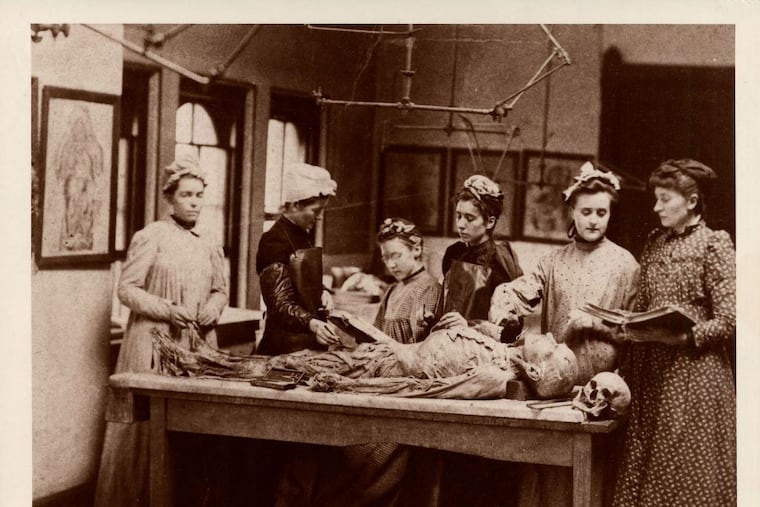
Before women could vote in the United States, they were earning medical degrees in Philadelphia. As we celebrate International Women’s Day on March 8, let’s take a moment to not only recognize the first female physicians trained in Philadelphia, but also examine whether the systems they challenged have fully evolved.
In 1850, the Woman’s Medical College of Pennsylvania (WMCP) became the first degree-granting medical school in the world established specifically to educate female physicians. At a time when most institutions rejected female applicants, WMCP not only admitted them but also legitimized their roles in medicine.
Alumnae of WMCP, which later merged with Drexel University College of Medicine, have earned their place in history by shaping medical education, clinical care, and public health across the United States and internationally.
Ann Preston graduated in 1851 as part of Woman’s Medical College’s first graduating class, and later became dean of the college. She fought vigorously to secure clinical instruction in Philadelphia hospitals for WMCP’s female medical students, who were routinely denied bedside training.
In doing so, she confronted resistance from male medical students and hospital faculty who opposed the presence of women in clinical settings. Her leadership ultimately secured hospital training opportunities at a time when bedside instruction was essential to legitimizing medical education.
WMCP’s persistence drew students from around the world. Anandibai Joshee, who graduated in 1886, became one of the first Indian women to earn a degree in Western medicine.
Her education in Philadelphia reflected the global reach of Woman’s Medical College and its commitment to expanding access beyond national borders. Her achievement inspired generations of women in India to pursue medical training.
That same commitment to underserved communities is reflected in another distinguished alumna, Susan La Flesche Picotte, who graduated in 1889 as the first Native American female physician in the United States.
She returned to serve the Omaha Reservation in Nebraska, providing care regardless of her patients’ ability to pay, and later founded a hospital dedicated to Native patients — one of the first such institutions established to serve an Indigenous community at a time when Native populations had little access to formal medical care.
These women were not symbolic graduates. They were institution builders. They practiced medicine in communities where care was scarce. They trained other physicians. They expanded maternal and child health initiatives. They advanced public health principles before the field was formally defined.
Today, women constitute approximately 50% of U.S. medical school matriculants, a milestone that reflects tremendous progress. But the representation of women in medicine does not always translate to equity in structure or leadership — progress does not equal parity.
Women remain underrepresented in department chair positions, deanships, and executive hospital leadership roles. Enduring gender pay gaps also remain across specialties. Certain fields continue to demonstrate disproportionate gender imbalance. Studies show that, despite advances, disparities persist in medicine, including in leadership advancement, compensation, research funding, invited speaking opportunities, major authorship positions, prestigious awards, and other forms of professional recognition.
The barriers are no longer formal admissions policies, but structural inequities.
The legacy of the Woman’s Medical College of Pennsylvania is not simply historical; it is instructive. Its alumnae demonstrated that expanding access strengthens the profession as a whole. They proved that excellence in medicine is not defined by gender, but by training, dedication, and service.
As WMCP’s successor institution, Drexel University College of Medicine inherits this legacy.
Opening the door was only the beginning. Sustaining equity requires continued attention, accountability, and leadership.
Legacy is not something we passively inherit; it is something we continuously steward.
Anita Gaurnier-Hausser is the director of the interdisciplinary health sciences program and an assistant professor at the Graduate School of Biomedical Sciences and Professional Studies at Drexel University College of Medicine. Younes Labsh Abazid is a postgraduate candidate in interdisciplinary health sciences at the College of Medicine and is president of the Pre-Medical Pre-Health Graduate Student Association.

Inquirer Opinion Newsletter