Does Cory Booker really have a shot at the White House?
With experience, media savvy, and a bipartisan record, the senator from New Jersey checks many of the boxes needed by Democratic hopefuls. But critics still wonder if he’s more stunts than substance.
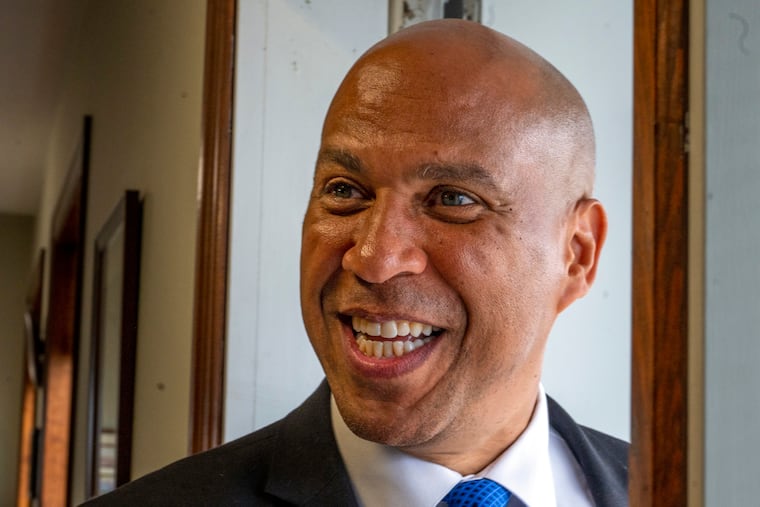
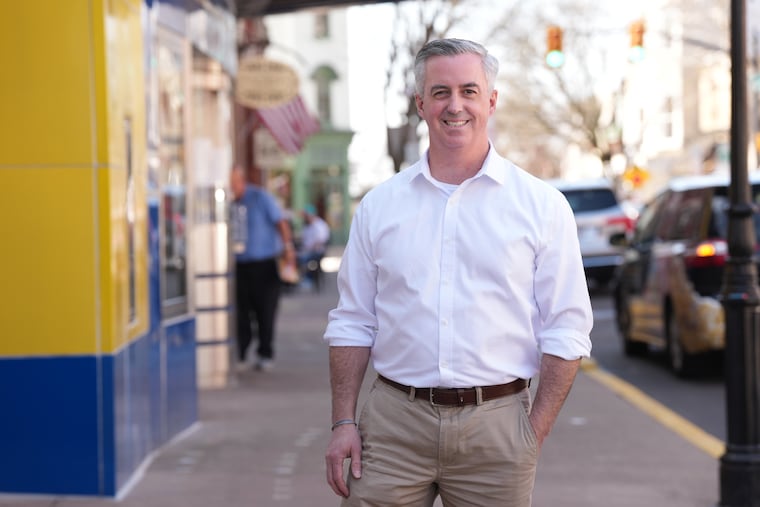
Cory Booker passed through Philadelphia the other day promoting his new book, which — if recent political trends are to be believed — can only mean one thing: New Jersey’s senior senator will likely run for president next year.
Other potential Democratic presidential hopefuls have published books recently, including Govs. Josh Shapiro, Gavin Newsom, and Andy Beshear. None has announced their candidacy, but the book tour is often the prelude to the campaign.
So, does Booker have a shot at the White House?
On paper, he seems like a strong candidate. Booker is smart: Stanford University, Rhodes scholar, and Yale Law School.
He is experienced. Booker was elected to the Newark City Council at age 29, served two terms as mayor of “Brick City,” and then was elected to the Senate in 2013.
Booker’s bipartisan record could attract independents in key swing states. As one of only five African Americans in the Senate, he could also energize Black turnout.
He is media savvy. As mayor, Booker used Twitter to engage directly with constituents to help shovel snow and deliver diapers. He even rescued a woman from a burning building.
Booker now chairs the Senate Democratic Strategic Communications Committee and helped boost online engagement 430% while adding 20 million new followers across platforms.
Booker has led by example. In 1999, as a city councilman, he slept in a tent and went on a 10-day hunger strike to draw attention to open-air drug dealing, violent crime, and the poor conditions at a public housing complex in Newark. He also lived in a housing project from 1998 to 2006.
Booker’s record-setting, 25-hour and 5-minute speech on the Senate floor last year provided a needed antidote to Donald Trump’s relentless attacks on democratic norms.
“These are not normal times in our nation, and they should not be treated as such in the United States Senate,” Booker said during the marathon speech for which he stood the entire time. “The threats to the American people and American democracy are grave and urgent, and we all must do more to stand against them.”
The book, appropriately titled Stand, builds off of Booker’s speech, which highlighted more than 200 stories and letters from constituents detailing their personal hardships and Trump’s attacks on healthcare, education, environmental regulations, immigration policies, Social Security, the rule of law, and foreign policy.
During a well-polished question-and-answer session last week at the Free Library of Philadelphia, Booker provided a window into the upbeat campaign he would likely mount.
While he leveled some jabs at Trump, Booker said the current Oval Office occupant is a “symptom” of deeper problems in America. Rather than waste energy criticizing the president, he said Democrats must focus on helping average Americans.
“Trump is not the main character in our story,” Booker said. “We are the main character.”
He urged the audience to take charge of their destiny, insisting that democracy is not a spectator sport. Booker said every key moment in history, from women’s suffrage to voting rights to civil rights, “comes back to, what are we doing?”
He said we are all beneficiaries of our ancestors’ hard work, and now it is our turn to “show the best of ourselves at the worst of times.”
Booker fired off other compelling slogans, including “Change doesn’t come from Washington, it comes to Washington” and “the power of people is greater than the people in power.”
» READ MORE: Over the course of 25 hours and 5 minutes, Cory Booker points the way to oppose Trump’s abuses of power | Editorial
He said his floor speech was inspired by a constituent who cornered him in the grocery store and pressed him about the Democratic Party’s inability to stand up to Trump’s unprecedented and often unconstitutional actions.
After Booker offered a feeble response, the man asked what happened to the city councilman who fought on the front lines for change, and asked, “Are you an Ameri-Can or an Ameri-Can’t?”
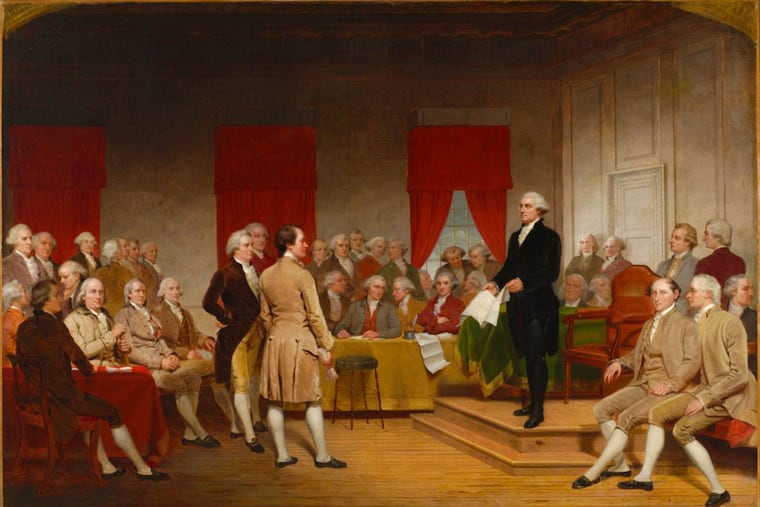
His book features positive stories about leadership from compelling figures like George Washington, suffragette Alice Paul, civil rights activist-turned-U.S. Rep. John Lewis, environmental justice advocate Ron Finley, disability rights activist Jennifer Keelan-Chaffins, and U.S. Supreme Court Justice Ketanji Brown Jackson.
The book also outlines 10 virtues needed to strengthen civil society, including agency, empathy, courage, patriotism, and humility. Left unsaid: Trump’s “virtues” focus more on the seven deadly sins.
Echoing Michelle Obama’s call to “go high” when others go low, Booker said civil rights marchers didn’t win in Birmingham, Ala., by bringing “bigger dogs and bigger fire hoses.”
» READ MORE: Cory Booker says experimenting with caffeine pills before his 25-hour Senate floor speech was ‘not a fun experience’
Booker also called out the Democratic Party for its lack of vision. He offered up some ideas that likely previewed his presidential campaign pitch, but they are easier said than done.
They include a major overhaul of the tax system by raising the standard deduction to $75,000 for joint filers, $37,500 for single filers, expanding the child tax credit, raising corporate tax rates, and closing loopholes for high earners.
Booker called for prohibiting members of Congress from trading stocks and a code of conduct for the Supreme Court, which has been plagued with ethical scandals involving Justices Clarence Thomas and Samuel Alito Jr.
The biggest applause came when Booker called for a constitutional amendment to overturn Citizens United v. FEC, the 2010 Supreme Court decision that has corrupted elections by allowing unlimited spending by billionaires and corporations.
Will that be enough to power a presidential run? Booker’s similarly positive presidential campaign pitch in 2020 failed to gain any traction.
He even failed to connect with Black and brown voters. Indeed, the audience at the Philadelphia book event was almost all white.
Critics say Booker’s political career has been more about stunts than substance.
Progressives, in particular, argue that he is too close to Wall Street and Big Pharma.
Many are outraged by Booker’s support for Israel. In August, he voted to sell more arms to Israel, even after the indiscriminate killing of tens of thousands of women and children in Gaza, and the International Criminal Court issued an arrest warrant for Prime Minister Benjamin Netanyahu for war crimes.
Booker refused to say if Netanyahu committed war crimes, and was criticized for accepting more than $800,000 in donations from the American Israel Public Affairs Committee (AIPAC) — even after claiming he did not take donations from corporate PACs.
Booker sparked backlash after being the only Democratic senator to vote with Republicans to confirm Charles Kushner to be U.S. ambassador to France.
Kushner is the sleazy father of Jared Kushner, who is married to Trump’s daughter, Ivanka.
A New Jersey real estate mogul whom Chris Christie once called “loathsome,” Kushner pleaded guilty in 2005 to multiple federal charges, including tax evasion and witness tampering. He was sentenced to two years in prison, and in 2020, received a pardon from Trump.
Booker’s vote to confirm Kushner undermined something he said weeks earlier during his heralded speech: “This is not a partisan moment. It is a moral moment. Where do you stand?”
Good question for voters and Booker. With democracy on the line, he must do more than talk a good game.