America turns 250 with its soul in the balance | Editorial
The Semiquincentennial should be cause for celebration. Instead, a great malaise hangs over the United States.
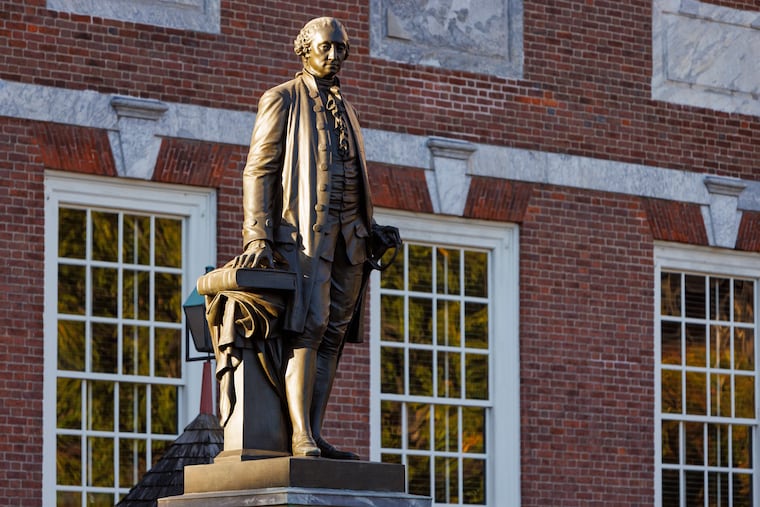
The Founding Fathers gathered in Philadelphia 250 years ago and formally adopted the Declaration of Independence, which proudly proclaimed that “all men are created equal” and endowed with certain inalienable rights, including “life, liberty and the pursuit of happiness.”
The Great Experiment’s Semiquincentennial should be cause for celebration. Instead, a great malaise hangs over the United States.
While America has an abundance of exceptional qualities, for many, the dream has never matched the declaration. Even worse, the nonstop chaos, corruption, and incompetence coming out of Washington make it feel like the founders’ belief in the fundamental rights of humanity is under attack.
The country is deeply divided, and the outcome of the battle against illiberalism has never been more uncertain. That has tempered the excitement for this July Fourth.
While many Americans, including members of this Editorial Board, celebrate the freedoms, strengths, and highest ideals of the United States, we, like the author James Baldwin, love this country more than any other but reserve the right to criticize its current leadership and what’s been done in our name.
In fact, it is not only our First Amendment right but our duty to the founders, who raised their voices against the injustices of their era, stood up to a king, and crafted an imperfect declaration of the importance of individual freedoms that has inspired generations of democracies around the world.
Their ghosts walk the streets of Philadelphia, which might explain the intensity of the ambivalence many of us feel about how best to honor America as it celebrates what was started here 250 years ago.
A recent poll found only 33% of U.S. adults are “extremely proud” to be American — the lowest rating since Gallup began asking a quarter century ago.
Those feelings are understandable. It is not unpatriotic to express concerns about the direction of the country.
After all, it is difficult to be proud when masked federal agents kill U.S. citizens in broad daylight.
It is difficult to be proud when U.S. Immigration and Customs Enforcement agents round up migrants while they work on farms in California, repair a roof in Louisiana, or wash cars in North Philadelphia.
It is difficult to be proud when a hapless defense secretary celebrates the killing — in violation of international law — of more than 200 civilians in tiny boats, who may be transporting drugs or just fishing.
It is difficult to be proud when a nation founded by immigrants sends migrants with no criminal record to maximum-security prisons in foreign lands without any due process.
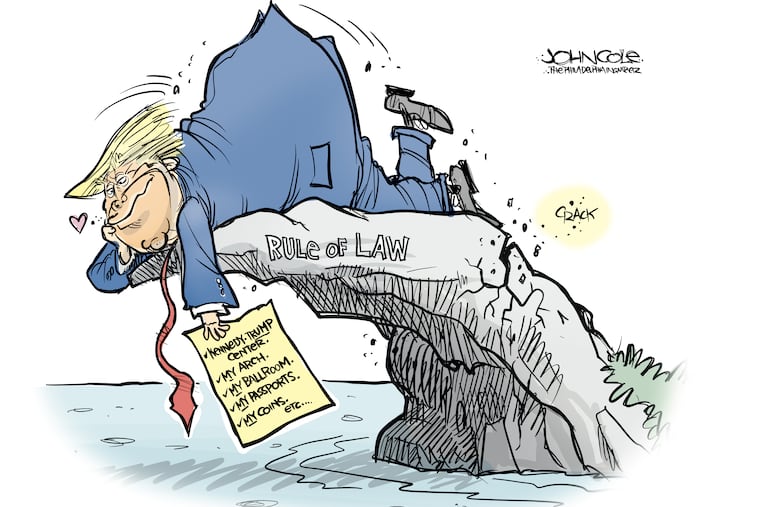
Pride does not come easily when you live in a country whose leader dismantles higher education, shakes down law firms, slashes scientific research, tramples the rule of law, and cuts off health insurance for the most vulnerable citizens.
Where is the pride in watching the world’s richest man parade across a stage with a chain saw to celebrate the firing of hundreds of thousands of federal workers? Or when he ends foreign aid for the poorest lands, leading to mass deaths?
Who was proud to lose another senseless and illegal war that cost billions and sent gas prices above $5 a gallon?
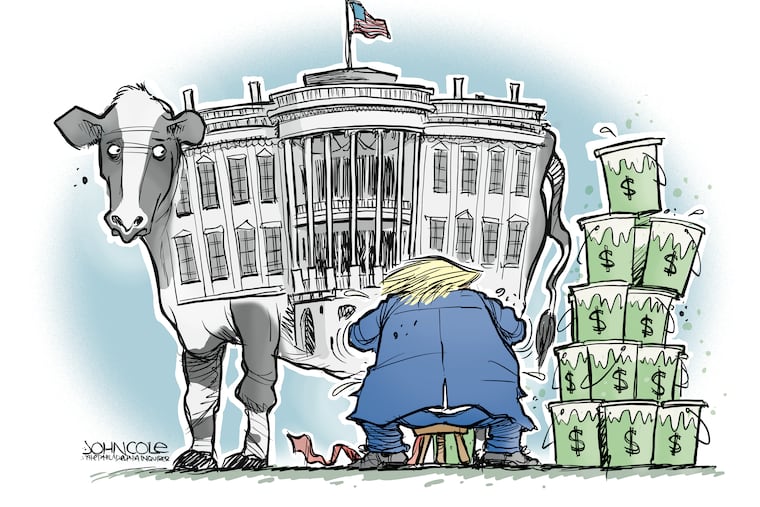
Who is proud to have a convicted criminal in the White House, pocketing $2 billion on side hustles that blur the line between policy and personal business?
How did lies, anger, and cruelty replace life, liberty, and the pursuit of happiness?
Life expectancy in the U.S. declined to its lowest level since 1996, in part from the pandemic, but also from the growing inequality in education and healthcare.
Child poverty has tripled in recent years while the rich keep getting richer.
The top 1% of American households own more stock than the bottom 90%, according to the Federal Reserve.
A booming stock market has helped to fuel a surge in wealth inequality. The number of U.S. billionaires reportedly jumped by 50% from 2017 to 2025.
Elon Musk, who recently became the first trillionaire, makes $3.6 million an hour, while more than 42,000 Pennsylvanians make the minimum wage of $7.25 an hour.
Billionaire tech oligarchs are reshaping American politics, civic discourse, media, and the economy for the worse. We have seen the enemy, and it is not trans athletes or day laborers outside Home Depot.
Much of the anger, division, and disillusionment stems from the fact that for most of the country, the American dream is out of reach.
Stagnant wages, rising healthcare costs, and attacks on unions explain, in part, why fewer than 40% of U.S. households can afford to buy a starter home priced at $200,000.
Forget pursuit of happiness; most Americans can’t afford basic necessities like groceries, utilities, and gasoline, let alone go on vacation, a recent poll found.
Turns out you can’t build a strong middle class on a gig economy, dollar stores, and legalized gambling.
Many Americans are so fed up that they are voting with their feet. For the first time since the Great Depression, more people moved out of the country than moved in, with many citizens packing up and looking for a better life elsewhere.
Then there is the long-ignored elephant in the room.
While there has been great progress over two-and-a-half centuries, the United States has failed to live up to the promise Thomas Jefferson penned while living on the corner of Seventh and Market Streets: After 250 years, all still are not equal.
The country continues to live in the shadow of slavery.
There have been efforts to right the wrong. The 13th Amendment abolished slavery in 1864. The landmark U.S. Supreme Court ruling in Brown v. Board of Education prohibited segregation in public schools in 1954.
Passage of the Civil Rights Act in 1964 dismantled institutional segregation, and the Voting Rights Act in 1965 barred racial discrimination in voting, eventually paving the way for the election of the first Black president in 2008.
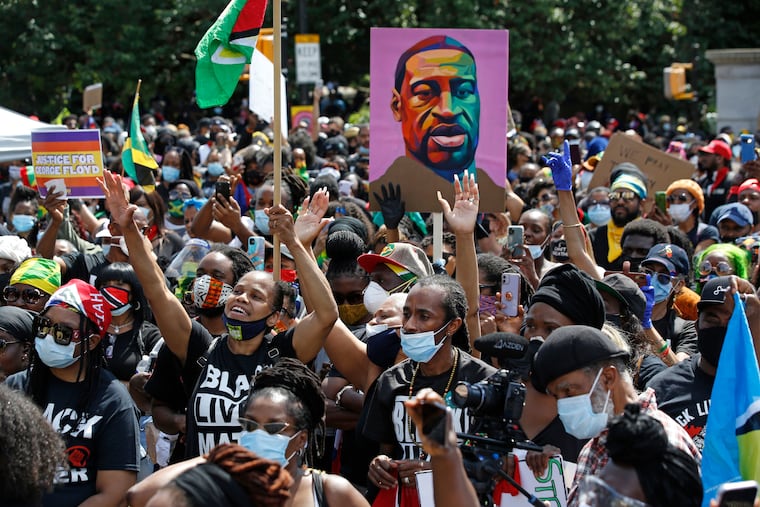
But one truth remains self-evident: Systemic racism continues to create disparities in the quality of housing, education, employment, wealth accumulation, law enforcement, and health outcomes for many Black and brown citizens.
For a lot of Americans, the reality has never matched our nation’s founding principles. Yet, every day, millions of people do their part to help the United States become a better version of itself, a more perfect union.
Two hundred and fifty years ago, a small group of citizens met in Philadelphia and changed the world. Keeping the republic requires all of us to preserve, protect, and defend the Constitution from the current attacks coming from within.
Still, the question remains: Should we raise the American flag? Or fly it upside down in a sign of distress? Or lower it to half-staff in mourning or remembrance of things past?
Like any assessment of the state of the American Experiment, there is no easy answer. Perhaps, on the Semiquincentennial Fourth of July, the most appropriate response might be to simply sit briefly with the discomfort of the nation’s dichotomies — the contradictory truths that coexist.
And after taking a moment to acknowledge the grand vision that birthed a nation where all men are created equal — a vision yet to be fulfilled — let’s continue the work to see it realized.