A court was right to stop the sale of its water system, but Chester still needs help | Editorial
The state Supreme Court recently determined a bankruptcy receiver cannot sell the Chester Water Authority to help address the city’s financial woes.
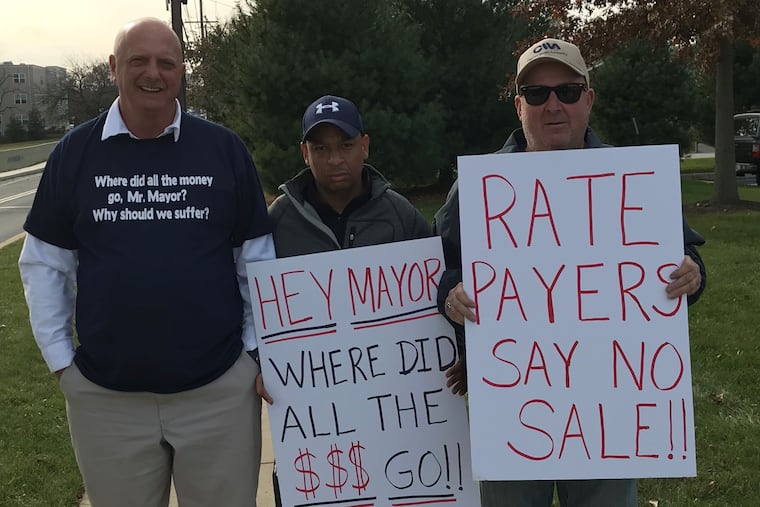
The recent state Supreme Court ruling that a receiver can’t unilaterally sell the Chester Water Authority to a for-profit company was a big win for its customers. But it complicated a plan to use the sale to bail out the city of Chester.
While the court ruling is the final word on the sale, there is more to be done to safeguard utility customers across the commonwealth and help the residents of Chester.
The best way to protect all utility customers in Pennsylvania would be for the General Assembly to repeal Act 12. The misguided legislation, spearheaded by lobbyists, opened the door in 2016 for the sale of municipal water and sewer systems.
The law was supposed to help distressed utility systems. Instead, for-profit companies have largely purchased well-run systems and massively and routinely increased the rates that customers pay.
Since Aqua Pennsylvania purchased the sewer system in New Garden Township in Chester County in 2020, for example, residents have seen their rates increase 200%, according to a consumer group fighting the sales. Other cities and towns have seen their bills go up by 100% or more.
» READ MORE: Officials should be ready to protect Philadelphia from Trump’s immigration overreach | Editorial
In short, Act 12 has failed to accomplish what it was allegedly designed to do.
To his credit, State Sen. John Kane, a Democrat who represents parts of Chester and Delaware Counties, has proposed repealing Act 12, but few lawmakers in Harrisburg are brave enough to stand up to the influential for-profit water companies.
Short of a repeal, lawmakers must reform Act 12. At the very least, the law should be amended to require that the sale of any public utility be put to a vote. The residents who pay for the utility should decide whether to sell it, not the local politicians. If residents approve a sale, the utility should be put out to a public bid and not negotiated in private.
Such reforms, while not perfect, would give residents some protection from local elected officials selling off public utilities for short-term gains without their input.
The court was right to rule that the city of Chester could not sell the water authority. After all, the authority serves roughly 200,000 people in more than 30 municipalities across Chester and Delaware Counties.
It is understandable that the city wanted to sell the water authority. The City of Chester, which has about 34,000 residents, filed for Chapter 9 bankruptcy in 2022.
Aqua offered to buy the water authority in 2017 for $320 million. Two years later, the for-profit company increased its offer to $410 million.
The board that oversees the water authority unanimously rejected the offer, but the city council in Chester viewed the sale as a way out of its financial problems.
» READ MORE: Removal of slavery exhibit from the President’s House will not whitewash history | Editorial
But any short-term gain for the city would likely have resulted in a sharp increase in water bills for customers. This would have put more financial stress on residents in Chester, which has a poverty rate of 30%, making it one of the poorest municipalities in the state.
Residents in Chester and Delaware Counties would have also seen steep increases in their water bills. The water authority is already well run, so there is little to be gained by a sale.
However, the court’s ruling leaves the city of Chester in a bind. There is a vehicle in place to help Chester. Act 47, known as the Municipalities Financial Recovery Act, supplies funding to help municipalities in financial distress.
The city of Harrisburg, the city of Chester, and the borough of Newville are already part of the Act 47 program. State lawmakers should increase funding for Act 47 to help the commonwealth’s distressed municipalities.
That is the best solution to a thorny problem. It also avoids the sale of public utilities that will only result in bigger bills coming due for ratepayers.
Just ask the residents in New Garden and other towns whose local elected officials sold them out to for-profit companies.