Trump’s assault on free and fair elections continues | Editorial
With the midterms less than a year away, local and state officials must remain steadfast, and voters must demand that their rights are protected.
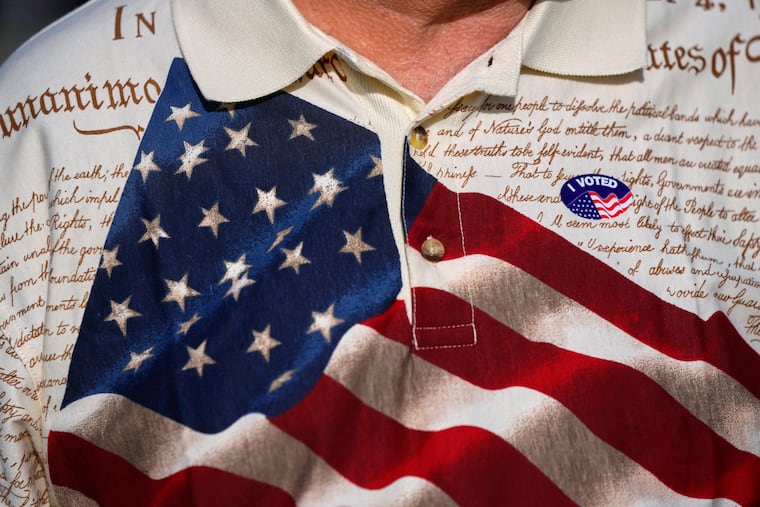
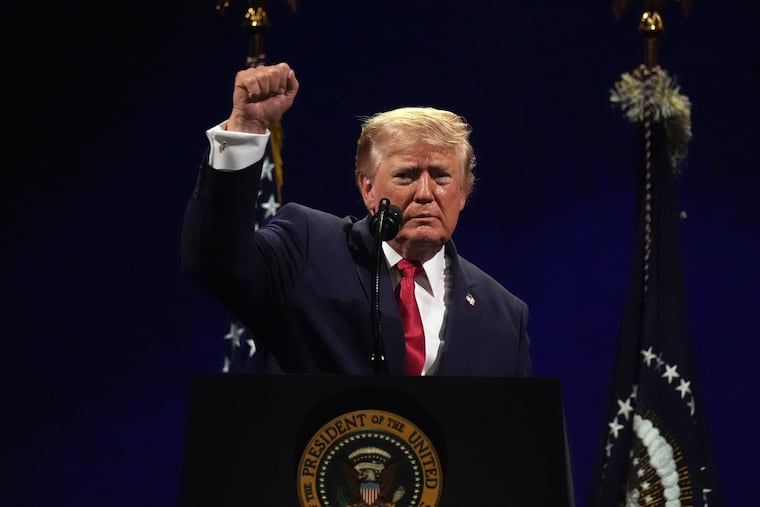
There are many things Donald Trump could regret about the aftermath of the 2020 election.
Perhaps it could be his nonstop lying about voter fraud, or how he was recorded asking Georgia election officials to “find” him the votes he needed. Maybe he has remorse about inciting the mob that attacked the U.S. Capitol, violence that led to seven deaths and more than 100 injured law enforcement officers.
But no. What the president “regrets,” as he told the New York Times recently, is not ordering the National Guard to confiscate voting machines in swing states he lost.
If the idea of military reservists marching into Philadelphia polling places and walking out with the pesky will of the people seems far-fetched — just another of Trump’s rambling musings — then consider that he and his enablers are already laying the groundwork to undermine future elections.
With the midterms less than a year away, local and state officials must remain steadfast in their defense of free and fair elections, and voters must demand that their rights are protected.
» READ MORE: Hahnemann redevelopment may be another victim of councilmanic prerogative | Editorial
The administration’s assault on the franchise began in March, when Trump issued an executive order seeking to exert control over election law that the Constitution does not grant the president, including demanding states avoid counting mail ballots postmarked by Election Day but received after.
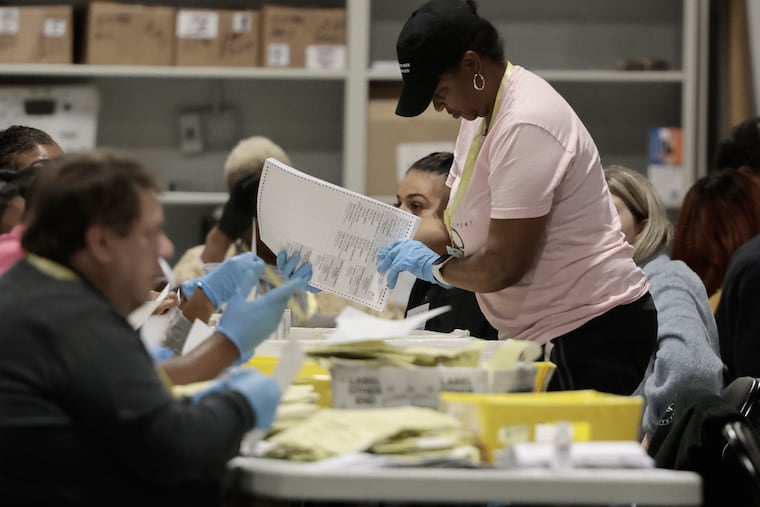
The courts have so far stopped the order from taking effect, but it is worth noting that a new U.S. Postal Service rule changes when a piece of mail is postmarked — no longer when it is dropped off, but when it is processed. That means procrastinating voters in states where a ballot counts if mailed by Election Day can no longer take for granted their vote will be tallied.
Trump has claimed he will target mail-in ballots and voting machines as part of his effort to “help bring HONESTY to the 2026 Midterm Elections.” He has also threatened election officials who oversaw the 2020 election with prosecution while pardoning the Jan. 6, 2021, rioters who sought to interfere with the certification of Joe Biden’s electoral victory.
Meanwhile, starting in May, the U.S. Department of Justice demanded that states turn over their complete voter registration lists. Many states have declined to comply, including Pennsylvania, and are being sued by the government. This is sensitive data that includes Social Security numbers, dates of birth, and home addresses.
Along with privacy concerns, there are fears that the Trump administration may seek to cast doubt on voter eligibility and pressure states to purge people from voting rolls. Already, there are examples of people being falsely identified as noncitizens by federal databases.
» READ MORE: Trump’s efforts to control the Federal Reserve put the U.S. economy in jeopardy | Editorial
It is sadly not much of a leap to imagine Trump claiming widespread voting by noncitizens requires U.S. Immigration and Customs Enforcement agents be stationed at polling places. Of course, noncitizens can’t vote, but one does not need to be an immigrant to be intimidated by gun-toting masked forces who have shown they will fire first and expect no questions later.
The president has also successfully lobbied some Republican-controlled states to remake congressional maps to favor the GOP, regardless of their potential illegality. In Texas, the U.S. Supreme Court allowed 2025 redistricting maps to be used for the upcoming election, even as a legal challenge moves forward over racial gerrymandering. The high court’s conservative members are also likely to strike a blow against the Voting Rights Act this term, further emboldening voter suppression efforts.
The administration’s unprecedented machinations have fortunately run into the wisdom of the founders, who charged the states with running elections, not the federal government. The same decentralization that sometimes frustrates widespread election reform and the implementation of best practices also limits a wholesale takeover.
State election officials — Republicans and Democrats — have shown they take their charge seriously and are honor-bound to do their duty. Still, as Trump continues to consolidate power in the executive and stoke fears of widespread fraud, ensuring free and fair elections will require keeping the federal government from overstepping its authority.