With plans for a new train line, Gov. Sherrill caters to a part of N.J. that often feels overlooked | Editorial
The new Camden-Glassboro rail line expands access to public transportation in South Jersey, where residents often feel ignored by state officials compared with their neighbors to the north.

For many residents of South Jersey, statewide elections can feel a little repetitive. Candidates, typically from the much more heavily populated northern side of the state, promise to take their needs seriously. They decry the inequality in investment between north and south. Elect them, they say, and things will be different. And then, inevitably, according to South Jerseyans, money and attention are still dominated by the north.
However, over the course of her first few months as governor, Mikie Sherrill has made a couple of moves that demonstrate she might well be serious about changing this perception.
In a gesture that may be equal parts symbolic and practical, Sherrill announced her intention to move to Drumthwacket, the Garden State’s governor’s mansion in Princeton. Not only is the 18-room, Greek Revival residence close to the legislature in Trenton, it is also more centrally located than Sherrill’s hometown of Montclair, which is about 20 miles west of Manhattan. Whether her destination is Montague in the north or Cape May in the south, Sherrill will now be within a two-hour drive of just about any community in the state.
More substantive, however, is Sherrill’s commitment to building the proposed Glassboro-Camden train line. Even a cursory glance at NJ Transit’s maps reveals the deep divide in access to public transportation in the state.
North Jersey — defined, depending on whom you’re asking, as everything north of I-195 or I-78 — has nine regional rail lines connecting its towns to New York City, Newark, and each other. South Jersey has just one: a rail connection between William H. Gray III 30th Street Station in Philadelphia and Atlantic City.
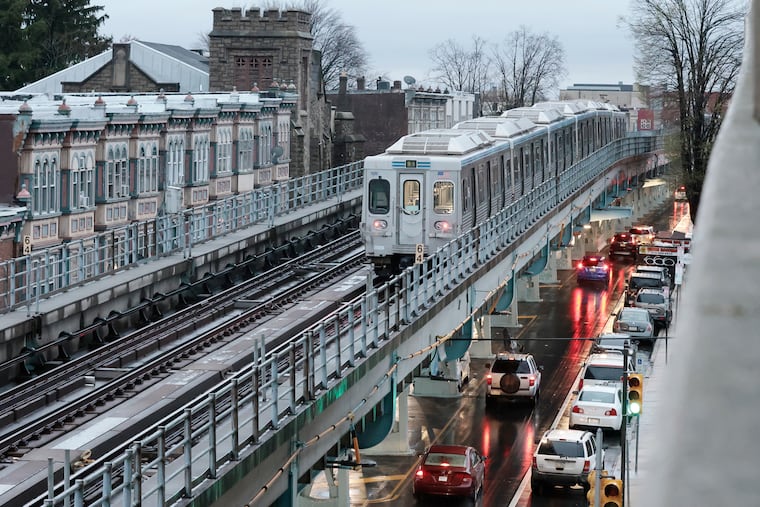
The proposed 18-mile Glassboro line would be a hybrid rail system, like the River Line that connects Camden to Trenton. It won’t allow riders to travel directly to Philadelphia; passengers would have to transfer to the PATCO high-speed line to do so. It will, however, create access between Camden, Gloucester City, Deptford, Glassboro, and other towns that are currently without any significant rail access to speak of.
Sherrill’s commitment to the project is also remarkable because of her willingness to defy the “Not In My Backyard” attitudes from some of the residents who live closest to the proposed route.
Politicians, understandably, often prioritize the anger of dedicated opponents over the regional benefits of a new transit line, which is one of the reasons why SEPTA’s proposed King of Prussia rail extension fell victim to escalating costs, leading to its cancellation.
While reasonable steps to alleviate concerns are appropriate, Sherill’s focus on the potential riders and widespread economic benefits is a welcome signal of political courage. Transit lines can’t function if towns can opt in on a case-by-case basis.
Sherrill has also committed to a scheduled revamp of the Walter Rand Transportation Center in Camden, a hub of South Jersey’s transit network. For decades, the state government’s approach to redevelopment in Camden has been one of big tax breaks for big corporations, rather than investing in the city as a whole.
The result is a city filled with office complexes — where workers may not have the time or inclination to venture out to grab lunch or drinks after hours — rather than a mixed-use business district. Sherrill’s plan for new, fast, frequent bus routes to connect transit centers is also worth pursuing.
With Camden experiencing record low rates of violent crime, the city is well-positioned to lean into the kind of transit-oriented bottom-up growth that makes communities as big as New York and as small as Hoboken coveted destinations. Kudos to Sherrill for taking the first steps in the right direction.