Mikie Sherrill for New Jersey governor | Endorsement
U.S. Rep. Mikie Sherrill is best poised to take on the Garden State's challenges, with actionable plans to produce more energy, protect ratepayers, and build more housing.
New Jersey is known for its scenic coastal communities, strong schools, and a legacy of conservation. It also has a state government that has developed a reputation for corruption and incompetence. The Garden State needs a governor who is willing to take on long-term structural problems instead of pandering to traditional parochial attitudes.
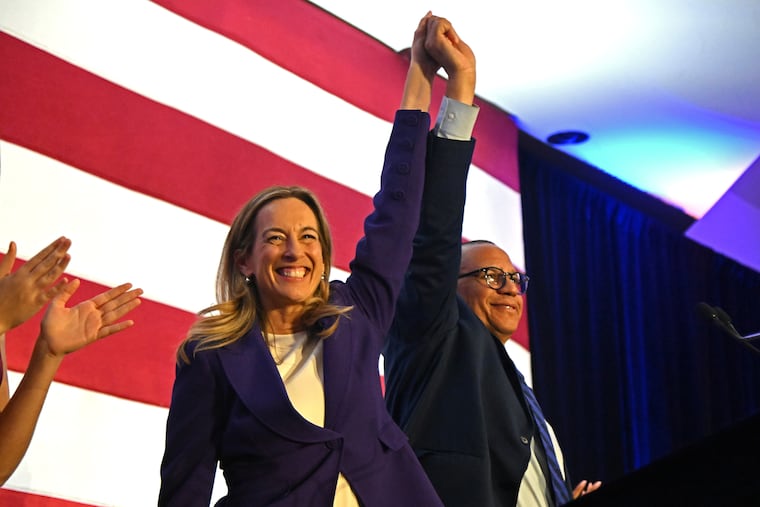
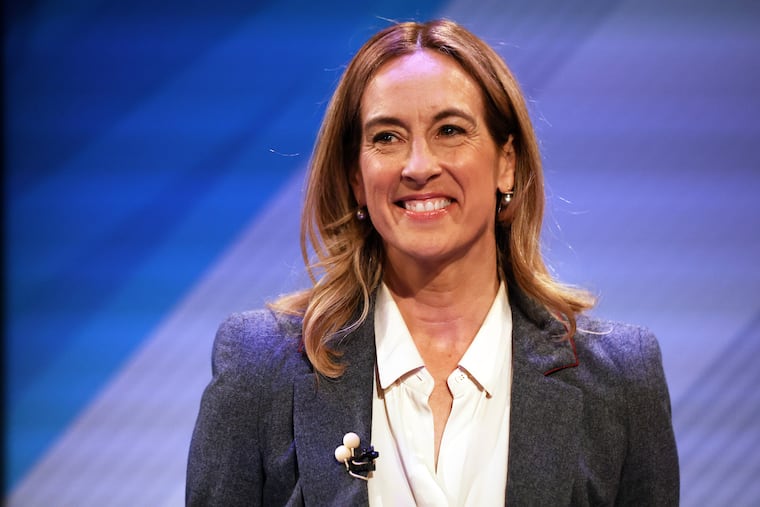
The best choice for voters in the New Jersey governor’s race is U.S. Rep. Mikie Sherrill.
Sherill has dedicated her life to public service. After attending the U.S. Naval Academy in Annapolis, Md., she became a naval aviator, including nine years of active-duty service. Sherrill also worked in the U.S. Attorney’s Office as a federal prosecutor.
Since her election in 2018, Sherrill has represented New Jersey’s 11th Congressional District, breaking more than 30 years of Republican domination in the seat. Throughout her career, Sherrill has demonstrated a welcome willingness to take on big challenges.
As New Jersey’s next governor, she will need it.
Surging energy consumption driven by data centers and new commuting habits has raised costs, home prices have skyrocketed, federal malfeasance has endangered key projects like the Hudson Gateway tunnel, and flooding threatens the Garden State’s iconic Shore, with more littoral and inland towns threatened by rain every year.
Sherrill is best poised to offer solutions, with actionable plans to produce more energy, protect ratepayers, and build more housing — particularly in cities that are well below their peak population levels and along transit corridors.
The Republican nominee, Jack Ciattarelli, is on his third attempt to take the job. His campaign is one of slogans, not ideas. In the past, Ciattarelli has sought to distance himself from Donald Trump. Ten years ago, he called him a “charlatan” who was embarrassing our country. This year, he enthusiastically sought and won the president’s endorsement.
Because Ciattarelli chose not to participate in The Inquirer’s endorsement process this year (the Editorial Board had a cordial conversation with him in 2021), it is unclear what exactly has changed his mind about Trump.
Was it the raids and harassment of immigrants and citizens by masked U.S. Immigration and Customs Enforcement agents? The $1 trillion cuts to healthcare? The gutting of the Centers for Disease Control and Prevention and health research? The intimidation and prosecution of the president’s political opponents? The appointment of deeply unqualified cabinet secretaries like Pete Hegseth and Robert F. Kennedy Jr.?
Ciattarelli is also running on ideas that would make New Jersey’s problems worse, not better.
He’s pledged to reduce state spending by 30% without noting where he’d make changes. New Jersey’s most recent budget spends over $22 billion on education from prekindergarten to 12th grade, and offers another $12 billion in aid to underfunded districts, representing more than half of all spending. This means Ciattarelli’s cuts would almost certainly require difficult choices for school districts across the Garden State. Sherrill, for her part, wants to expand education by investing in pre-K and regional magnet schools.
On energy, Ciattarelli has been even more opposed to renewable sources than Trump, rejecting wind projects that would supply desperately needed power for the nation’s most densely populated state.
Given that New Jersey is a net importer of electric power, prices will continue to rise unless new sources are added to the grid. While both Sherrill and Ciattarelli agree on expanding the use of nuclear sources, the latter’s opposition to green energy projects will leave ratepayers hobbled in the fight to lower costs.
Ciattarelli also wants to repeal New Jersey’s sanctuary policy, making it easier for ICE to harass residents at a time when its tactics have become increasingly reckless and inhumane. New Jerseyans deserve better than a governor who would collude with White House Deputy Chief of Staff Stephen Miller to persecute the workers who help ensure the state’s blueberry harvest.
With few other prominent positions on the ballot this November, the governor’s race has become a magnet for big money, with more than $200 million in spending expected by the end of the campaign. This has meant that much of the race has focused on attack ads and attempts to manufacture scandals, rather than the candidates’ plans for the state.
For Sherrill, Ciattarelli’s attacks have focused on her record at Annapolis, where she graduated but was barred from taking part in the ceremony. According to Sherrill, this happened because she refused to report classmates who had been involved in a cheating scandal. According to Ciattarelli, it is proof that Sherill herself was involved.
While the full truth of the story is unlikely to surface — and Sherrill’s explanation of why she won’t release her disciplinary record is shaky at best — the fact that the Navy allowed her to graduate and commissioned her for service suggests confidence in her abilities and integrity.
The Ciattarelli campaign and the Trump administration also acted improperly in releasing Sherrill’s military personnel file, which was initially unredacted, allowing access to Sherrill’s home address, Social Security number, and other sensitive information that should not have been shared.
For her part, Sherrill made her own explosive allegation, tarring her opponent with thousands of deaths from the opioid crisis. It is true that courts have found that marketing and promotional materials contributed to the rise of opioid use. Yet, unlike some pharmaceutical companies, medical publications like the one formerly owned by Ciattarelli have not been deemed liable for fueling the drug epidemic.
Filing a lawsuit to stop a political attack — as Ciattarelli’s campaign has threatened to do — is an overreaction, and so is Sherrill’s claim that her opponent is responsible for these deaths.
The race has also underscored the need for both campaigns to improve press access. Given how much less local media scrutiny these candidates have faced compared with their predecessors — largely the result of cutbacks at newspapers across New Jersey — the least they could do is make themselves, not just communications staffers, available to journalists on a regular basis.
If candidates can’t handle regularly answering questions from reporters, how can they handle the special interests that permeate state government, and so often stymie needed reforms?
Something else the campaigns share is their agreement that no one in the Garden State should pump their own gas. Fans of full-service gas stations can be assured their preferences will continue, no matter who wins, for better or worse.
Fortunately for voters, on the much more important issues at stake, there is a clear difference between the candidates. From housing to transportation, education to energy, Mikie Sherrill is the best choice for voters in the New Jersey governor’s race.