In standing up for human dignity over AI, Pope Leo sets the example for other world leaders | Editorial
With tech bros focused on making a fortune and President Donald Trump caring mainly about himself, it was a welcome relief to see a grown-up step into the AI debate.
Artificial intelligence is fundamentally reshaping human life in ways that can be beneficial and harmful while also posing many unknowns as the technology leaps forward by the day.
AI has already impacted every corner of our world, from big and small businesses to healthcare, government, education, and human relationships. While some have sounded the alarm about job losses, cyberattacks, invasion of privacy, misinformation growth, and a “Terminator-style” takeover, many of the fears have not been properly confronted.
Most Big Tech companies — including Amazon, Google, Meta, Microsoft, Oracle, SpaceX, OpenAI, and Anthropic — are more focused on spending billions in a race to be the dominant player and reap huge profits.
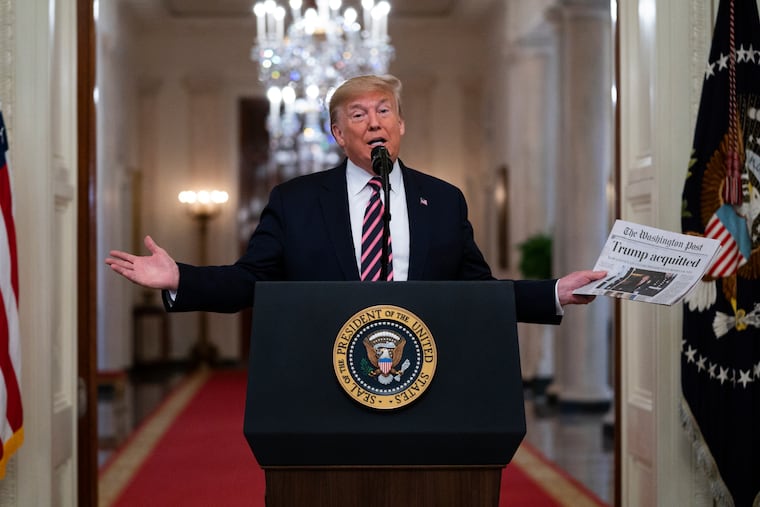
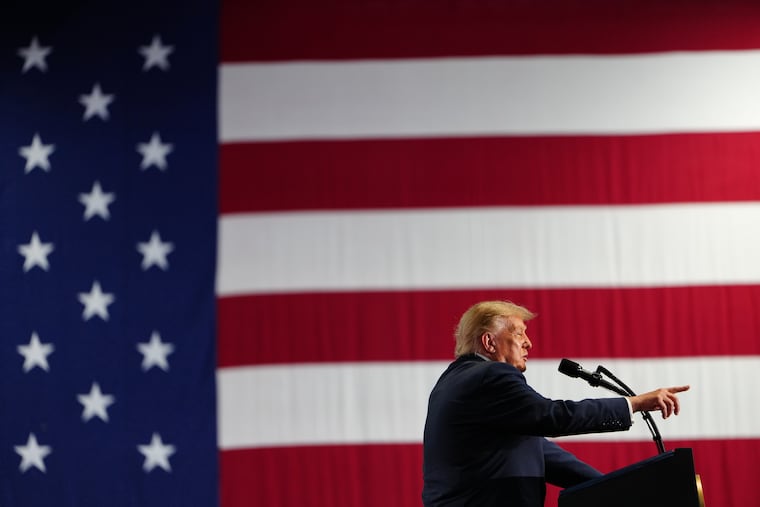
Of course, the Trump administration — which values incompetence and self-dealing — has done little substantive policy planning beyond pushing for deregulation and fast-tracking the development of data centers. (Hours after returning to the White House, Donald Trump signed an executive order canceling the AI safeguards implemented during the Biden administration.)
With the tech bros focused on making a fortune, and Trump caring mainly about Trump, it was a welcome relief to see a grown-up step into the AI debate.
Pope Leo XIV issued a 42,300-word papal encyclical, or open letter to “all people of good will,” that warned business and political leaders of the need to protect humanity from the massive disruption coming because of AI.
While the Vatican could use an editor to tighten and simplify some of the U.S.-born pontiff’s more lofty points, his message was a clarion call: The AI race could become “a new Tower of Babel” if power, profit, and data take precedence over safety, equality, dignity, and human interaction.
» READ MORE: Clash at N.J. ICE detainment facility spotlights the cruelty and folly of Trump’s immigration policies | Editorial
The pope also warned that AI could destabilize democracies by expanding the spread of disinformation. It could also lead to more war as death and destruction get turned into a video game.
“No algorithm can make war morally acceptable,” Leo wrote.
While the prospect of drones and robots on the battlefield could reduce the human costs, it could also make it easier for countries to start a war. At the same time, automating combat could lead to more civilian casualties.
Defense Secretary Pete Hegseth, who remains unfit on his best day and can’t be trusted not to share secret war plans, has demonstrated zero capacity to develop safeguards or backstops to keep an attack from spiraling out of control, let alone prevent an AI apocalypse in which machines turn on humans or spur a nuclear war.
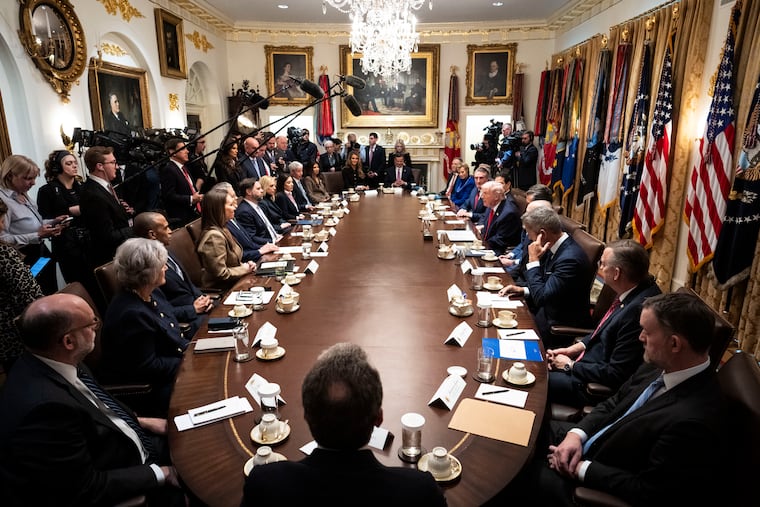
To see how unserious the Trump administration is, watch Wednesday’s pathetic cabinet meeting in which members took turns heaping praise on their dear leader. In the middle of it, Trump patted Hegseth on the bicep and said, “He loves war.” The apple polishers laughed.
Fortunately, the American pope who studied mathematics at Villanova University takes his leadership role seriously and is not afraid to stand up to Trump — unlike so many other so-called leaders.
Leo’s encyclical underscored how AI could exacerbate inequality as its enormous computing power further concentrates wealth and influence in the hands of the few.
The pope also raised concerns about how artificial intelligence could undermine creativity as users generate similar ideas. A recent analysis of 370,000 student college essays found less creativity and more homogeneous ideas.
At the heart of Leo’s message is a deep concern about its impact on human dignity.
» READ MORE: President Trump is stealing your money to pay for crime and insurrection | Editorial
In his first interview last year, he warned of “the extremely rich people who are investing in artificial intelligence, totally ignoring the value of human beings and of humanity.”
In a November social media post, the pope wrote, “The Church … calls all builders of AI to cultivate moral discernment as a fundamental part of their work — to develop systems that reflect justice, solidarity, and a genuine reverence for life.”
Some masters of the universe, fueling the AI boom, quickly pushed back.
Marc Andreessen, a billionaire venture capitalist and investor, appeared to mock the pope with an immature meme, later deleted, of a reporter raising her eyebrows as she asks actress Sydney Sweeney about her controversial jeans ad.
Peter Thiel, another billionaire venture capitalist and tech investor who bankrolled JD Vance’s political start, ridiculed Leo as a “woke American pope,” and said various pontiffs were suspected of being the Antichrist.
Thiel, who has been spreading fears of the Antichrist, also wrote that he “no longer believes that freedom and democracy are compatible.”
The pope is not alone in his AI concerns.
Geoffrey Hinton, a Nobel Prize-winning computer scientist and a former Google executive, is known as the “godfather of AI.” He quit Google last year to speak out about the technology’s danger.
Hinton, 78, said the engineers building AI systems don’t fully understand how the technology works, and warned there is a 10% to 20% chance AI could lead to human extinction over the next 30 years.
More serious-minded grown-ups like the pope and Hinton are needed, since tech bros and Trump cannot be trusted.