Trump makes a mockery of pardon power by blithely granting clemency to his allies | Editorial
The president began exploiting the system in his first term, but his pardon abuse has reached new lows with his return to the Oval Office.
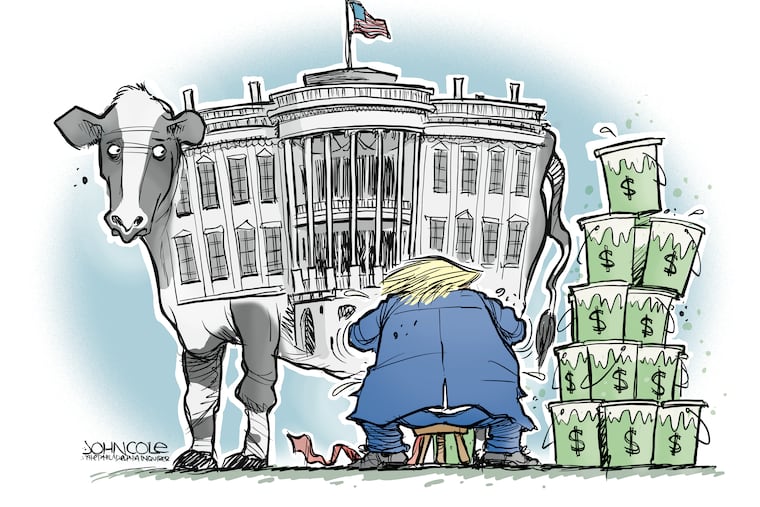
When historians conduct a full accounting of Donald Trump’s corrupt presidency, a hallmark will be how he rewarded cronies and punished perceived foes.
Trump began exploiting the pardon power during his first term when he freed several sleazy advisers, including Paul Manafort, Steve Bannon, Michael Flynn, and Roger Stone. There were even allegations of efforts to sell pardons and charge fees to get clemency requests in front of Trump.
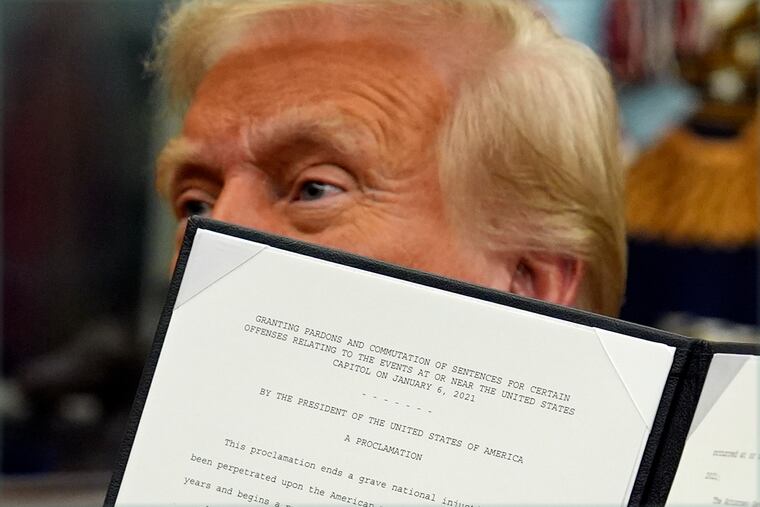
But Trump’s pardon abuse has reached new lows in his second term. On the first day back in office earlier this year, he pardoned some 1,500 supporters who stormed the U.S. Capitol on Jan. 6, 2021.
Just as the government shutdown ended, Trump pardoned dozens of allies accused of trying to overturn the 2020 election, including former White House Chief of Staff Mark Meadows and personal attorney Rudy Giuliani.
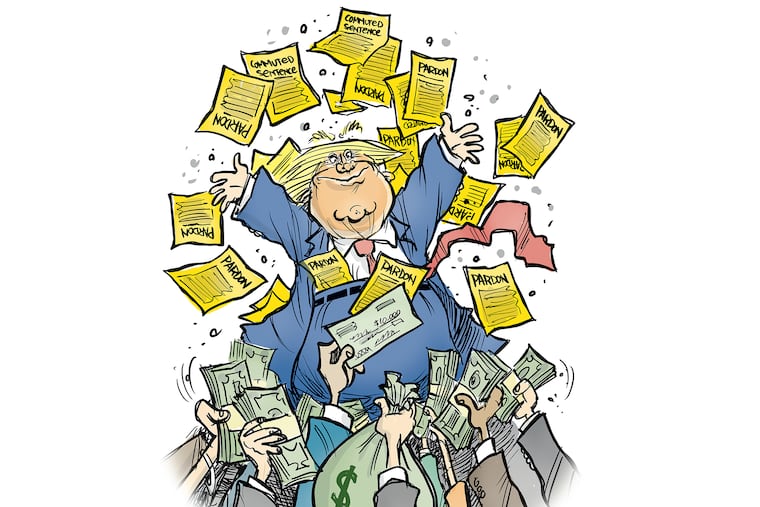
In between, Trump has pardoned political allies, celebrities, corrupt politicians, white-collar crooks, and donors. The pardon spree is part of his authoritarian playbook.
U.S. Department of Justice guidelines call for people seeking pardons to wait five years after release from prison, show remorse, evidence of rehabilitation, and file a petition through the Office of the Pardon Attorney.
Trump, also a convicted felon, has largely ignored that process. In October, he commuted the seven-year prison sentence handed down to disgraced former Rep. George Santos (R., N.Y.), who had served just three months.
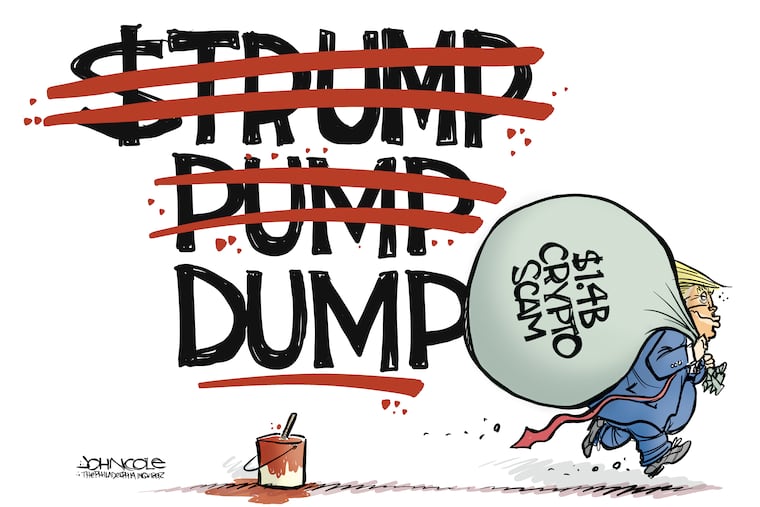
Perhaps the most brazen abuse involves pardons given to murky cryptocurrency operators who have benefited him politically and financially.
Ross Ulbricht, a Bitcoin pioneer sentenced to life in prison after creating the largest online drug marketplace, was pardoned to fulfill a campaign promise to libertarians and crypto holders who admired him for creating an illegal drug market.
In March, Trump pardoned three founders of BitMEX, a global cryptocurrency exchange, who pleaded guilty to effectively using the platform to launder money.
Last month, Trump pardoned Changpeng Zhao, a billionaire founder of Binance, another cryptocurrency exchange, who pleaded guilty to money-laundering violations in 2023. Zhao’s company reached a deal with the Trump family’s crypto venture that has generated billions of dollars in paper profits.
Rep. Maxine Waters (D., Calif.) called the pardon “a blatant example of pay-to-play corruption.”
All presidents — starting with George Washington — have issued pardons, including controversial ones. Joe Biden pardoned his son, and Bill Clinton pardoned his brother. George H.W. Bush pardoned six Reagan administration officials involved in the Iran-Contra scandal, and Gerald Ford famously pardoned Richard Nixon for his role in Watergate.
Republicans considered impeaching Clinton after he pardoned a fugitive financier whose ex-wife donated to the Democratic National Committee. Clinton at least detailed his reasoning for the pardon, even if many did not buy it.
The presidential pardon power was designed to correct miscarriages of justice, prosecutorial overreach, excessive sentencing, and show mercy.
But Trump has made a mockery of the system by rewarding scores of allies, and then using the Justice Department to go after perceived enemies.
He essentially called for federal prosecutors to indict former FBI director James Comey and New York Attorney General Letitia James for their roles in investigating him. He also suggested investigating Sen. Adam Schiff (D., Calif.), who oversaw Trump’s first impeachment and served on the House committee investigating the insurrection on Jan. 6.
The score settling is part of a broader effort to rewrite history surrounding Jan. 6. Trump pardoned several lawyers who promoted lies about the 2020 election, including Sidney Powell, Jenna Ellis, John Eastman, and Kenneth Chesebro.
Giuliani, a lead election denier, was disbarred from practicing law in Washington, D.C., and New York last year, and ordered to pay $148 million to two Georgia poll workers whom he falsely accused of trying to steal the election.
As a reward, Trump announced plans to give Giuliani the Presidential Medal of Freedom.
Tucked inside the spending bill to end the shutdown was a provision to reward GOP lawmakers involved in helping to overturn the 2020 election by allowing them to sue the federal government for as much as $500,000 over special counsel Jack Smith’s lawful search of their phone records.
Separately, Trump wants to be reimbursed $230 million for legal fees surrounding his four criminal indictments.
In all, Trump’s pardons have cost taxpayers and victims more than $1.3 billion in restitution that was supposed to be paid back.
By rewarding those who backed the 2020 lies, Trump is also laying the groundwork for support in overturning future elections or denying outcomes.
By rewarding those who backed the 2020 lies, Trump is also laying the groundwork for support in overturning future elections or denying outcomes.
Freeing the Jan. 6 insurrectionists and other allies sent a clear message: Those who commit crimes for Trump will not face accountability.
Among the insurrectionists set free were dozens who assaulted law enforcement officers and members linked to the Proud Boys and Oath Keepers, extremist groups that planned part of the attack.
Some insurrectionists had prior criminal records ranging from rape to manslaughter to drug offenses, while others quickly ran into new legal trouble.
One man was recently charged with threatening to kill House Minority Leader Hakeem Jeffries (D., N.Y.). Others were rearrested on a variety of charges, including soliciting a minor, killing a person while drunk driving, illegal gun possession, burglary, and home invasion.
It’s no surprise that a lawless president aids and abets lawbreakers. But Trump’s unchecked pardon power is fueling his drive to dictatorship.