College should be more challenging, but Harvard’s cap on giving A’s teaches the wrong lesson about hard work
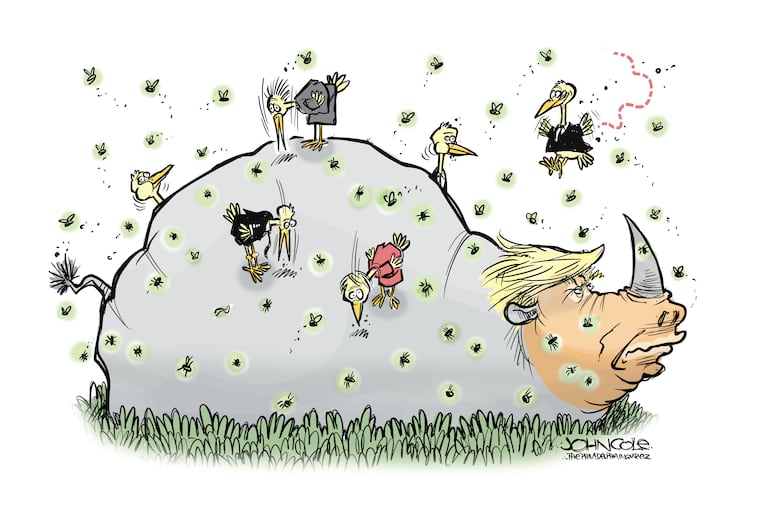
The university voted last week to limit A’s to 20% of the undergrads in each course. But the problem isn’t just that we give too many A’s. It’s that we don’t demand enough work in exchange for them.
I teach at the University of Pennsylvania, where my students submit a piece of writing to me every week. At the start of each semester, I tell them what they need to do to receive the top grade: produce assignments that consistently reflect effort, engagement, and understanding. And if everyone does that, I add, they will all get A’s.
They’re lucky they don’t go to Harvard.
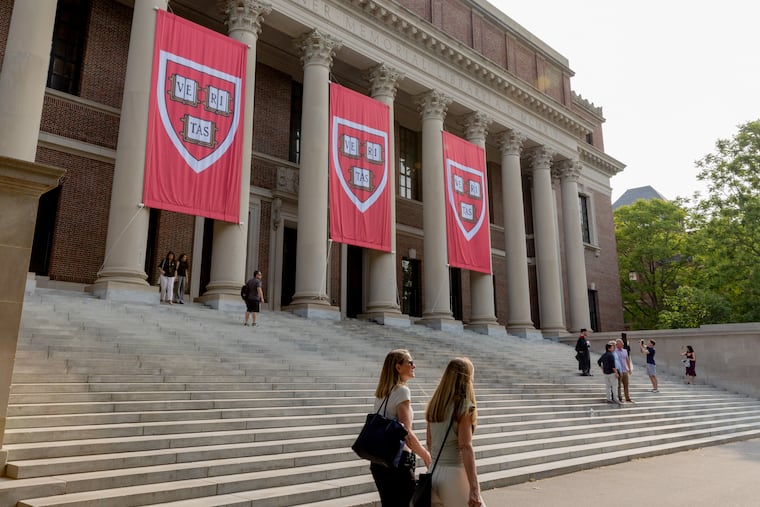
The Harvard faculty voted last week to limit A’s to 20% of the grades awarded in each undergraduate course. Regardless of how hard they try — or how good their work is — four out of five students in each class won’t get the best grade.
That doesn’t feel right to me. If a course has high demands — and if students meet them — they should be rewarded for that. And it shouldn’t matter how many other students rise to the same bar.
In too many cases, though, the bar isn’t high enough. And that’s the great open secret in American higher education. The problem isn’t simply that we hand out too many A’s, although surely we do. It’s that we don’t demand enough work in exchange for them.
In 1960, 15% of grades at American colleges were A’s; in 2011, the figure was 43%. And over roughly the same period, the average amount of studying by people in college went down by almost 50%, from 25 to 13 hours a week.
These trends were even more pronounced at elite schools. By 2021, 79% of grades awarded by Harvard were in the A range (A+, A, or A-). And many students barely broke a sweat along the way.
In a revealing 2024 essay, Harvard undergraduate Aden Barton said he failed to complete most of the assigned readings for a class and still got an A. One of his friends didn’t attend any classes for an entire month.
No problem! The friend still had to submit work, but there wasn’t much of it. And he could rest assured that almost anything he turned in would receive an A.
“Rising grades permit mediocre work to be scored highly, and students have reacted by scaling back academic effort,” Barton wrote. “I can’t count the number of times I’ve guiltily turned in work far below my best, betting that the assignment will nonetheless receive high marks.”
Nobody should get an A for less-than-stellar work, of course. But simply capping the percentage of A’s — as Harvard did last week — won’t correct for that.
Instead, we should insist that professors assign more work. In 2011, sociologists Richard Arum and Josipa Roksa found that one-third of the 2,300 students in their sample studied less than five hours per week (yes, you read that right). And over half of the people in the sample said they hadn’t taken a single course in the previous semester that demanded a total of 20 pages of writing.
In 1960, 15% of grades at American colleges were A’s; in 2011, the figure was 43%.
Things have almost certainly gotten worse since then. Students are anxious and distracted, professors report, and they balk at reading entire books. So we assign excerpts or articles, in the hopes that they’ll learn something — anything — from us.
That’s a scandal, or it should be. Every college should establish minimum reading and writing requirements and make sure professors enforce them. And they should also make attendance mandatory. If my students don’t learn more by coming to my class than by blowing it off, I shouldn’t be a teacher.
We also need to institute rigorous evaluation of instruction to see if students are learning at all. That’s become ever more important in the age of artificial intelligence, when ChatGPT can do your homework for you.
The nation’s largest university system, California State University, recently signed a deal with OpenAI to make it America’s “first and largest AI-empowered university.” AI tutors will be embedded in the system’s 22 campuses.
Will that help its 460,000 students learn more? Or will it simply outsource their brains to a bot? Unless we invest deeply in research about learning, we won’t know.
I can’t tell you how much my own students are learning, to be honest, because my university has never tried to find out. But I do know that I assign lots of work, and you need to complete it — and complete it well — to get the highest grade.
I should add that my classes are small, so I have the time to grade everyone’s writing. Many faculty members around the country aren’t so fortunate. Teaching huge classes, they simply can’t assign — or evaluate — the amount of work I do.
That’s why we should devote more resources to hiring professors and teaching assistants, and less to new gyms and luxury dormitories. Things of value cost something. And if you’re not willing to sustain the costs, you probably don’t value them very much.
My biggest fear isn’t that we’re giving out too many easy A’s. It’s that we’re too easy, period. Changing the grading system won’t change any of that.
Jonathan Zimmerman teaches history and education at the University of Pennsylvania. He is the author of “Whose America?: Culture Wars in the Public Schools.”