To counter fake news, look to lessons from the Holocaust
By understanding the ways that propaganda has functioned throughout history, we can approach falsehoods circulating online with skepticism.

For the last 15 years, social media usage has grown steadily. In 2021, 72% of U.S. adults reported using at least one form of social media, compared with just 5% in 2005. In the same period, we’ve seen an alarming spike in the country’s polarization. By having users select who they friend and follow, social media places people largely within their own bubbles.
As more people have migrated their news consumption to social platforms, their worldviews have begun to reflect in their echo chambers. As a result, for many people, it has become second nature to believe any claim that is shared on social media — whether reasonable opinions, distortions, or out-and-out lies.
While this reality is concerning, there is one positive: While fake news is certainly fake, it is not exactly new. And by understanding how falsehoods have impacted society in the past, teachers and students can begin to address it.
History’s most notorious purveyor of fake news was Adolf Hitler, who created a propaganda ministry shortly after assuming Germany’s chancellorship. The ministry’s purpose was to enforce Nazi ideology, including stirring hatred against Jews and galvanizing German citizens to persecute non-Aryans. To that end, the ministry oversaw German media, arts, and education as a means of censoring viewpoints that didn’t align with its own message. For Nazi propagandists, the media was used to portray Jews as public enemies by depicting them as less healthy or attractive than Aryans, portraying them as subhuman — including drawing them as animals — or branding them with moral failings, such as greed.
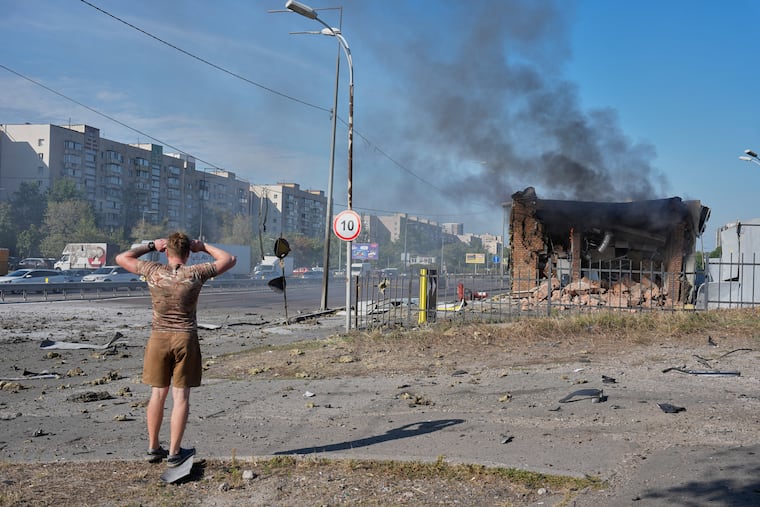
In 2022, aspects of this sound eerily familiar. For a decade, Vladimir Putin has waged a misinformation campaign against Ukrainian politics, fashioning Ukrainian leadership as a public enemy. With limited opportunity to oppose his propaganda, Putin’s worldview gained dominance within Russia, generating enough support to justify his war against Ukraine.
Of course, neither Putin nor Hitler invented propaganda, and in certain respects, the latter modeled his own approach after England — which he felt had a powerful communications machine in World War I — and the United States.
When examining the U.S., it is eye-opening to see the side-by-side comparisons between Nazi propaganda and anti-Black imagery from the first half of the 20th century, which also included offensive caricatures and the vilification of an entire race.
Realistically, we can’t expect to eliminate fake news, but teaching and reinforcing media literacy can play a significant role in lessening its impact.
For two years, our team at the Philadelphia Holocaust Remembrance Foundation has conducted dozens of trainings with local teachers to help them educate their students about the Holocaust and its various lessons that can be applied to our lives. Propaganda-related lessons — which teach students about misinformation and the need to think critically about the abundance of information they encounter in an increasingly digital world — are among the most salient.
» READ MORE: Nazis murdered my great-uncle in a forgotten massacre. Decades later, the few memories are fading. | Opinion
In exploring Nazi- and Jim Crow-era propaganda, we present historical, bigoted images and texts about Jewish and Black people and ask teachers to analyze them. While these historical sources are disturbing, it’s essential to look at them to understand the commonalities and rationales for “othering” behaviors. We then show educators how bigoted images today are used in similar ways on social media.
We encourage teachers to have these conversations in the classroom to improve students’ media literacy and critical thinking skills in middle and high school. For example, before engaging with content online — especially something that is critical of other people — it’s helpful to ask basic questions: Who produced this? How reliable are they? What sort of interest might they have in conveying a certain viewpoint? Who does this content hurt?
To highlight the need for urgency and action, we also show photos of ordinary street life from 1930s Germany, where anti-Semitic propaganda abounds on posters and newsstands, but passersby ignore it.
While there is no state propaganda machine spreading misinformation in the United States, the nature of social media’s bubble effect has created platforms that allow misinformation to spread quickly. By understanding the ways that propaganda has functioned throughout history, we can approach online falsehoods with the necessary skepticism to help curtail the power of fake news.
Eszter Kutas is the executive director of the Philadelphia Holocaust Remembrance Foundation. ekutas@philaholocaustmemorial.org