Trump may have shut down the border to asylum-seekers, but he can’t end immigrants’ hope
The president has succeeded in curtailing illegal immigration through a mix of enforcement, deterrence, and cruelty, but it is unsustainable.
JUÁREZ, Mexico — Carolina was living in Colombia as a refugee when her 15-year-old son disappeared. Almost a year after her boy went missing and she mourned his loss, she got a call from an international number.
Her son was alive 3,000 miles away in this historic Mexican city once known as “the Pass of the North,” nestled along the Texas border.
“I was so happy, but I didn’t know how to get here, without knowing anything, without money, with nothing,” she told me when I met with her recently at an immigrant shelter in Juárez. “I sold my house and came here alone.”
After a harrowing three-month journey during which she made her way across seven countries, survived two kidnappings, and endured beatings and sexual assault, she reunited with her son on Jan. 10.
They tried to get an appointment to cross the border through U.S. Customs and Border Protection’s CBP One app — part of a program launched by the Biden administration to allow people to come to the U.S. legally while they waited for their asylum or other immigration case to be processed.
Carolina and her son were still trying when President Donald Trump ended the program the day of his inauguration.
They’ve been stuck in shelters ever since.
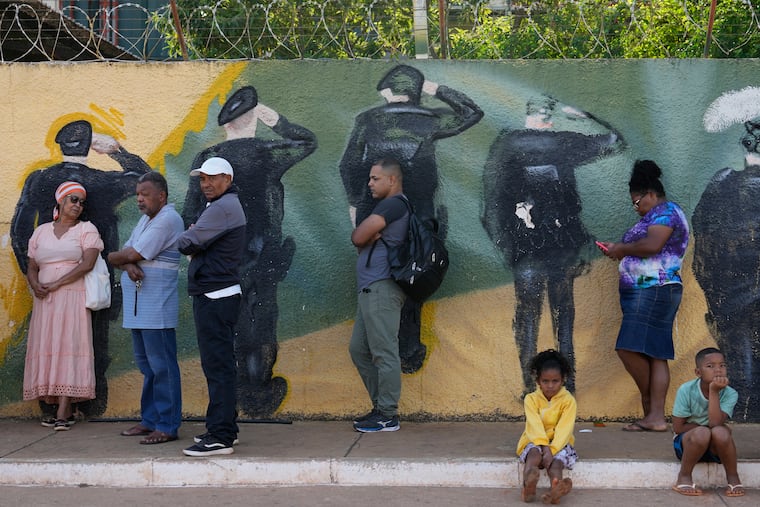
Speak to immigrants at the border, and what happened to Carolina is sadly common. Some people are luckier, some less so, but no one comes out unscathed from their journey. And while some are willing to see their dreams deferred, there are and will continue to be more people who see coming to the United States as the only way out of a desperate situation.
Visiting the border nearly 10 months after Trump took office and essentially ended the ability to seek asylum in the United States, you see what many Americans — even some begrudging critics — credit the president with doing.
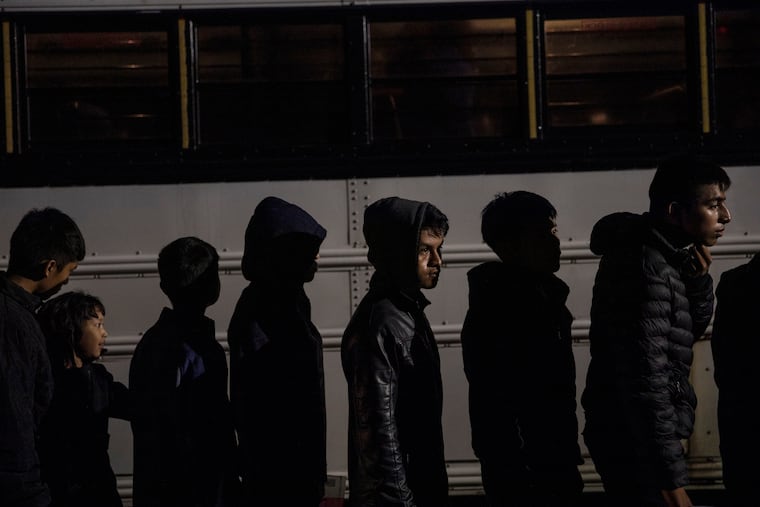
Trump has been brutally effective at limiting border crossings. The quiet downtown streets and plazas, the nearly empty shelters in both El Paso, Texas, and its sister city of Juárez in Mexico, are a testament to that fact. Only a few years ago, thousands of immigrants crowded sidewalks and shelters here, straining the region’s spirit of hospitality.
Today, the immigrants left behind are the vulnerable among the vulnerable, advocates said. People who are unable to move out or move on, stuck in shelters with the hope that Trump’s “hard heart will soften,” as one woman told me.
My own heart was not hard enough to dash her dream. Perhaps it should have been.
The last thing immigrants need is for some well-meaning dope to ignore the facts for short-term comfort. They had enough of that during the Biden administration.
Good intentions
Under President Joe Biden, about six million people were allowed entry to pursue asylum applications and other immigration cases, according to the Migration Policy Institute.
I believe that all things being equal, the U.S. has no trouble absorbing these immigrants. Call me cynical (I prefer pragmatic), but our economy runs on cheap labor and consumer spending — six million people give you both. It gives you adults who are willing to do the work Americans won’t, and kids who will go to school and graduate for the jobs there aren’t enough Americans for.
But the problem is the president can only do so much. The executive can allow people to remain in the country under some sort of limited parole, it can direct enforcement toward higher priority targets, such as immigrants with criminal records, but it cannot grant legal status.
Only Congress can do that, and legislators have decided there is no major issue they can’t shrug off as intractable and call it a day.
So the Biden administration opted to let people in — regardless of whether they had a good asylum case — knowing full well that just as one president could open the door for immigrants, another could slam it in their faces.
Biden himself shut that door halfway as the 2024 presidential election neared, but the political damage had already been done, because the administration at no point made the argument for why it was doing what it was doing.
As desperate people who wanted a better life clustered at the border — partly because of the pent-up demand that grew under pandemic restrictions Trump put in place — Biden could have made a moral argument, or laid out the economic benefits of immigration. He could have done more than introduce immigration reform shortly after taking office, and then just as quickly give up on it.
Instead, it was never clear what Biden wanted other than not to be seen as the bad guy.
His administration’s humanitarian intentions, coupled with incessant fear-mongering on the right, paved the way to where we are today.
All for nothing
It took Helen, her husband, and their 3-month-old baby three months to travel from Ecuador to the Casa del Migrante shelter in Juárez, which is run by the Roman Catholic Diocese of Ciudad Juárez.
Like Carolina, Helen — who remains concerned about the status of her potential immigration case — would speak with me only on the condition that her last name not be used.
Helen and her husband, both in their early 20s, arrived in October of last year after leaving their home because of growing gang violence. “You couldn’t have any peace anymore,” Helen said.
The family crossed the dangerous jungle and rode through Mexico on the freight train known as “the beast.” She saw a man die, falling under the wheels of the cars.
While her husband goes out to work odd jobs, she takes care of their daughter. The routine gets to her, she said. Once a month, they’re able to go out and splurge on a meal, even as they’re afraid to walk the city’s streets.
Her daughter has now lived most of her life inside a shelter, but Helen told me they will continue to sacrifice.
“We are waiting to cross. Whatever it takes,” she said.
Across town at the Vida shelter, Carolina, 53, is torn about what to do.
Her journey to Juárez began 14 months ago. Distraught over her son’s disappearance, she went back to her native Venezuela to be with her mother.
When Mexican officials informed Carolina that her son was alive, she left Venezuela on Oct. 20, 2024, and traveled across Central America. She was kidnapped twice, Carolina said. Once when she crossed the Guatemalan border into Mexico, and again when she got to Juárez in December.
“The one here was the worst. The one here was rape, beatings. I still can’t fully touch myself here,” she said, grimacing as she moved her hand along her left breast. “They left me with nothing.”
Although she’s grateful for all the help she’s received, she said, it’s coming up on a year of living in shelters, and the uncertainty is becoming overwhelming.
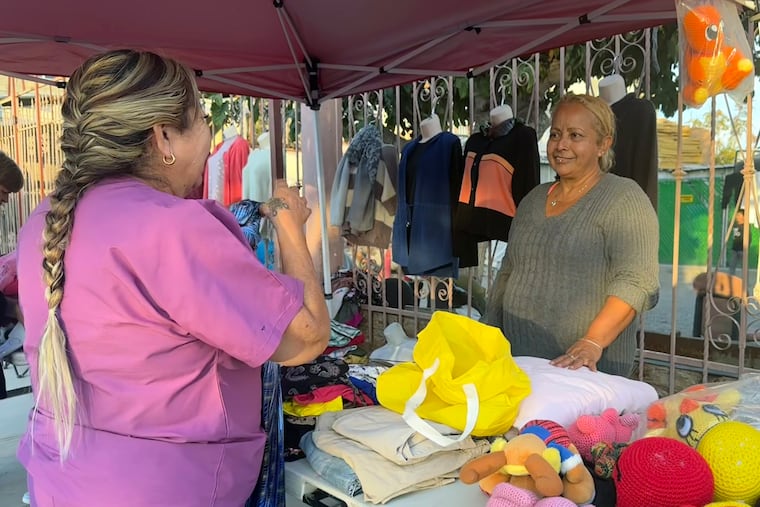
Her son is going to high school, and sometimes works with a handyman. She sells donated used clothing in front of the shelter and cleans houses, but work is sporadic.
“I tell my son we should go back,” Carolina said. “He says he came here for a future.”
Her mother calls and tells her she doesn’t have food, she said. She trusts that God has a plan and things will work out accordingly — even if it means returning home to struggle there — but there must be a point to her journey.
“You go hungry, you grow tired, it’s raining, you see corpses. You spend sleepless nights, running from people who want to rob you, kill you,” she said.
“Do you know what it’s like to go through what I went through and not be able to cross?”
No turning back
Many immigrants who are still in shelters, and those who have decided to remain in Mexico, are in a state of flux, waiting for the opportunity to cross the border.
Trump may have succeeded in curtailing illegal immigration through a mix of enforcement, deterrence, and cruelty, but it is unsustainable. While he may be able to delay the inevitable — especially if he manages to crash the economy and there are fewer jobs for immigrants to fill — eventually, people will return.
“Listening to people’s stories, we’re really at a critical moment,” said Alejandra Corona, who heads Jesuit Refugee Services in Juárez, a nonprofit that serves the migrant community. “The world is broken, and there are no options.”
You see it in the eyes of parents who are deeply wounded because they cannot provide for their families even in the most basic ways, Corona told me, and the reasons why are far from simple.
“It’s not just, ‘Oh, I lost my job,’” she said. “It’s, ‘I had a job, but couldn’t afford to pay off the gang member or the cartel. I stopped paying for protection and had to flee. I was discriminated against, I’ve never had a passport, I’ve never been to school, I’ve never had access to my rights. I do not exist, and no one wants to see that I don’t exist.’”
The lesson to be drawn from the border today is that immigrants may not be as visible, but they haven’t gone away.
If Democrats capture the presidency in 2028, they will likely not follow the Trump administration’s amoral ruthlessness, but they cannot repeat the Biden administration’s aimless permissiveness, either.
Everyone suffers under the current seesaw approach to immigration, where an immigrant can come here “the right way” under one administration, only to see things turn out wrong under the next. Trump has tried — successfully and unsuccessfully — to kill programs for immigrants established under Presidents George H.W. Bush, Barack Obama, and Biden.
Whether or not you support immigration, the whims of an individual — even if it’s the president — are no substitute for the legislative process.
The United States is a nation of immigrants. America has thrived economically and culturally thanks to this fact. On immigration, it’s Congress, as representatives of the people, who must determine the who and how, the when and where, that makes the most sense for the country.
Until then, immigrants will be ready and waiting — and praying for a softer heart in the White House.
More from the border: At the border, fear and uncertainty as Trump seeks to remake the immigration court system