Blame game
There are a few important things to keep in mind amid all of the discussion about the “crisis” with the state budget and SEPTA funding.
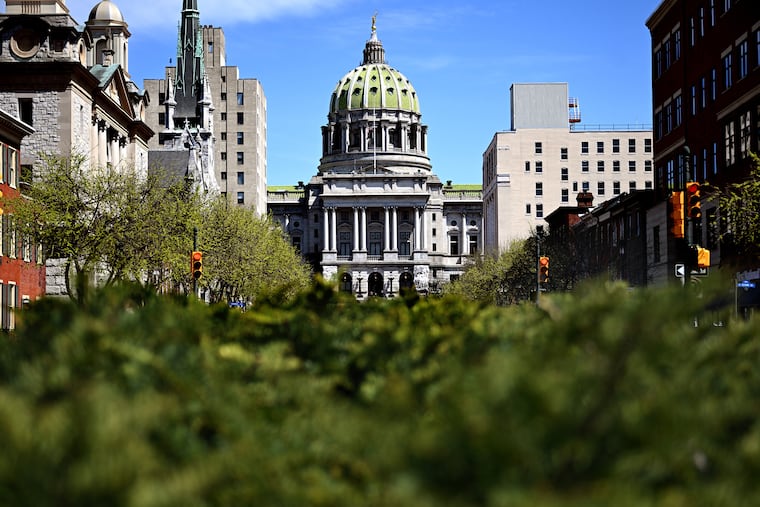
First, there are three parties involved: the governor, the state Senate Republicans, and the state House Democrats. All of them are equally responsible for not meeting the constitutional deadline to adopt a budget. All of them will share equal credit when one passes.
Second, the budget is always passed as a package. Every expenditure and revenue source is on the table and interrelated. When the House or the Senate passes a stand-alone plan for SEPTA or anything else, they are exploiting the process for political gain and demonstrating that they care more about that than the well-being of the rest of the state. Both legislative parties have done this, and it slows the process.
Third, whenever any group blames one party or directs people to contact anyone other than their own legislator, they are contributing to the problem, not helping to solve it.
One example is the governor and others telling people to contact State Sen. Joe Picozzi. They know Picozzi is fighting for SEPTA. Frankly, if he were not there, SEPTA’s ultimate funding would be less than it will be.
One other thought: Whenever anyone argues that SEPTA or any other program in the budget needs to be “fully funded” or “fairly funded,” they have to realize there’s no such thing. The budget is a balancing of priorities by the elected officials who have to pass and sign it — and not every legislator has the same priorities as you.
Matthew Wolfe, Philadelphia, matthew@wolfe.org
Public health crisis
The recent service cuts to SEPTA are more than an inconvenience; they are a public health hazard. Reduced transit access worsens air quality, increases traffic injuries, and isolates thousands of Philadelphians from jobs, schools, and healthcare. Reliable public transit is as essential to our city’s health as hospitals and clean water.
This situation deserves recognition as a public health emergency. By declaring it as such, the mayor and the governor can unlock emergency funds to address the cuts before irreparable harm is done to our most vulnerable communities.
I suggest a funding proposal that addresses SEPTA’s structural shortfall while expanding equity. It includes modest increases to residential parking passes for households with multiple cars, higher peak parking garage fees, and increased registration fees for multicar households above 200% of the poverty line. To ensure fairness, residential parking zones should also be expanded into South, Southwest, Kensington, and Port Richmond, redistributing some of the cost burden among neighborhoods that have inequitably benefited from multiple vehicles registered to single-family homes and/or registered out-of-state, and are amply connected to public transit. These funds would secure SEPTA’s fiscal stability and expand free Key Card access to Philadelphia Medicaid recipients ages 13 to 65, of which all Philadelphians can benefit.
Philadelphia cannot thrive without reliable, equitable transit.
Patrick Dunn, Philadelphia
Fate of SEPTA
I thought your readers might want to hear what an outsider has experienced with SEPTA. I read with sadness how politics has deprived this fine transit system of proper funding.
I have visited the Philadelphia area four times in the last five years, and I have used SEPTA routes on three occasions. I found the system efficient, clean, and on time. But, more importantly, as an outsider, the SEPTA staff were friendly and helpful.
Urban transit systems need subsidies. I would hate for the Philadelphia area to experience a diminution of this excellent system because of politics.
Harrisburg, are you listening?
Jeffrey Nelson, Urbana, Ill.
Join the conversation: Send letters to letters@inquirer.com. Limit length to 150 words and include home address and day and evening phone number. Letters run in The Inquirer six days a week on the editorial pages and online.