Use it or lose it
A letter writer venting over missing a Sunday concert’s beginning seems to blame others for his poor decision to drive downtown, especially without checking traffic first. More importantly, if Chestnut Hill residents want to help maintain their arguably redundant rail service (the ends of the two lines are a very short walk apart) and even increase service, they have to actually use it. Yes, those trains run only every two hours on weekends, but the Chestnut Hill East schedule is perfect for that 2 p.m. concert. Returning, the unlikely worst-case scenario — missing the Chestnut Hill West line’s 4:23 p.m. train — would cause a one hour and 40 minute wait. So have dinner in town and a relaxing ride home while saving the additional driving (and letter-writing) time and aggravation.
This isn’t to simply criticize an individual, it’s a vital reminder to all residents about a simple fact of life when it comes to public transit: use it or lose it — even if that may require a trivial inconvenience.
Dave Campbell, Wildwood
Keeping discussion alive
Amid the disturbing news of unrest and reaction on U.S. campuses, I found hope in what happened at Brown University. Alerted by alumna pride, I was satisfied that a peaceful, sensible accession to student demands had been agreed to by the administration. Even more encouraging was the fact that the protest of that agreement by billionaire alumnus donor Barry Sternlicht, who dismissed student protests as “ignorant,” failed to stop it.
The school’s agreement to vote on divestiture of investments in Brown’s endowment tied to Israel might be the only possible good response to that demand. Divestiture is at best complicated — how do you decide which companies in the worldwide economy are genuinely tainted? — and most likely ineffectual, except symbolically: Will those companies, not to mention Israel, be moved to change?
Not only Brown’s angry donors but many, including Sen. Chuck Schumer, ask, “Where were the protests about suffering in Ukraine, Syria, Afghanistan, and Iraq?” To manipulate those situations, corporations and/or the U.S. government would need to leash the dogs of war. If divestiture was at all effective in change to apartheid South Africa, it didn’t hurt that that country’s struggle was internal. What Brown accomplished helped keep alive discussion, civility, and civil rights.
Joe Jones, Brown University, Class of 1978, Mount Holly
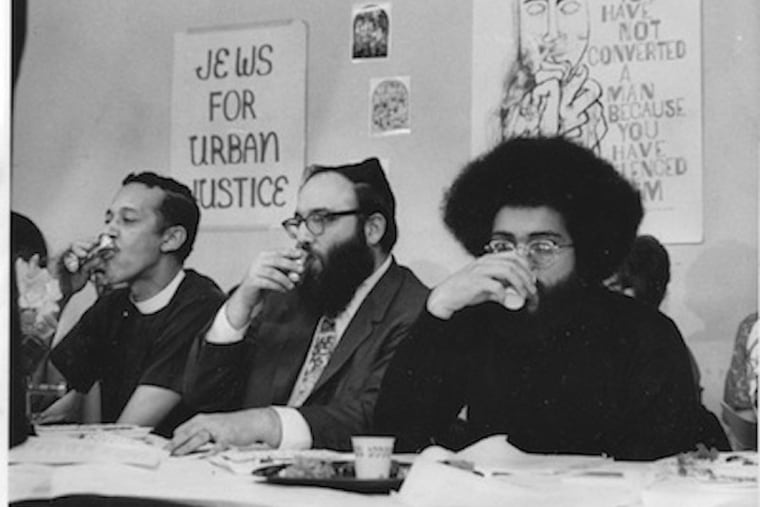
Opposition isn’t antisemitism
I am a Jewish woman writing to say that opposing Israel’s genocidal war is not an antisemitic act.
At the heart of Judaism is a reverence for life. It is Israel who is violating this core belief.
Israel and the United States are together conducting an unbelievably brutal war against the people in Gaza. Israel’s powerful army, supplied by the world’s one superpower, has already destroyed most of Gaza.
People around the world who are protesting the barbarous massacres are routinely called “antisemitic.” As a Jew and an American, I cry out against the mass murders of Palestinians, nearly half of them children. As a Jew and an American, I denounce the war criminals who try to distract attention from their monstrous acts by repeatedly charging “antisemitism.”
Anti-Zionism is not antisemitism. The leaders of the Zionist minority, wanting to create a Jewish homeland on a land with few Jews, knew from the beginning, and stated, that the people who already lived on such land would present a problem to their plans. Opposition to the Zionists was not against Jews, but against colonists.
The ensuing century was tragic for both the Jews and the Palestinians, both betrayed by powerful empires. I hope these two peoples, cousins really, can together free themselves from the hell that exists today.
Diane Laison, Philadelphia
Join the conversation: Send letters to letters@inquirer.com. Limit length to 150 words and include home address and day and evening phone number. Letters run in the Inquirer six days a week on the editorial pages and online.