Letters to the Editor | April 7, 2026
Inquirer readers on President Trump’s Easter social media post and an argument between two coaches with Philadelphia-area roots at the NCAA women's basketball tournament.
Loser
During my four decades as an educator, I made it a point to shake the hands of students as they left my classroom for the last time while collecting their final exam papers. That simple moment of acknowledgment and well-wishes meant just as much to me — and to them — when I began teaching 40 years ago as it did the last time I taught in 2025.
That’s why I found University of Connecticut women’s basketball coach Geno Auriemma’s failure to acknowledge the South Carolina players and wish them well after last Saturday’s game so disappointing. Moments like that matter. They reflect respect, sportsmanship, and an understanding of the effort those student-athletes just gave. Instead, the absence of even a basic gesture felt dismissive and sent an unfortunate message about accountability and humility — especially from someone in a position of influence. Regardless of the outcome, those players deserved recognition at the end of a hard-fought NCAA semifinal game. That moment can’t be given back, and that’s what makes it so upsetting.
Michael Zuckerman, Philadelphia
. . .
I am responding to the recent column by Marcus Hayes concerning Connecticut coach Geno Auriemma. While I agree that Auriemma’s behavior at the end of the UConn-South Carolina game was most unfortunate, sullying his incredible legacy, the article is an example of journalistic overkill. Using buzz words such as “abuse of privilege” and “entitlement,” the author described Auriemma as a “crotchety rich white guy bullying a brilliant Black woman” whom Auriemma was trying to “humiliate.” Why was it necessary to inject race into this? Can any rational person believe Auriemma’s behavior was in any way caused by the fact that Dawn Staley is Black? A fiery coach, in the heat of the moment, lost his cool and engaged in conduct that he undoubtedly regrets and for which he later apologized, something caused by competition rather than color. Like everything else in life, sports should be colorblind. So should journalism.
Stephen F. Freind, Havertown
Tick, tick, bang
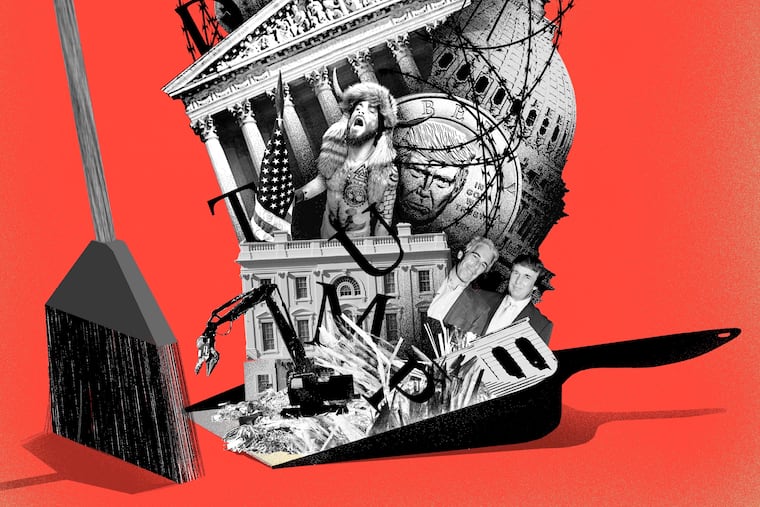
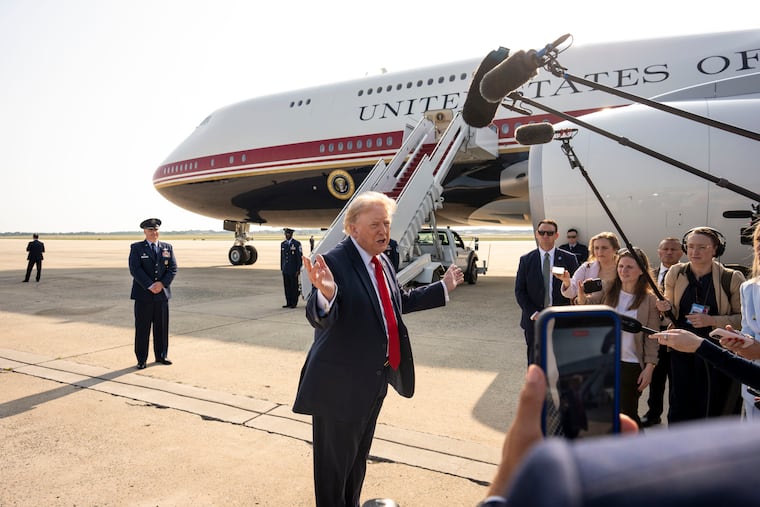
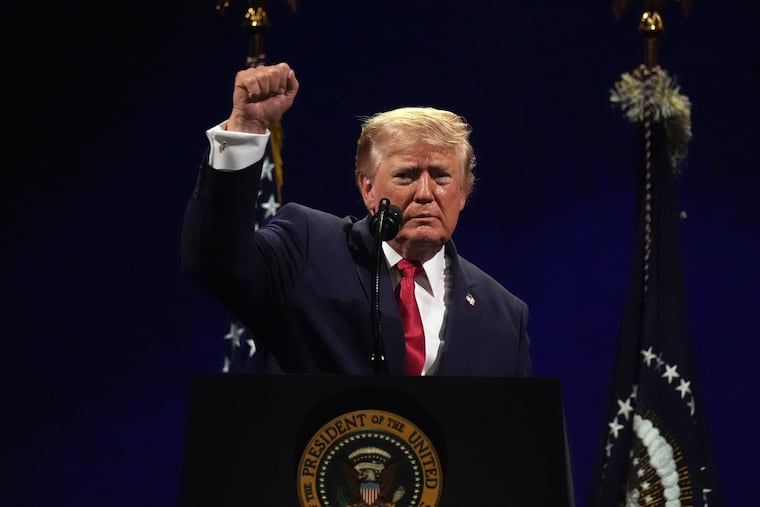
After reading the latest expletive-filled Donald Trump posts on Truth Social, my concern is that the president is like a wounded animal that has been backed into a corner. Although weakened, he still has weapons at his disposal that he is more and more likely to use. He may figure he has nothing left to lose since the verdict of history has already been written. Our nation’s only faint — and probably futile — hope is that Republican leaders like Rep. Brian Fitzpatrick will threaten him in private with the prospect of their standing aside while Democrats launch impeachment proceedings next year, and offering him the off-ramp of resigning because of “health” or “family” concerns. The president’s allies may reason with him (if, at this point, he responds to reason), convincing him that stepping down soon enough could forestall a bloodbath for the GOP in the midterms, increase the chances of a JD Vance victory in 2028, and allow him to preserve his fortune. But Republican leaders face, as do we all, a task that’s like defusing a time bomb — cutting the wrong wire may set it off. Trump trades on unpredictability, and this prospect gives the whole world pause. Unfortunately, the president’s brand of chaos has now become a feature of the United States government, and it is hard to see how our country’s reputation can ever be salvaged.
Joe Sundeen, Yardley
Join the conversation: Send letters to letters@inquirer.com. Limit length to 150 words and include home address and day and evening phone number. Letters run in The Inquirer six days a week on the editorial pages and online.