Letters to the Editor | Aug. 13, 2025
Inquirer readers on the federal takeover of Washington D.C.'s police force and how SEPTA service cuts would affect passengers from the Garden State.
N.J. needs SEPTA, too
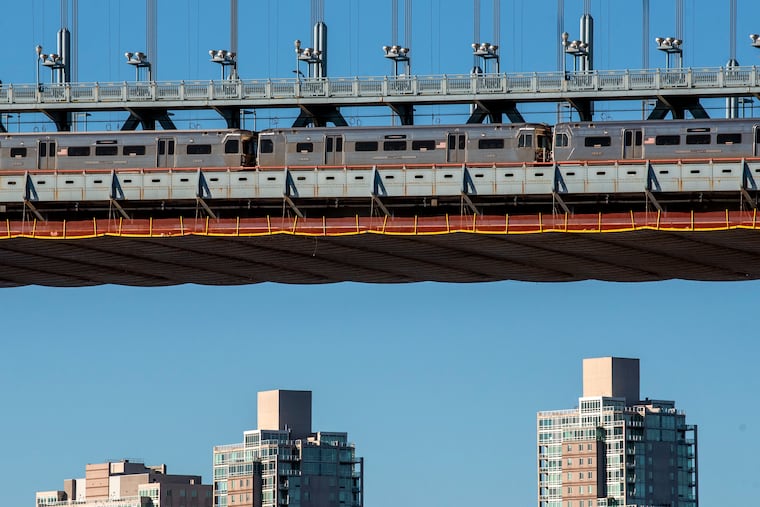
As potential SEPTA service cuts loom, one group of people is being mostly overlooked: the citizens of New Jersey. The cuts will affect passengers who use public transit for interstate travel — especially those headed for locations beyond Center City Philadelphia.
Medical staff living in Gloucester County who commute to Children’s Hospital of Philadelphia via NJ Transit bus service may soon find that the final leg of their journey using the reduced SEPTA service is too problematic. People driving to locations within New Jersey will see greater traffic congestion due to higher traffic volumes caused by increased motor vehicle usage throughout the region.
This all has a cascading impact. SEPTA service cuts not only impact NJ Transit and PATCO by motivating current passengers to abandon mass transit as their primary mode of travel (thus reducing fare revenue), but those who currently drive will also suffer from declining quality of life as increased congestion lengthens travel times in southern New Jersey.
All residents of the region need an attractive, efficient, safe, fully functioning SEPTA. Political leaders in Pennsylvania should come to an agreement on SEPTA funding before the negative impact of service reductions for everyone — including New Jersey residents — occurs.
Bill Ritzler, public transportation chair, Tri-County Sustainability, Burlington/Camden/Gloucester
Foreboding blueprint
It’s hard for me to think these words as I type them, but the reality is that President Donald Trump has now deployed our armed forces in two U.S. cities: Los Angeles and Washington, D.C. I would have thought the notion preposterous just a year ago, but we are now forced to face this new kind of country and new kind of government. As I watched TV Monday night, I listened to the words of LA Mayor Karen Bass and Mayor Muriel Bowser of D.C. At first, I listened to the words, but then my focus widened out. I realized I was listening to the words of two African American female mayors of largely Democratic cities. And then it hit me: I live in just such a city. When are the troops coming to Philadelphia? How will we respond?
Deborah Zubow, Philadelphia
. . .
With the announcement of the deployment of the National Guard to Washington and the suggestion that there might be deployments to other cities, the Trump regime has begun laying the groundwork for a future nationwide imposition of martial law, the ultimate objective being the severe restrictions of access to voting. It can — and is — happening here.
Tom Goodman, Philadelphia
. . .
The America in which I was born and raised, went to college, became an Army veteran of Vietnam, raised a family, and had a productive career is not the same America today.
Donald Trump and his sycophants violate the Constitution, ignore the rule of law, defy the courts, use bullying tactics to achieve the administration’s agenda, and attempt to rewrite the history of our country.
I consider myself a patriotic American. It pains me to see the nation I love spiral toward authoritarianism as democracy is being chipped away.
We took pride in being the land of the free and the home of the brave. Trump is remaking us into the land of nativism and white nationalism.
The scariest aspect of all this is that it happened in only seven months. Where will we be at the end of Trump’s term? I dread the thought.
Richard Zanoni, Edgewater Park
Aid the unhoused
Candice Player’s excellent overview of the city’s homelessness dilemma raises a few new questions. President John F. Kennedy launched the deinstitutionalization movement in the 1960s when he signed the Mental Retardation and Community Mental Health Centers Construction Act of 1963. Advocates quickly jumped on board. The courts also pushed the movement forward. The state centers for the developmentally disabled were targeted for closure (see: Pennhurst) as residents transitioned into group homes in the community.
Unfortunately, the state hospitals that housed the mentally challenged didn’t go so well. Too many failed in community settings and ended up homeless in the streets or in prison. Player’s proposals offered hope — until Donald Trump came along and eliminated funding for crucial housing initiatives. Trump further suggests sending the homeless back to institutions. Now the choice seems to be: sleeping in the street while on an endless waiting list, or returning to an institution. As with many of Trump’s plans, details are hard to come by — as are the dollars to pay for them. Thus, the homeless are left with a dilemma: continue living in the streets, or face an uncertain future in an institution.
Perhaps there is another way. Peco recently established a $10 million plan to assist low-income folks with their utility bills. This was done after Trump eliminated the LIHEAP Program that provided funds for such. Perhaps a similar effort could be established with the larger Philadelphia Realtors so that the defunded housing initiatives can go forward. The private sector needs to step up, as Trump has taken our government out of the help business.
Angus Love, Narberth
Dibs on hospital food
As a pediatric physician, I spend much of my time counseling patients on healthy eating and the consequences of our dietary choices. In a population like that of Philadelphia’s, where far too many of our fellow residents are facing poverty and living in food deserts, the barrier to healthy eating is often not a matter of choice, but rather of access. The Good Food, Healthy Hospitals initiative, which was the subject of a recent article, addresses an incongruity within the world of healthcare: selling unhealthy food in institutions dedicated to healing. This program gives patients and their families the opportunity to choose nutritious options while receiving care. Importantly, the program also aims to make these healthier choices more affordable, pricing them at or below the cost of less healthy alternatives. Although the program is small in scale, it represents an important step toward addressing a larger public health problem.
Sarah Doebley, Philadelphia
Cherry-picking history
Does anyone else find it particularly hypocritical of the Trump administration to justify putting the statues of Confederate generals back up, saying they are part of our history, while at the same time pulling down so many displays related to the history of slavery in this country?
Keith Bance, Blue Bell
Wrong direction
Over the last six months, much of Project 2025 has been implemented. The Department of Government Efficiency took over government buildings, locked out civil service employees, accessed confidential information, and, at times, denied access to members of Congress. Many approved congressional appropriations were blocked. Some government departments were left with only skeleton staffing. President Donald Trump has used baseless lawsuits and withholding of federal funding to intimidate law firms, universities, and state governments. Republican members of Congress have been kept in line by threats of funding their opponents in future primaries. Meanwhile, U.S. Immigration and Customs Enforcement has been forcefully arresting people without warrants and depriving them of due process of law. Many of these actions are illegal. Our Constitution guarantees all people the right of habeas corpus, and gives only Congress the responsibility to create new departments or close them, and to enact tariffs. How many more nails are needed to finish the coffin of our democracy?
Wayne Olson, Philadelphia
Join the conversation: Send letters to letters@inquirer.com. Limit length to 150 words and include home address and day and evening phone number. Letters run in The Inquirer six days a week on the editorial pages and online.