Letters to the Editor | Aug. 25, 2025
Inquirer readers on the hoax at Villanova and SEPTA funding.
A hoax at Villanova
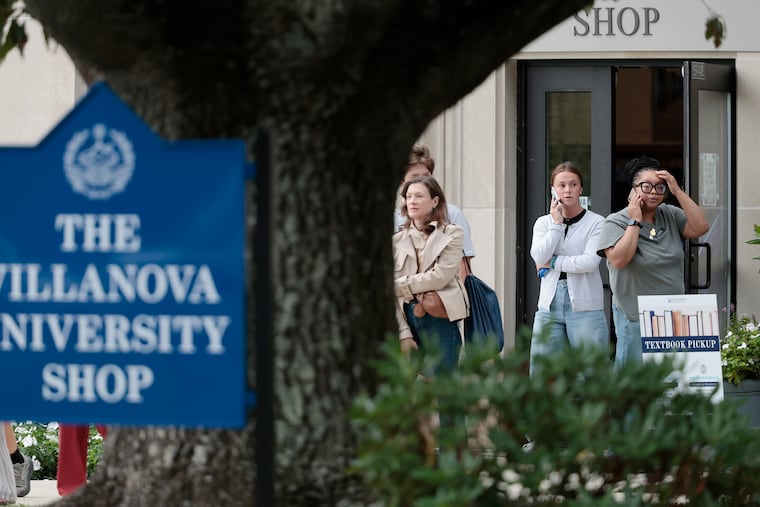
On Thursday afternoon at 4:34, I got the text that no one wants to receive: “ACTIVE SHOOTER.”
Like many faculty at Villanova University, I was not on campus — classes begin Monday. Thursday was orientation for new students, who had just moved to campus the previous day. But as soon as we got the emergency alert, we began texting each other to see if anyone had information.
By 4:53 p.m., the situation had become clearer: “Stay Clear of Law School Scarpa Hall.” News cameras zoomed in on large tactical units strategizing in front of the parking lot by our law school, the lot I parked in last year.
Finally, at 6:01, came the all clear. There was never an active shooter, explained our university president, the Rev. Peter Donohue. This was simply a “cruel hoax.”
“Can you believe it?” a colleague texted me.
“No, I can’t,” I replied.
But as soon as I said that, a thought immediately occurred to me: Why is it that when an actual campus shooting happens, I don’t have the same response? Why is it that, upon receiving the text about an alleged shooter on campus, I didn’t think to myself that it could ever be a hoax?
Why was I more shocked that a shooting didn’t happen than that it did?
The answer is simple: Because I’m an American. Because I teach on a college campus in the United States. Because when I hug my husband goodbye in the morning before heading off to work, I remind myself that today could be the day. Because for far too many people who live in our country, today will be the day.
Never, in the wake of a shooting, have I wondered how it could possibly have happened. There are more guns than people in this country. When we get the text about an active shooter incident, we have every reason to believe it.
But a text that this was simply a “cruel hoax”? That’s unbelievable.
Brandon Ambrosino, visiting assistant professor, Villanova University
Makings of a tyrant
What do Vladimir Putin and Benjamin Netanyahu have in common? Both would do anything to stay in power. Both ignore the will of their people. Both disdain the truth. Both have been accused of committing war crimes. Both have no regard for the lives of innocent civilians. Each carries on a barbaric war in which they have killed tens of thousands such civilians.
In fact, Netanyahu’s forces have killed thousands more civilians than Putin has. Russian forces have killed 45,000 people in Ukraine. Netanyahu’s forces have killed 62,000 people in Gaza, according to health officials in the enclave, who don’t distinguish between civilians and combatants. And Netanyahu has initiated a policy of starvation against the Palestinians in Gaza as part of his war effort.
So, Netanyahu and Putin are alike in many ways. How are they different? The chief difference between the two is that, while Putin is considered a cruel enemy whose war efforts must be stopped, Netanyahu is considered a friend by America’s leaders. To America’s leaders, he is an ally whose hellish war against the Palestinians should be aided, not ended.
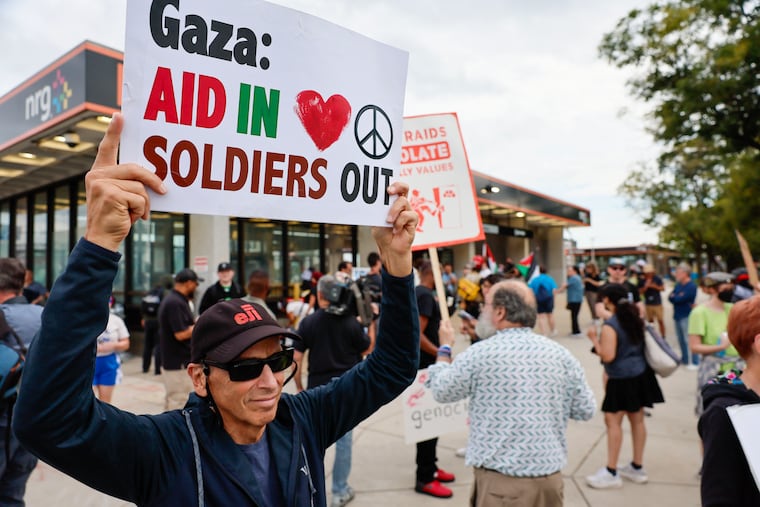
As an American citizen, I am distraught that our leaders continue to support Netanyahu in light of the destruction he has wrought among the innocent Palestinians in Gaza. This war in Gaza has to stop. America must stop assisting Netanyahu as he continues to commit war crimes in Gaza. End the war now.
William Cooney Jr., Philadelphia
Philly’s lifeline
It is beyond me how there can be any real debate as to appropriating the necessary funds for SEPTA.
A fully functioning public transportation system is absolutely necessary in order to have an efficient, navigable, and welcoming city. It is also vitally necessary in providing the transportation so many children rely on to get to and from school. This in itself should be enough to make this discussion a no-brainer. For many kids, getting to school is tough enough without having to deal with the lack or paucity of public transportation. The cutting of bus routes, reducing the frequency of those routes that still exist, overcrowded conditions, and the hassle of just having to deal with this every day will be enough for many kids to decide to just skip it. We can’t let that happen. Why make it harder for people to get to school, work, and appointments, not to mention shows, concerts, restaurants, the list goes on and on.
The amount of pollution, congestion, lack of parking, and aggravation that will result in cuts to routes and schedules will only be to our detriment. Our city is celebrating a big birthday in 2026. We want to stand out as a city with a transportation system that works. We want our city to thrive and be a desirable destination for tourists. To make that happen, we need an efficient and well-run system of public transit. Lawmakers may not have to depend on public transportation, so perhaps it isn’t something that hits home for them. But it should. Legislators: Approve whatever funding is needed in order to keep our city well-run, easy to traverse, safe, and workable for everyone.
Barbara Kotzin, Cheltenham
Restore Pa.’s voice
Money should never drown out the voices of everyday Pennsylvanians. Yet, under current interpretations of the law, unlimited election spending by wealthy donors and special interests threatens to do just that.
Pennsylvania Senate Resolution 126 offers a path forward. It urges Congress to propose a constitutional amendment making it clear that states can regulate election spending in state races, and Congress can do the same for federal elections. Just as importantly, it affirms that rights belong to natural persons — not corporations or other entities — ensuring political power is not concentrated in the hands of the few.
This is not a partisan issue. It’s about protecting the integrity of our elections, restoring trust in government, and ensuring every citizen’s voice carries equal weight. Without acting, our democracy risks becoming a marketplace where influence is sold to the highest bidder.
I urge our legislators to pass SR 126 and stand with the people of Pennsylvania in defending fair, representative government. Our voices — not our wallets — should decide the future of our state and our nation.
David Hunter, Lansdowne
Don’t privatize USPS
President Donald Trump is striving to eliminate independent federal agencies and gain control of them. The U.S. Postal Service is no exception, and the president intends to abolish its independence. USPS is cited in the U.S. Constitution as an independent agency, with oversight of postal regulations granted to Congress, not the president.
Privatization of this critical service would be detrimental, especially to the 51 million rural households that rely on USPS, e.g., receipt of medications, bill statements, tax documents. The vote-by-mail process would be eliminated because of Trump’s baseless claims of voter fraud. The overall result will be increased postal costs and a notable decrease in crucial services.
The Postal Service is a major employer of 640,000 employees, including 73,000 veterans. If USPS is privatized, a substantial percentage of employees would lose their jobs. The funding of the Postal Service is provided by postal sales. Not a single tax dollar is used to operate the service.
Congress, voters, and the courts must stop Trump’s controversial plans before it’s too late.
Exercise your First Amendment rights. Contact your congressional representative and insist on keeping USPS public and independent.
Ed Vreeswyk, Yardville
Join the conversation: Send letters to letters@inquirer.com. Limit length to 150 words and include home address and day and evening phone number. Letters run in The Inquirer six days a week on the editorial pages and online.