Letters to the Editor | Dec. 11, 2025
Inquirer readers on billing by long-term care pharmacies and the Food and Drug Administration's guidance on vaccines.

Well-meaning policy
If you walk into any nursing home in the southeastern corner of the commonwealth, you’ll find a highly choreographed system of long-term care (LTC) pharmacies humming along that help keep older Pennsylvanians safe and are the backbone of patient care.
But this system is just months away from a potential collapse. Unless the Trump administration or Congress takes action now, on Jan. 1, a new policy will devastate LTC pharmacies that serve senior living facilities and nursing homes.
Passed during the Biden administration, the Inflation Reduction Act allowed the federal government to negotiate with drug companies to determine “maximum fair prices” on certain expensive brand-name drugs for Medicare Part D beneficiaries — a policy designed to help seniors afford medications.
But there’s a problem: The law is about to bankrupt the very pharmacies these seniors depend on to stay alive.
By setting “maximum fair prices” on certain brand-name drugs, the policy significantly reduces the reimbursement rates LTC pharmacies receive.
This price change will have rippling effects on all facilities that depend on the services of LTC pharmacies, including the 200,000 Medicare Part D beneficiaries over age 65 who have long-term care needs.
The Trump administration can act via an executive order to keep LTC pharmacies operational by delaying or modifying the new drug pricing until a sustainable payment model is identified.
Simultaneously, Congress must pass the bipartisan Preserving Patient Access to Long-Term Care Pharmacies Act (HR 5031). This legislation would establish a temporary $30 supply fee for each prescription filled under the new negotiated prices — a modest investment that would keep pharmacies solvent through 2027.
We can’t afford to look the other way — our seniors deserve a system that supports them, not one that collapses under the weight of well-meaning policy.
Rob Frankil, executive director, Philadelphia Association of Retail Druggists
Risks vs. benefits
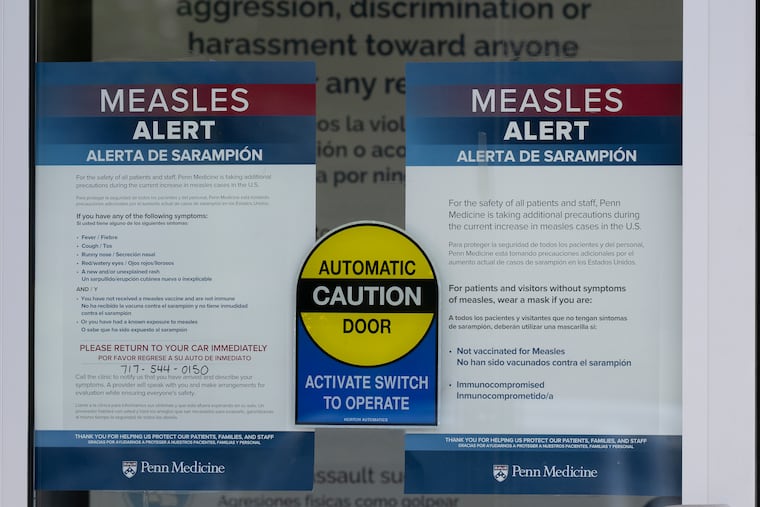
The loss of a child is always a profound tragedy, and any parent would take extraordinary measures to avoid that possible outcome. Potentially saving their child, though, would not justify the certain death of thousands of other children as a result of their actions, which is what would happen without the timely availability of vaccines. The risk-vs.-benefit consideration is the foundation of effective public health decisions. The Food and Drug Administration even has a reporting system for adverse effects after a vaccine comes on the market to ensure the blessings of getting a jab far outweigh the harms.
If every vaccine were evaluated solely on the occurrence of any adverse event, it would be regulated out of existence, and the death rate for the diseases the vaccines were meant to address would be catastrophic. While every death is devastating, the 10 deaths Vinay Prasad of the FDA has attributed to COVID-19 vaccinations would not statistically justify impeding the timely development of new vaccines. It is puzzling that President Donald Trump would allow a reversal of his greatest achievement: the timely development of vaccines.
Jo-Ann Maguire, Norristown
Join the conversation: Send letters to letters@inquirer.com. Limit length to 150 words and include home address and day and evening phone number. Letters run in The Inquirer six days a week on the editorial pages and online.