Letters to the Editor | Feb. 6, 2026
Inquirer readers on censorship at the President's House and a controversial nominee to the state's Board of Pardons.
Recognizing the past
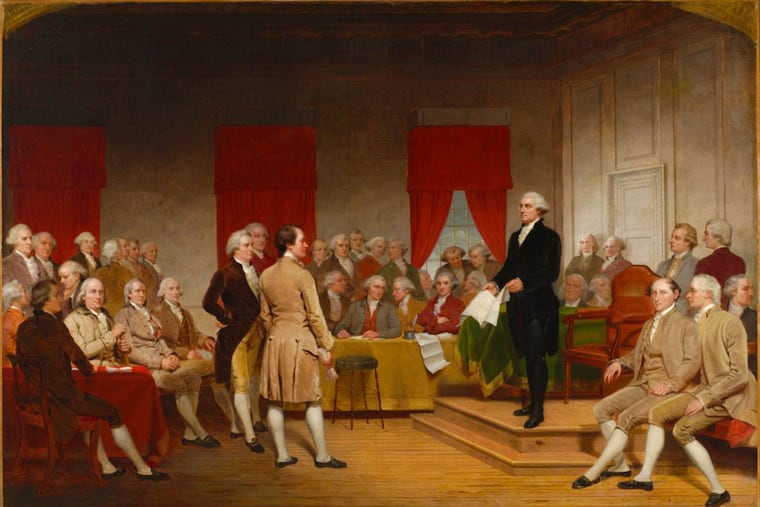
Why does it matter so much to the Trump administration that an exhibit about nine enslaved Africans at the President’s House be removed? Yes, we know this display does not allow Americans to skip past the horrors of enslavement and the daily violence that people of African descent faced. Yes, we know the display counters the majestic view of the Founding Fathers as saintly people who fought for the equal rights of all. Yes, we know this memorial ingrains in the American consciousness that Black people were thingified and their free labor built this country.
Simply put, the dismantling of this exhibit is an attempt to erase our collective consciousness so that Black children and white children grow up without a clear reference point of what this nation was. Without understanding what America was, we are bound to make the same oppressive mistakes. And what will efforts like this mean for the future of the curricula in our schools?
The removal of the exhibits was an assault on our spiritual eyes — the eyes we use to invoke our collective memory. My spiritual eyes watched a video of the dismantling and saw my ancestors being brutalized by the crack of the whip again. My spiritual eyes saw my ancestors labor to build a nation and fight for a country that does not see them as fully human.
The Sankofa proverb teaches us that progress occurs when we must recognize our past. Our past is not perfect; it is complex and filled with moments of dehumanization that make us all cringe and feel saddened. But examining and reflecting on the past allows us to build a better, more beautiful society together. Let’s take that path forward as a nation.
Nosakhere Griffin-EL, Pittsburgh
A disappointing nomination
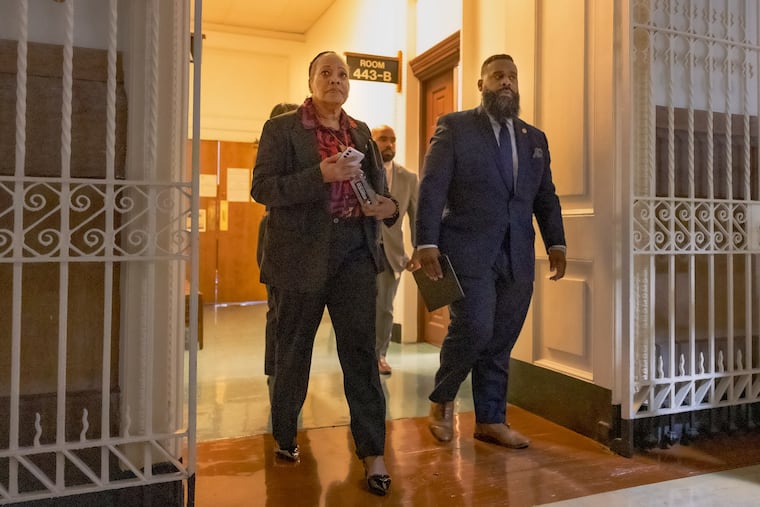
I know that I am not alone in expressing my deep disappointment in the confirmation by the Pennsylvania Senate of the Shapiro administration’s nomination of Dr. John S. O’ Brien II to the state’s Board of Pardons.
Dr. O’Brien will now help make the ultimate decision on both commutation and pardon applications from deserving people who seek to shorten their prison sentence.
My experience with the Board of Pardons is deeply personal. My father was the victim of a kidnap carjack robbery in 1980 and died as a result of the crime. The two accomplices to the carjacking, who did not intend to kill my father and did not kill him, were still convicted of second-degree felony murder, and they were sentenced to the mandatory sentence in Pennsylvania: life in prison without parole. They were 18 and 19 respectively.
They were incarcerated for 40 years. They more than paid for their participation. I felt so strongly about this that I was a key advocate for their release through the commutation process.
Dr. O’Brien is known for being a paid expert witness in criminal cases, almost always for the prosecution, often involving children. He has argued that accused children cannot be rehabilitated and should be charged as adults. This biased point of view goes against science and documented research.
People who committed or were participants in severe crimes when they were teenagers are often incarcerated for years and pay dearly for their crimes. These people deserve consideration (but not automatic release) when applying for commutation. To think otherwise is simply not true.
It is just wrong to deny people who have paid their debt to society a voice as they are fighting to prove they are not the same person they were at such a young age.
Nancy Leichter, Philadelphia
Join the conversation: Send letters to letters@inquirer.com. Limit length to 150 words and include home address and day and evening phone number. Letters run in The Inquirer six days a week on the editorial pages and online.