Letters to the Editor | July 27, 2025
Inquirer readers on ICE in Philadelphia, beach replenishments, and the 2026 World Cup.
No longer welcome
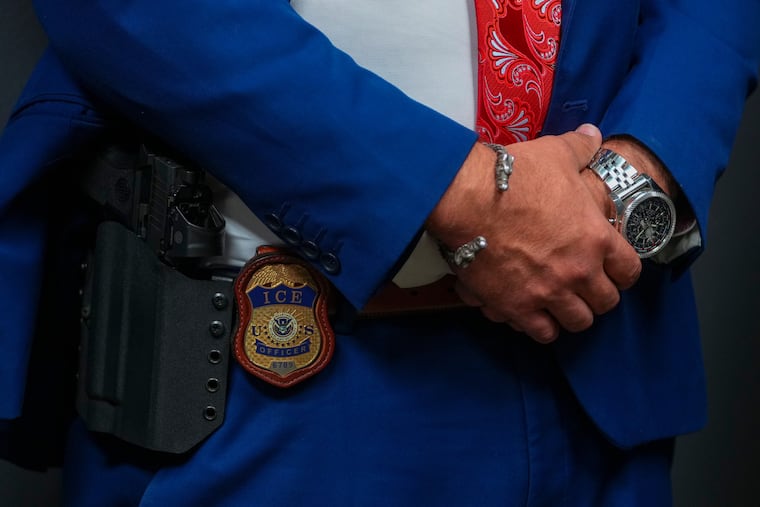
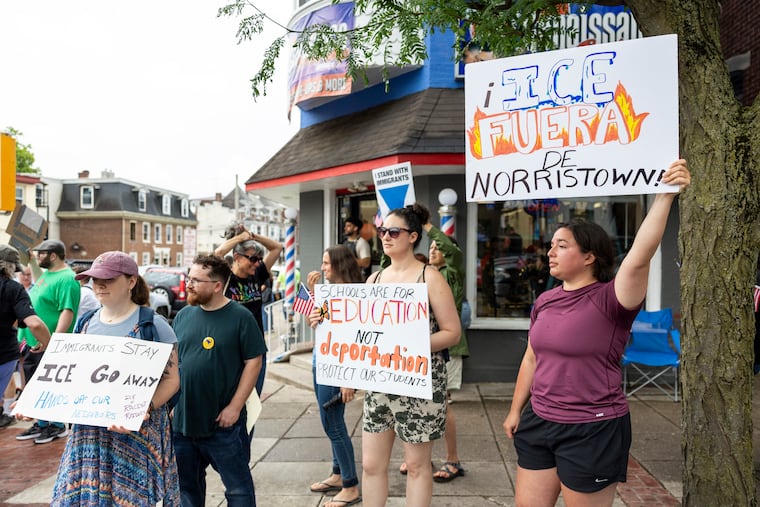
As mentioned in a recent Inquirer article, U.S. Immigration and Customs Enforcement arrests have been surging in the region since late May. Philadelphia once stood proudly as a sanctuary city, but the line from City Hall has recently shifted us to being a “welcoming city.” In light of recent events, even the term welcoming seems like a misnomer. These arrests are terrorizing our community and criminalizing innocent people. On July 16, a community member was allegedly pinned to the ground by ICE. Some local law enforcement have even taken it upon themselves to aid ICE officials, taking us one step further from our past legacy of being a place of shelter. As a community, we must denounce ICE enforcement in our city to make sure Philly is a safe and welcoming community for all.
Frances Avila-Soto, Philadelphia
Self-sustaining
According to The Inquirer, Shore towns will not receive any federal money for beach replenishments this year. The average house in Avalon is worth around $3 million. With a real estate tax of less than 1%, residents can easily pay to fix their own beach. Few people outside of Avalon use their beach, and those who do must pay for parking and beach tags. Let the rich pay for their beach.
Richard Abraham, Havertown
Good trouble
DeRay Mckesson wrote, “Our power can never be defined by the things we destroy; it must be, must always be, defined by the things we build.” At a time when forces from our nation’s capital pummel us daily with destruction, we raise up the voices of all who stand in protest, working to build a more perfect union. We raise up the voices of Harvard University, of the thousands of people across the country who stood up in memory of our late moral leader, Rep. John Lewis. We raise up the voices for unity, inclusion, multiracial democracy, protection of our voting rights and health services for our people. All our people. Those who seek to divide us cannot measure the power of individuals who come together with courage to build a just, welcoming, and compassionate America.
Marilyn Frazier, Ambler
Lemon location
Our city’s planners still have great locations to choose for the celebrations of the 2026 World Cup, but they’ve selected Lemon Hill — a lemon of a location. Please reconsider and pick one of these dynamic and more appropriate spaces for large groups: 1) Belmont Hill is a brilliant location with much wider open space for people and cars, and it has the best, by far, panoramic view of our lovely city. 2) FDR Park, all spruced up, has much more open space and infrastructure support, and is nearer to public transportation and to the World Cup games themselves. 3) The Mann Center is already set up for shows and celebrations just like this, with space for screens, and already has the supporting power, seating, and parking.
Lemon Hill lacks parking and facilities. It is surrounded by complicated, narrow roadways and lacks supporting electricity. East River Drive needs to be passable for the rest of our working residents, and there is a daily need by hundreds of others who use that area every day. The city should choose any of the other proposed locations as more expansive, more appropriate, and more manageable locations for the great celebrations of the World Cup games to be played here.
Gardner A. Cadwalader, Philadelphia
Stop the leaks
I’ve been privileged to witness America’s natural beauty and vibrant communities. I want future generations to inherit the same natural wonders and thriving communities, but that inheritance is threatened by severe climate disruption. In the 1960s and ‘70s, as tar balls washed up on beaches and oily sheens covered the water, oil companies claimed they couldn’t afford to stop leaks and spills. Despite pleas of industrial poverty, they’ve been forced to stop those discharges, clean up our oceans, and they still thrived.
Today, one of the industry’s most damaging discharges isn’t visible. It’s methane — an invisible, odorless, and very potent greenhouse gas — escaping in great quantities from wells and other sites across Pennsylvania. We can’t see it, but it is harming our health and damaging the planet. Once again, the industry says it can’t stop it; it’s too costly. In 2024, ExxonMobil, Chevron, and other gas producers posted tens of billions in profits. The Pennsylvania Department of Environmental Protection’s proposed methane reduction regulations are a good step forward, but they must go further. The true cost of gas production must be paid by the producers, not by society.
Peter Furcht, Philadelphia
Spending spree
The taxpayers in the American colonies were outraged by the English government’s continued tax increases. Taxes went up, up, up, and yet taxpayers received little or no benefits. Finally, the taxpayers had enough, and there was a tax revolt, the Boston Tea Party, and eventually a revolution. “Taxation without representation” was a slogan that turned the tables. People were fed up with sending their tax dollars to the government and getting nothing in return. Sound familiar?
Once our tax dollars are sent to Washington, there is little or no accountability of where or how your money will be spent. Congress allocates money to be spent on domestic and international programs. However, it seems the executive branch can reduce, eliminate, or reallocate funds to wherever it wants without congressional approval, which is unconstitutional. Donald Trump is spending the money he has, and wants to increase America’s debt load so he can spend more. He wants to reward the billionaire class with tax cuts to pay them back for financing his legal defense fund and his 2024 election bid. He wants unchallenged rule over America’s future and fortunes for whatever he wants. When Trump was a civilian businessman, he ran six companies into bankruptcy. Is he trying to do the same to America?
Susan Thompson, Media
Funding source
I recommend that Pennsylvania and Philadelphia take the bold step of looking at solutions that could address the SEPTA funding crisis in a sustainable manner, such as the congestion pricing program in Manhattan. Other cities around the country are paying attention. It’s time to think outside the box. The program is on track to bring in $500 million by the end of its first year, allowing needed upgrades to the Metropolitan Transportation Authority’s subway system, the purchase of electric buses, and improvements to its regional rail network. Improvements in air quality and quality of life because of the reduction of congestion have been noted, as well. I studied this approach in Europe as a German Marshall Fund of the U.S. fellow back in 1998. Other cities around the globe have adopted this approach for many years now. Significant care should be given to pricing policies that do not aggravate income inequities.
Robert Hicks, Philadelphia
Join the conversation: Send letters to letters@inquirer.com. Limit length to 200 words and include home address and day and evening phone number. Letters run in The Inquirer six days a week on the editorial pages and online.