Letters to the Editor | July 28, 2025
Inquirer readers on Josh Shapiro's take on Zohran Mamdani, Columbia University's settlement, and open primaries in Pennsylvania.
Moral clarity
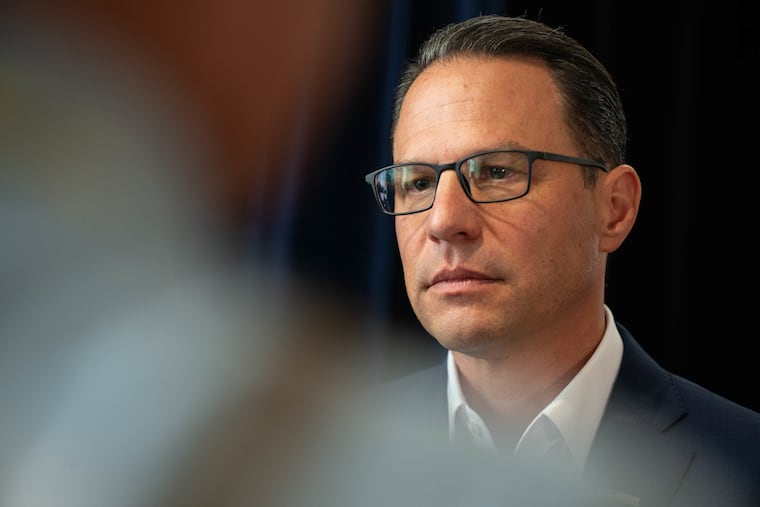
Gov. Josh Shapiro recently criticized Zohran Mamdani, the Democratic nominee for mayor of New York City, saying that “leaders have a responsibility to speak and act with moral clarity.” At issue is Mamdani declining to condemn the phrase “globalize the intifada,” instead explaining with nuance the phrase’s history referring to nonviolent protest, while acknowledging that it can also evoke violence and fear. It was notable because Shapiro himself cannot boast a record of moral clarity on language. Last summer, he refused to apologize for a racist, anti-Palestinian op-ed he wrote in college, even when called on to do so by 22 Pennsylvania-based peace organizations.
A real example of moral clarity comes from Brad Lander, New York City’s comptroller. Lander, who is Jewish, posted to X on Thursday: “The mass starvation & killing of Palestinians in Gaza at the hands of the Israeli gov’t is a chillul hashem, a desecration of God. Jewish leaders who criticized Zohran Mamdani for three words he doesn’t use should raise their voices loudly here as well.” Pennsylvanians who believe that anti-Palestinian racism is wrong, and that the mass starvation of Palestinians is an atrocity, are waiting for Shapiro to demonstrate the moral clarity he demands of others.
Justin Marshall, cochair, Prayers for Peace Alliance, Philadelphia
No champion
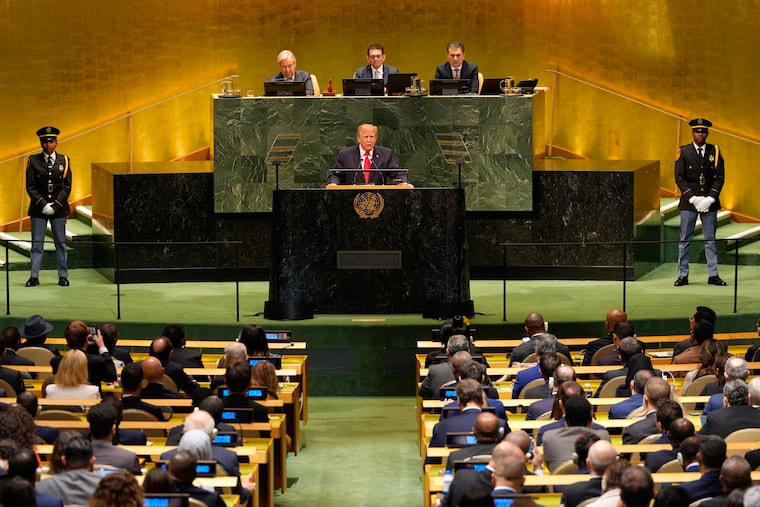
Columbia University just agreed to pay $200 million to the federal government, purportedly as a penalty for antisemitism it allowed to happen on its campus. Other universities have been chastised and threatened with cancellation of funds by Donald Trump for similar failings. Why am I uncomfortable with all of this? I am Jewish. Shouldn’t I applaud these efforts? I don’t. Using the excuse of combating antisemitism is a false positive. Among the almost endless catalog of grudges Trump holds is his distaste for liberal values and policies he believes have taken over many American universities. Penalizing them under the guise of protecting Jewish students is merely a convenient tool for him to brandish against them. Doing so will undoubtedly add fuel to false beliefs that Jews receive special treatment and somehow control the levers of government, finance, the press, and so on. Trump has never been a champion of protections for Jews. His current actions, allegedly on our behalf, are disingenuous and may, in fact, have the opposite effect.
Ben Zuckerman, Philadelphia
In the air
As a father and grandfather, I’m deeply concerned about the world we’re leaving for future generations as fossil fuels continue to heat the planet. In just a few decades, we’ve seen atmospheric CO2 levels rise from 280 parts per million to over 427 — driven by fossil fuels. And now, methane, a gas 86 times more potent than CO2 in the short term, is being released into Pennsylvania’s air at alarming rates — more than 1.1 million tons annually from oil and gas operations.
Climate change is a scientifically proven fact. Since 1980, the U.S. has suffered over 400 climate disasters totaling nearly $3 trillion in damages and claiming 17,000 lives. That’s why I urge Pennsylvania’s Department of Environmental Protection to adopt the strongest possible methane protections: require frequent inspections and faster repairs at all oil and gas sites, including small wells, reduce flaring, and engage impacted communities. In the face of the federal government dismantling clean energy technologies to promote the fossil industry, the commonwealth must lead. Pennsylvanians can make their voices heard at bit.ly/MethaneProtections.
Richard Whiteford, West Chester
A special place
Like Dick Allen, I, too, was raised in Wampum, Pa., and can attest to the wonderful community. When I tell my kids stories of what it was like growing up there, they always tell me it reminds them of a fairy tale. The high school basketball coach, L. Butler Hennon, treated all his players equally. My father played high school basketball in the 1940s with Allen’s brother, Coy, and my mother told me that when the team played away, if a restaurant refused to serve the Black players, Coach Hennon turned around and took the whole team elsewhere. Allen’s story portrays lessons of kindness, friendship, and teamwork that we could all learn from today.
Marilou Simon, Philadelphia
Hardly fair
I can’t argue with Michael R. Dimino’s op-ed on closed primaries being constitutional; they are. But the state constitution doesn’t force all Pennsylvania taxpayers to pony up for these private clubs to pick their candidates. It’s like paying for a party you’re not invited to. Dimino states the NAACP and Reproductive Freedom for All, for example, don’t let outsiders pick their leaders, but these organizations don’t get public money to fund the process of choosing those leaders.
About 15% of the Pennsylvania electorate is registered unaffiliated, and that number is growing. Yet, every year, independent voters are forced to pay for an election and then told to sit back and watch while each of the parties chooses the candidates who best represent issues that excite their rabid base, and then we have to hold our noses in the fall and pick the person who will do the least harm. Never mind that independent voters might play a part in picking a more moderate candidate who stands a better chance of representing the interests of all Pennsylvanians, or that the issues candidates run on will be focused on the needs of the public rather than tests on party purity.
If you want to tamp down on the partisan politics that are ruining this country, opening up primaries to everyone might be a step in the right direction, but good luck getting parties to change the rules. Paying for an election you can’t take part in may be constitutional, but it sure doesn’t feel fair.
Paul Magee, Upper Darby
. . .
The examples used by Michael R. Dimino in his op-ed are way out of line. Reproductive Freedom for All, Operation Rescue, the NAACP, and the Ku Klux Klan are all private groups. They raise private money to fund their organization. In the case of political parties and their belief that only party members should be able to choose their leaders, I’m fine with that. However, rather than using taxpayer funds, let them have their own elections or conventions at their own expense. Don’t use taxpayer funds for their exclusive little clubs. Open primaries would result in more centrist candidates and eliminate candidates from the extremes of the two major political parties. Open primaries would lead to dialogue toward building consensus and compromise. As it stands, the extremes from both parties discourage talking and building consensus. I believe 60% of voters are slightly right or slightly left of center. About 10% of each party are extreme (and 10% of each are radical). Open primaries equal better government.
Dave Humes, Wilmington, humesdc@gmail.com
Join the conversation: Send letters to letters@inquirer.com. Limit length to 200 words and include home address and day and evening phone number. Letters run in The Inquirer six days a week on the editorial pages and online.