Letters to the Editor | July 6, 2026
Inquirer readers weigh in on the Supreme Court’s birthright citizenship ruling and recall protests in Philadelphia during the Bicentennial celebration.
Stoking fear
Your reporting on the Bicentennial in Philadelphia reminds readers that then-Mayor Frank Rizzo stoked fears of July Fourth counterprotests, and thereby scared away tens of thousands of visitors. In his efforts to thwart protest, his unsuccessful demand for 15,000 federal troops predicted “disruption and violence by a substantial coalition of leftist radicals.” It was red-baiting rhetoric that sounds eerily like what we hear today.
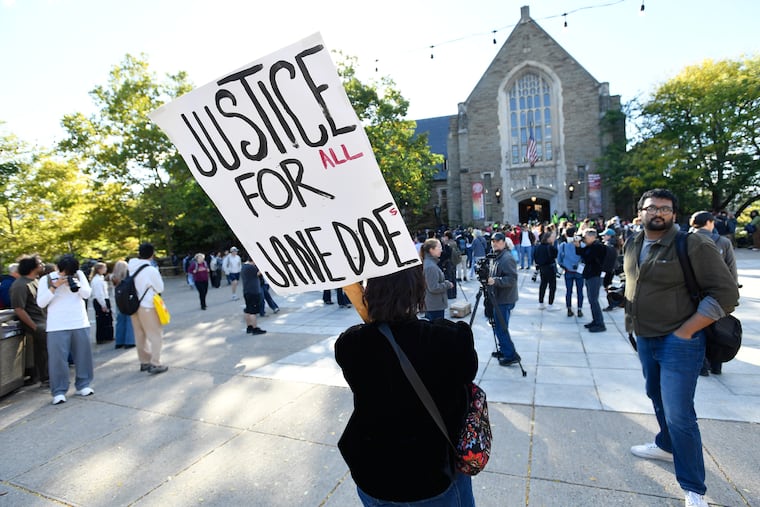
There were actually a few different protest actions on July Fourth. We were participants in the largest one, a national demonstration held in North Philadelphia and led by Puerto Rican and Native American activists, calling for “a Bicentennial without colonies,” as well as “jobs and a decent standard of living” and “full democracy and equality.” Hundreds of organizations mobilized for the protest. News accounts estimated as many as 40,000 people marched and rallied peacefully in Fairmount Park.
While the protest’s goals are yet to be achieved, this massive coalition effort in the face of repression by Mayor Rizzo was a boost to independent progressive politics in Philadelphia and beyond. This year, we are commemorating that protest and noting that milestones like America 250 are opportunities — not only to celebrate America’s birthday, but also to point out the unfulfilled promises of the Declaration of Independence, and to advance truthful, inclusive narratives about U.S. history.
Paul Socolar, Pedro A. Rodriguez, and Tony Heriza, July 4 Sin Colonias Coalition, Philadelphia
Fiscal irresponsibility
I appreciated the recent article illuminating Mayor Cherelle L. Parker’s decision to spend $15.5 million in taxpayer money on what is now called the “One Philly: A Unity Concert for America.” The price tag for the event seems to be in direct contradiction to what Parker said to striking municipal workers last summer — that meeting their demands for a new contract would put the “fiscal stability” of the city at risk. Moreover, given the fact that the Philadelphia School District is facing a $300 million deficit and narrowly avoided making significant staff cuts, spending $15.5 million on a concert sounds, to be frank, fiscally irresponsible. Simply put, Parker is prioritizing a concert that now bears her slogan over the stability of the city’s budget, which serves Philadelphians — proving, once again, that under the Parker administration, it’s not “One Philly,” it’s “Her Philly” — and we just pay for it.
Jeff Wasch, Philadelphia
Speak up
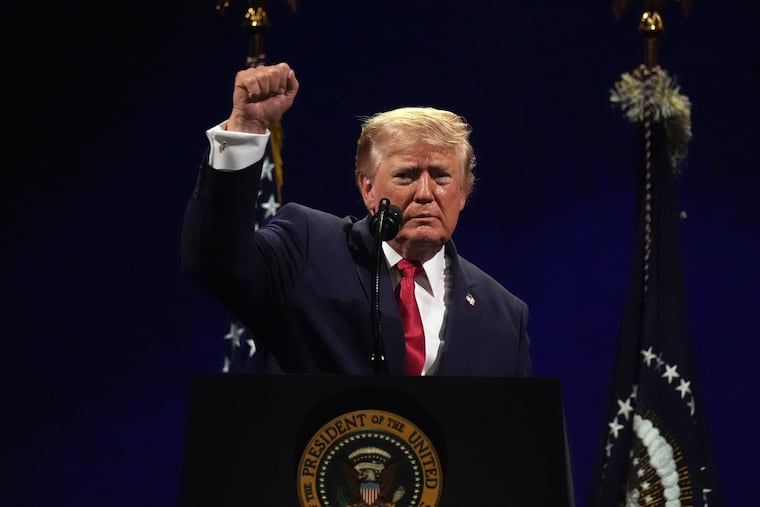
I studied political science in college and constitutional law in law school. In 50 years of law practice, I dealt with the occasional constitutional issue. None of my training or experience has prepared me for what the Trump administration is doing to the delicate balance we have called democracy. Hard to imagine that four justices of the U.S. Supreme Court had doubts about birthright citizenship, impossible to think that massive, unauthorized, and garish changes to the White House could be done by incompetent contractors whose meager qualifications include paying vast sums to the president while the Republican-led Congress does nothing to prevent it. A president who ignores the Constitution, statutory law, and judicial rulings while continuing to line his pockets — and those of his children — with billions of dollars of ill-gotten gain? It’s all happening every minute. The midterms and the November election are our best and last chance to throw these criminals out of office and take back America. In the meantime, speak up, attend rallies, and by all means try to persuade anyone who is on the fence to come over and help repair the harm.
Marc P. Weingarten, Palm Beach Gardens, Fla.
. . .
The elephant in the nine individual judicial chambers of the U.S. Supreme Court for the past three months was Donald Trump’s bogus executive order intended to end the absolute right to U.S. citizenship for every child born within the borders of the United States and its territories (with the ridiculous exception of American Samoa), as mandated by the Constitution and a prior court ruling. Trump has proved to be the most racist president since Theodore Roosevelt (look it up). He claimed, without evidence, that Barack Obama, son of a citizen and born in Hawaii, was an “illegal.” For years, with coaching and encouragement from the odious Steven Miller, he has been on a mission to cleanse America of nonwhite residents and darker-skinned immigrant citizens. Haitians fleeing for their lives from mercenary gangs, poverty, hurricanes, and earthquakes? Trump’s message is get the hell out. Lily-white Afrikaners from South Africa are welcomed with open arms. Need a visa? No problem. Unless Trump is removed from office by impeachment, we will have the cruelest and stupidest chief executive occupying the presidency for an implausible 31 more months — and at least four of nine Supreme Court justices and dozens of Republicans in Congress still ready and willing to defy the Constitution for him. They are a true enemy of America’s constitutional democracy and its creed — “out of many, one.”
David Kahn, Boca Raton, Fla.
Public philosophy
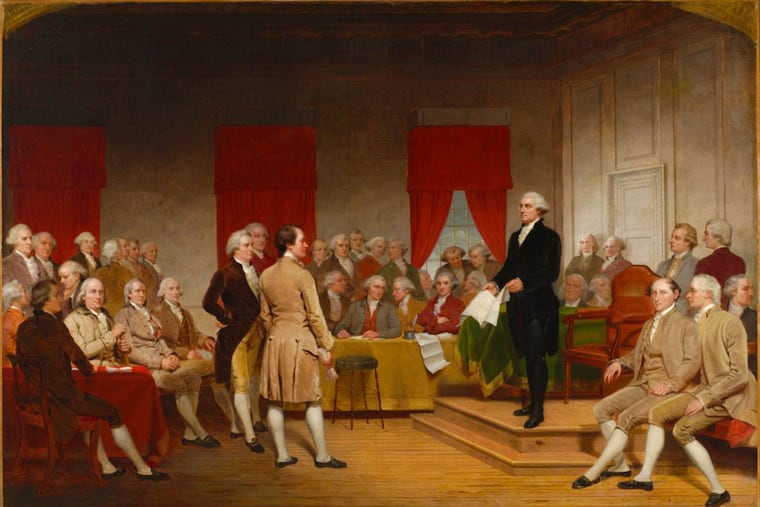
I write regarding a recent article about the draft report issued by President Donald Trump’s Religious Liberty Commission. To solve the problem of a secular public square, the report calls for the elimination of the principle of separation of church and state and the elevation of Christianity. However, the problem of the public square being empty of moral meaning is not a result of the separation of the state from the church. Rather, it is due to the separation of the state from a public philosophy through which moral order can be arrived at through evidence and reason, rather than revelation. Such a public philosophy provided the foundation of our democracy from the Age of Enlightenment of our founders until the latter half of the 20th century, when morality became privatized. The case for revival of this philosophical tradition was first made in 1955 by the political philosopher and journalist Walter Lippmann in his classic book, The Public Philosophy, and more recently by commentators such as David Brooks. A philosophical moral order that underlies our government, social relations, and marketplace — arrived at through reason — avoids the potential oppression of a state-established religion that our founders sought to preclude.
Donald Kelly, Havertown
Art of the Donald
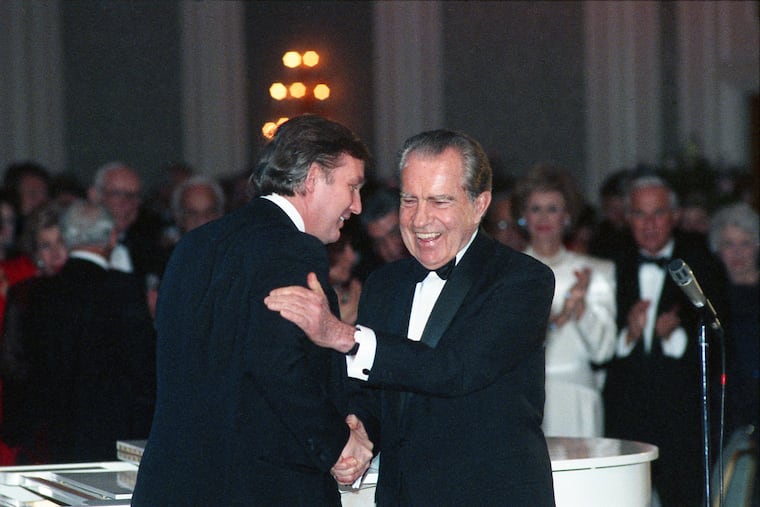
In his book The Art of the Deal, Donald Trump bragged about his negotiating skills. So let’s see how they are faring during his presidency. He awarded a no-bid $14 million contract to his favorite pool maintenance company to correct alleged flaws in the Lincoln Memorial Reflecting Pool after claiming the job would cost less than $2 million. How’s that working out so far? And it was recently revealed that he awarded a no-bid $500 million contract to the company building his wonderful ballroom after claiming the project would cost far less and be covered by donations from his cronies. Way to go, Don. And let’s not overlook his “agreements” with Iran to end his flawed (failed?) war that he promised would replace its authoritarian regime, remove its potential nuclear weapon capabilities, and reopen the Strait of Hormuz, which had never been closed to international shipping until his war began. So far, his war seems to have failed in achieving many of his goals. And the Strait of Hormuz? Its shipping lanes are only partly open and are now subject to fees never before charged by Iran. His next book should rightly be titled The Art of the Fail.
Ben Zuckerman, Philadelphia
Join the conversation: Send letters to letters@inquirer.com. Limit length to 150 words and include home address and day and evening phone number. Letters run in The Inquirer six days a week on the editorial pages and online.