Letters to the Editor | June 12, 2026
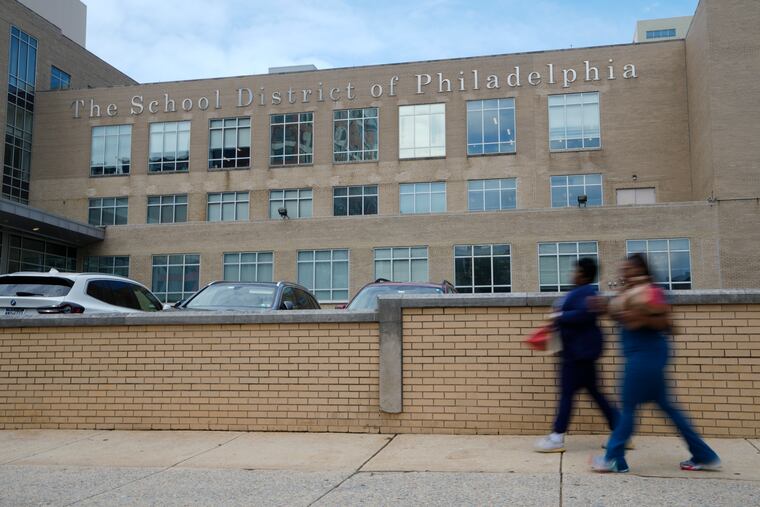
Inquirer readers weigh in on allegations of grade inflation in Philadelphia public schools.
Grade inflation fails
Thanks for your candid article on grade inflation in Philly schools. Perhaps the reason the children live in poverty and are incapable of holding a job is that the public education system is an abject failure. Some misguided souls think these students should be given “equality of outcomes” — that they should be treated the same as the student who works hard, gets a legitimate “A,” and can read and do math at grade level on proficiency tests. As the old proverb says: “If you give a man a fish, he eats for a day. If you teach him to fish, he eats for a lifetime.” Philadelphia has been giving students a fish for decades — and the remainder of their lives is hunger.
Alexander W. Ross Jr., Mount Laurel
. . .
The practice of giving wholesale passing grades in the Philadelphia School District — even for students who rarely show up to class or do not master most of the required content — is a very old story for which inadequate funding often takes the blame. But like many persistent problems in the district, this situation could be remedied if administrators took the time to identify and replicate the best practices in schools that are serving high percentages of low-income students, where grades actually are an accurate reflection of academic performance. A common thread in those schools is that struggling students receive the extra supports they need. The district should know what those schools are based on the reams of data it collects every year, but it seems to have done little or nothing to duplicate their efforts.
When large numbers of Philadelphia high school graduates cannot pass the basic skills test for a job requiring only a high school diploma, or the placement test for college-level classes at community college, the message is clear: Grade inflation may be acceptable in the school district, but it doesn’t work in the real world.
Debra Weiner, Quakertown
. . .
I sincerely hope people are reading the wonderful reporting of Kristen A. Graham regarding education issues. As a result of her work, we readers have learned that Philadelphia’s teachers essentially can’t fail anyone.
What’s the point of education if a teacher giving a student an “F” is overruled by a principal?
And whom do we thank?
For starters, I would look at people like Jeff Yass, whose hostility toward public schools, tens of billions of dollars, and campaigns for “educational freedom” have increased the pressure on administrators to the point where some of them might foolishly think that this kind of grade inflation is actually helpful.
In my humble opinion, every single teacher I had at Olney High did more for America than ByteDance, the politically divisive, Chinese-owned parent company of TikTok, which is responsible for much of the riches of the wealthiest Pennsylvanian.
Should a school’s first priority be to educate children? Or to make money?
The debate is elevated by Ms. Graham’s wonderful reporting, and I, for one, thank her.
Al Gardner, Olney High School, Class of 1964, Bolivia, N.C.
Join the conversation: Send letters to letters@inquirer.com. Limit length to 150 words and include home address and day and evening phone number. Letters run in The Inquirer six days a week on the editorial pages and online.