Letters to the Editor | June 4, 2026
Inquirer readers on pedestrian safety and budget cuts at the University of Pennsylvania.

Danger by design
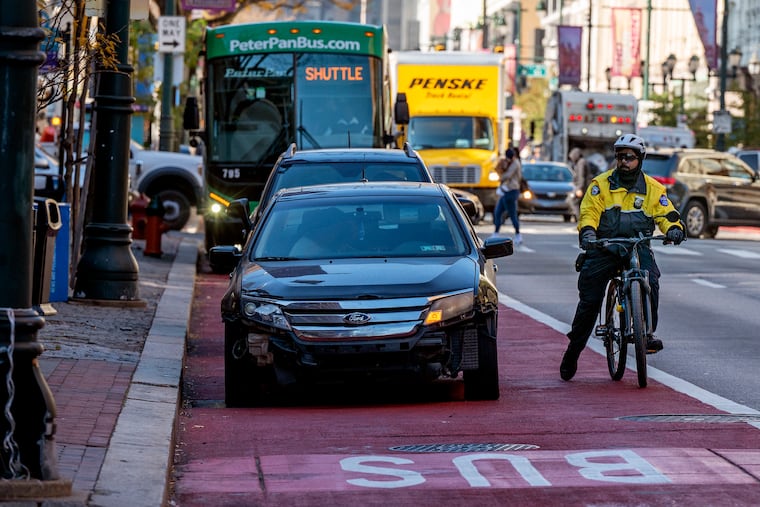
The recent tragic death of a pedestrian on 11th Street in South Philadelphia should prompt the city to take a long, hard look at the street’s design. Between Reed and Bainbridge Streets, there is a northbound bus route, two-way traffic running in narrow lanes, angle parking on both sides, and a two-way bike lane on the west side of 11th. It’s a recipe for disaster with no room for error.
Cyclists deserve safe, adequately protected bike lanes; drivers turning off 11th going south cannot see oncoming bike traffic because of parked cars. Pedestrians must be able to see oncoming traffic regardless of the light’s color, and this is risky when SUVs and vans the size of the one involved in Saturday’s crash angle park nearly in the crosswalk. The Philadelphia Parking Authority refuses to ticket them because of a lack of “no parking” signage that still hasn’t been installed. “Legally” parked vans and trucks pose an obvious hazard, too, on such a narrow passageway.
To improve safety, the street should run one way (north), long vans and trucks should be prohibited from angle parking on 11th, and the bike lanes should be moved away from the curb. The city must not wait for another tragedy to do the right thing.
Joyce Roman, Philadelphia
Honoring survivors
On June 4 — Holocaust Survivor Day — we remember the resilience and enduring legacy of Holocaust survivors while honoring the approximately 196,600 survivors alive today. More than 80 years after liberation, survivors continue to share their experiences, strengthen communities, and inspire future generations.
Too often, the Holocaust is framed only as history. We believe, at our core, that Holocaust education must always center firsthand testimony, connecting the antisemitism of the past directly to the horrifying rise we observe today. Honoring the memory of these survivors requires looking honestly at their present.
In the United States, it is estimated that more than 30% of Holocaust survivors are living in poverty. If we claim to honor them, we have a collective obligation to ensure they can live their final years with absolute dignity. After the terror they endured, no survivor should spend the final chapter of their life being forced to choose between food, rent, medication, or home care.
At Seed the Dream Foundation, we believe that honoring survivors means preserving their testimonies, educating about the Holocaust alongside contemporary antisemitism, and providing immediate, tangible relief to meet their urgent, day-to-day needs.
We are among the last generations who will have the privilege of knowing Holocaust survivors personally. This profound reality calls on each of us to pause, listen, and cherish the time we still have with these extraordinary individuals. Their resilience, wisdom, and humanity are living gifts, and their stories are our responsibility to carry forward.
Marcy Gringlas, president and cofounder, and Talia Kaplan, executive director, Seed the Dream Foundation
Penn prez profile
As an alumnus of the University of Pennsylvania who has sadly watched my beloved alma mater drift from what should be its core mission, I was encouraged by your profile of president J. Larry Jameson. His directive requiring departments to trim 4% from their budgets is a welcome step back toward institutional sanity.
Penn’s priorities have become increasingly difficult to defend. Over the last few decades, the growth in the university’s bureaucracy has often felt less like it was designed to provide support for the academic mission and more like a mission unto itself.
Universities exist first and foremost to teach, discover, and develop talent. Budget discipline alone will not solve every problem, but confronting administrative bloat is an overdue place to start.
Brian Suckow, Palo Alto, Calif.
Join the conversation: Send letters to letters@inquirer.com. Limit length to 150 words and include home address and day and evening phone number. Letters run in The Inquirer six days a week on the editorial pages and online.