Letters to the Editor | March 2, 2026
Inquirer readers on the hidden Epstein files and the meaning of Ramadan.
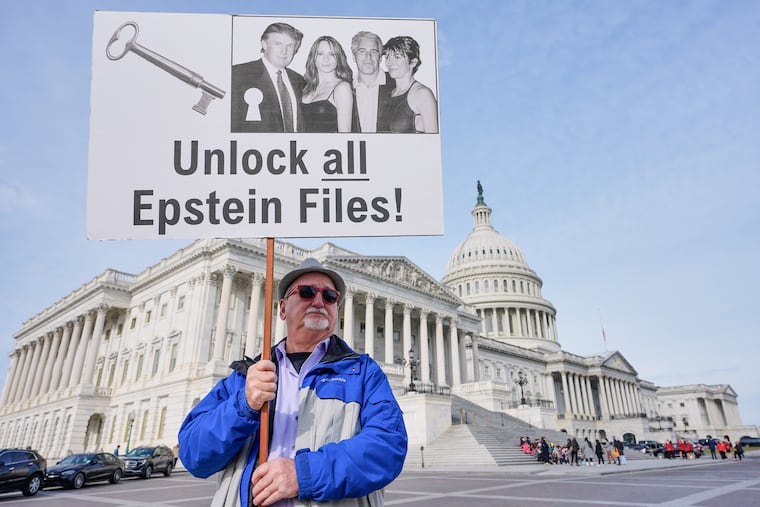
Dangerous men
It is beyond disgusting that the prince formerly known as Andrew was finally arrested, not for any of his alleged egregious crimes with underage girls and women, but for some impropriety with government documents. I’m waiting for whatever materializes against our current leader regarding the Jeffrey Epstein files, despite the dozens of women who had already voiced claims of sexual assault before he was first elected president. There is no denying that men have a zipper problem. It transcends race, religion, ethnicity, politics, wealth, age, education, legal status, you name it. Would relaxing views on celibacy, masturbation, and decriminalizing sex work help? I don’t know. Women are still regarded as chattel and statistically have a one in three chance of being the victim of physical or sexual violence in their lifetime. It didn’t spare this writer. It won’t spare your mother, sister, daughter, neighbor, coworker, nurse, teacher, or friend. One in three women is a victim! Please report and support to help end sexual assault against women. Enough!
K. Mayes, Philadelphia
Missing documents
Fifty-two years ago, Richard Nixon famously proclaimed, “People have to know whether or not their president is a crook.” As applied to our current president, one jury has already answered that question, and repeated revelations regarding his (and his family’s) financial dealings suggest an unfortunate answer (unfortunate for the country, but not for his family’s bank accounts).
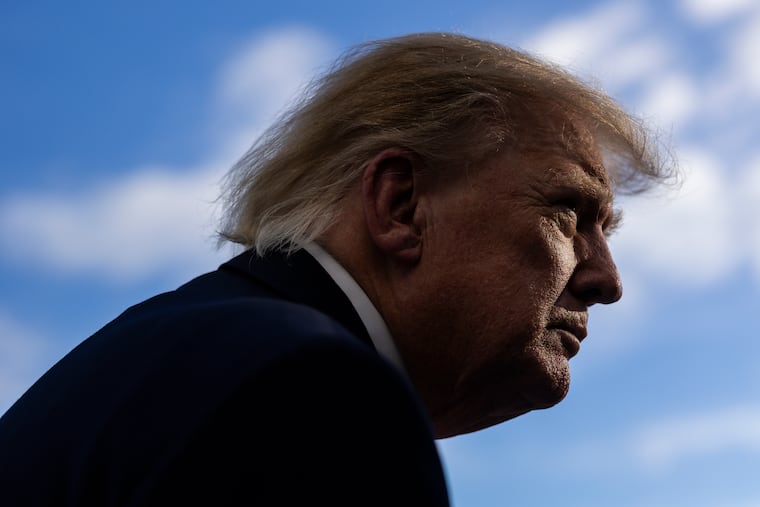
Beyond Nixon’s mandate, the American people have to know whether their president is a pedophile. However, under Donald Trump’s absolute control, the U.S. Department of Justice (now staffed with his acolytes, the “Roy Cohns” whose absence Trump lamented during his first term) refuses to release millions of files related to Jeffrey Epstein, and has produced documents rendered meaningless with many redactions in violation of federal law.
As with his other legal and moral challenges, Trump’s robotic claim of “complete exoneration” rings hollow unless and until the evidence is revealed and analyzed. As Trump continues to give the survivors, members of Congress, and the American public the middle finger, where are the elected Republicans? The answer to that one is also obvious: Still cowering under their beds with the lights out.
Stephen Ulan, Wynnewood
Dress for respect
Two recent comments by Pennsylvania’s senior senator, John Fetterman, caught my attention. For one, he criticized Democrats who boycotted the State of the Union address, saying it was a matter of respect for the office of the presidency. At another point, he acknowledged that he usually “dresses like a slob” before showing up in a suit for Donald Trump’s address. Should we conclude from his own comments that he respects the president but not his colleagues?
Laslo Boyd, Philadelphia
Inspired to give
Ramadan has begun. It’s a sacred month observed by Muslims through fasting and prayer. From dawn to dusk, Muslims abstain not only from food and drink, but also from harsh words and other negative behaviors. As the Holy Quran teaches, “O ye who believe! fasting is prescribed for you … so that you may become righteous” (2:184). Ramadan is, at its heart, a time for spiritual growth and moral renewal.
Experiencing hunger reminds us of our neighbors who face it daily. The Holy Prophet Muhammad (peace and blessings be upon him) said, “He is not a believer whose stomach is filled while his neighbor goes hungry.” In a nation where one in eight families has faced food insecurity in recent years — disproportionately affecting single-parent households, families below the poverty line, and many families of color — this message feels especially urgent.
Ramadan calls Muslims to increase their generosity and to feed the needy. We invite our fellow Americans, regardless of faith, to join in supporting local food banks, shelters, and community initiatives. Together, we can transform empathy into action. Though Ramadan is usually marked by joyful gatherings, we are mindful of the many around the world suffering from conflict and hardship. We pray for peace, justice, and for leaders to place our shared humanity above division. May this month inspire compassion and service for all.
Madeel Abdullah, Garnet Valley
Little things
“Don’t sweat the small stuff” is a phrase we usually hear in personal life, not in healthcare. But hospitals would do well to take it seriously — because in medical settings, the “small stuff” is often anything but. Patients and families routinely encounter minor lapses that, taken individually, may seem inconsequential: unanswered call buttons, missing medications, delayed transport, incomplete discharge instructions, inaccurate charts, malfunctioning equipment, or staff who are stretched so thin that basic communication falls apart. None of these failures alone makes headlines. Yet, together, they erode trust, increase risk, and ultimately affect outcomes.
Hospitals are rightly focused on major metrics — mortality rates, readmissions, infection control, and cutting-edge treatments. But an exclusive focus on big-picture indicators can blind institutions to the everyday breakdowns that define the patient experience. When small problems are tolerated, normalized, or dismissed as inevitable, they accumulate into systemic failure. For patients who are elderly, seriously ill, or frightened, these “little things” are not abstractions. They are moments of confusion, discomfort, and vulnerability. For families, they are warning signs that no one is fully in charge.
Attention to detail is not cosmetic; it is clinical. Precision, follow-through, and accountability at the smallest levels are the foundation of safe, humane care. Hospitals that truly aspire to excellence must insist on reliability not only in the operating room, but in the hallway, the chart, the shift change, and the bedside conversation. If hospitals want better outcomes, they should start by sweating the small stuff.
John C. Levine, Philadelphia
Not a hoax
It is disturbing to watch Donald Trump’s Environmental Protection Agency take a huge step backward on protecting the world as we know it. We know the climate emergency will determine the future for all living things on Earth. Many aspects related to the weather — extreme storms, droughts, heat waves, freezes — are being affected. Several years ago, I read a small book on climate change by Greg Craven, a science teacher in Corvallis, Ore., who produced a series of short videos that explained phenomena such as the melting of polar ice caps and thawing of the tundra, both of which would likely lead to dramatic shifts in the weather we have known for millennia. Both are now happening.
Craven created a chart on the impact of taking climate action. There were four squares: 1) Climate change is not a problem, and we don’t take action. 2) Climate change is not a problem, and we take action that proves unnecessary. 3) Climate change is a problem, and we do take action. 4) Climate change is a problem, and we don’t take action. It’s that last box that we are now putting ourselves in, and it’s the one box Craven said we should avoid at all costs.
Sue Edwards, Swarthmore
Join the conversation: Send letters to letters@inquirer.com. Limit length to 150 words and include home address and day and evening phone number. Letters run in The Inquirer six days a week on the editorial pages and online.