Letters to the Editor | March 6, 2026
Inquirer readers on the Iran War, school vouchers, and humanitarian aid for African nations.

Louder than words
In the last presidential election, this lifelong conservative voted for Kamala Harris, not because I supported her positions on matters foreign or domestic, but because I believed her opponent was seriously deranged and would lead us into war. Now, little more than a year into the second Trump administration, here we are at war. If people wonder how the dictators of the 20th century gained power, they need only look at our 2024 presidential election. How could an allegedly sane, reasonable, and informed electorate have put such a lunatic into the most powerful position on earth?
Up until now, the United States had been an example to the world on how to manage power. We tried to show our neighbors that our primary focus was avoiding conflict, even though we had the power to bend the world to our will. Avoiding conflict is what rational, thinking, 21st-century people do.
But now we kidnap and murder foreign leaders and commence hostilities that could lead to a world war — all while members of Congress sit on their hindquarters twiddling their thumbs. What do these kinds of actions tell our neighbors around the world?
Mike Egan, Plymouth Meeting
This is us?
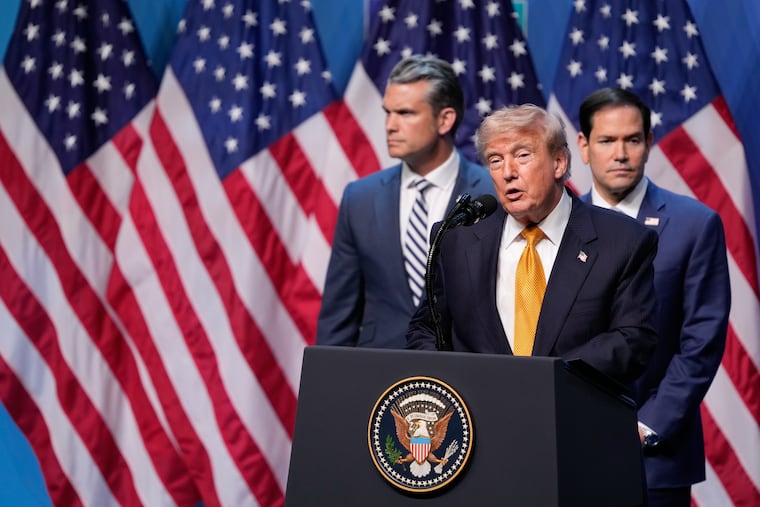
After seeing our nation’s leadership — from Donald Trump to Pete Hegseth to the entire Republican Party — I can’t stop asking myself: Is this what our country has become?
This administration — including its GOP enablers in Congress and Democratic Sen. John Fetterman — has endorsed the outright murder of people in other countries. They try to justify the bombing of children in elementary schools in Iran. They pay lip service to diplomacy. They ignore international law. Is this what our country has become?
This is certainly not what I believe or want, and I don’t think most Americans want it, either. We need to do something about this. It’s time for regime change of our own through safe and secure elections, which we’ve demonstrated we can execute with the systems we have in place.
In the meantime, contact your senators and call your representatives and tell them this has to stop. That this is not who we are as a country. We cannot sit back and do nothing. It’s time to act.
Jeffrey Plaut, Elkins Park
Needless sacrifice
President Bone Spurs initiated a war in Iran without consulting Congress, leaving our young soldiers solely at the mercy of his erratic behavior. We have already seen at least a half dozen service members killed. Donald Trump coldly states that some soldiers will die. How dare he diminish the ultimate sacrifice made by our troops when he wasn’t even willing to serve? His Iranian adventure is illegal and immoral. My heart breaks for the families who’ve lost their young sons and daughters — and those who still might before this unnecessary war is over.
Barbara Schwartz, Lafayette Hill
See something?
The phrase, “If you see something, say something,” was popularized after the 9/11 attacks. For 25 years, the U.S. Department of Homeland Security (DHS), the police, the FBI, and the transportation authorities told us, “If we see something, say something.” In 1943, Anne Frank wrote: “Terrible things are happening outside … poor helpless people are being dragged out of their homes. Families are torn apart; men, women and children are separated. Children come home from school to find that their parents have disappeared.” But then, as now, government officials, community leaders, and everyday citizens choose to look away, mumble in weak protest, or collaborate.
We have seen horrific videos of DHS actions. To find out what happened to someone taken by U.S. Immigration and Customs Enforcement, we are told to use the ICE Online Detainee Locator System and enter their name, country of birth, and birth date, or alien registration number. How can we know this about someone taken at the Wawa or Home Depot? In all these hundreds of thousands of ICE arrests, has anyone been picked up by ICE impersonators and kidnapped, raped, or trafficked? When we see masked, unidentifiable, gun-toting people stuffing someone in an unmarked vehicle, should we call the police? Is it time to consider that immigrants might be the first target? Martin Niemöller, originally a Nazi supporter, was imprisoned in Nazi concentration camps from 1938 to 1945. After the war, he explained his complicity in his poem, “First They Came.” “First when they came for the Socialists. I did not speak out, because I was not a Socialist.” And he ended, “Then they came for me — and there was nobody left to speak for me.”
Lynn Strauss, West Chester
Lifesaving aid
The administration is currently considering a plan to end all humanitarian aid to seven African nations: Burkina Faso, Cameroon, Malawi, Mali, Niger, Somalia, and Zimbabwe. These programs survived the initial U.S. Agency for International Development (USAID) cuts due to the fact that they were judged to be lifesaving by the administration’s standards. An internal State Department email states that these cuts are happening because “there is no strong nexus between the humanitarian response and U.S. national interests.”
Foreign assistance accounts for less than 1% of the federal budget, but is critical for meeting the most basic survival needs of people in danger of starving to death. A former senior State Department official, who left the administration in the fall, said, “If we don’t deliver this, people die immediately.” Cutting off aid also presents serious national security risks. When humanitarian support vanishes, terrorist groups rush to fill the vacuum — distributing food to bolster their local legitimacy.
The members of Pennsylvania’s congressional delegation should ask State Department officials to provide a more detailed explanation of these potential aid cuts and clarify their impact on U.S. national interests in these countries.
Jackson Duncan, Philadelphia
False choices
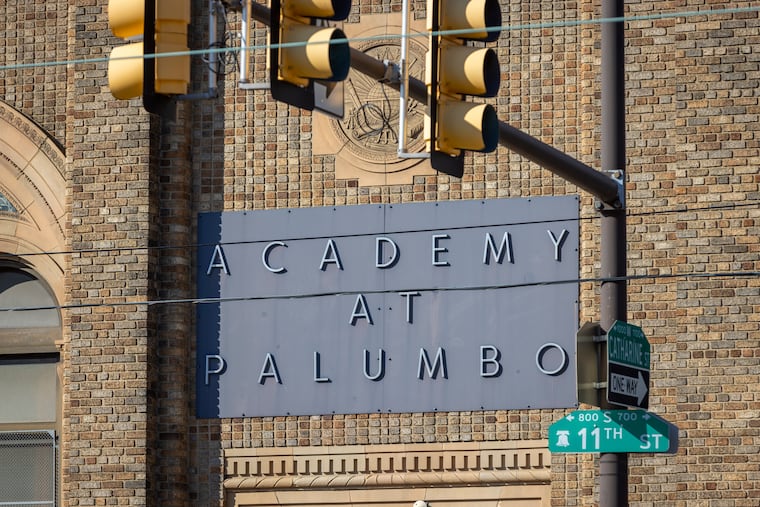
A recent op-ed touting the virtues of school choice was yet another example of the conservative mindset transparently attempting to convince us that they alone know what’s best for the schoolchildren of Pennsylvania. This current iteration of feigned concern is prompted by the recent announcement of pending public school closures in Philly.
Not surprisingly, the authors of the opinion piece are the president and CEO of the ultraright Commonwealth Foundation, along with one of the group’s distinguished fellows. While lamely using the proposed closures to energize their agenda, the truth behind all the artificial hand-wringing is simply economic. They want more, if not all, taxpayer education dollars to go to private hands.
They innocuously incorporate the value and necessity of expanding cyber schools into the mix. While these schools are a needed venue for students with challenges attending brick-and-mortar buildings, they are also a windfall for the operators: minimal start-up costs, limited overhead, and so on. Think of the fortunes being made with virtual casino gambling on a phone.
Cyber schools should not be expanded, but used as a last resort — all children need in-person learning, where they gain the ability to interact with other kids and teachers and pick up valuable life skills.
So let’s not succumb to the hackneyed statistics that charter and cyber school students achieve higher test scores — that is overwhelmingly a result of the reality that those schools can (and do) cherry-pick their students.
When the uber-wealthy and their conservative think tank messengers tell us they know what’s best for your children, ask yourself why they are so “concerned.”
J. Savage, Philadelphia
Full disclosure
I agree with the quote used by Andrew Lewis and David Hardy in their recent op-ed describing participation in the Education Freedom Tax Credit (EFTC) as a “no-brainer” — because no intelligent politician should allow such a program into their state.
There are some parents who do want a different school option from the one in their neighborhood, but educational tax credits and vouchers are not the answer, because these programs offer little or no obligation to the public about how successful they are in providing a proper education. Those programs and their advocates may claim families don’t need the type of hard data that can be found on public education websites because they can rely on recommendations from participating families. But isn’t that the type of approach that bankrupted those businesses and households that relied on unresearched endorsements about Bernard L. Madoff Investment Securities LLC?
If Messrs. Lewis and Hardy are truly interested in school choice, then families should be provided with the full information needed to make the right decisions for their children. Otherwise, there is not much of a difference between school choice and any other form of gambling.
Barbara McDowell Dowdall, Philadelphia
Join the conversation: Send letters to letters@inquirer.com. Limit length to 150 words and include home address and day and evening phone number. Letters run in The Inquirer six days a week on the editorial pages and online.