Letters to the Editor | May 4, 2026
Inquirer readers on controversies over school dress codes and the energy demands of data centers.
Supply, demand
For complementary reasons, the Pennsylvania Senate should pass two bills before adjourning for the election season. Both bills were recently passed by the state House.
The first bill, the Data Center Act of 2026, requires energy-hungry data centers over time to draw increasing fractions of their energy from fossil-free sources — 10% by 2027, 14.5% by 2030, and 32% by 2035. The benefits of this legislation are twofold: healthier and cleaner air, as well as less expensive energy for Pennsylvania’s ratepayers.
While the Data Center Act boosts demand, the second bill, House Bill 504, the Community Solar Act, boosts supply. The act facilitates development across the state of solar energy by enabling residents who cannot invest directly in home solar to subscribe to a community solar project. As a result, participants will enjoy a credit on their utility bill commensurate with their investment. This democratization of solar energy has the additional important benefit of boosting the supply of affordable energy.
These two complementary bills will help to protect consumers from spiraling energy prices driven by data centers’ demand for electricity. Pennsylvanians should urge their state senators to call for a vote on them in the near future.
John Francis, Philadelphia
Dress code woes
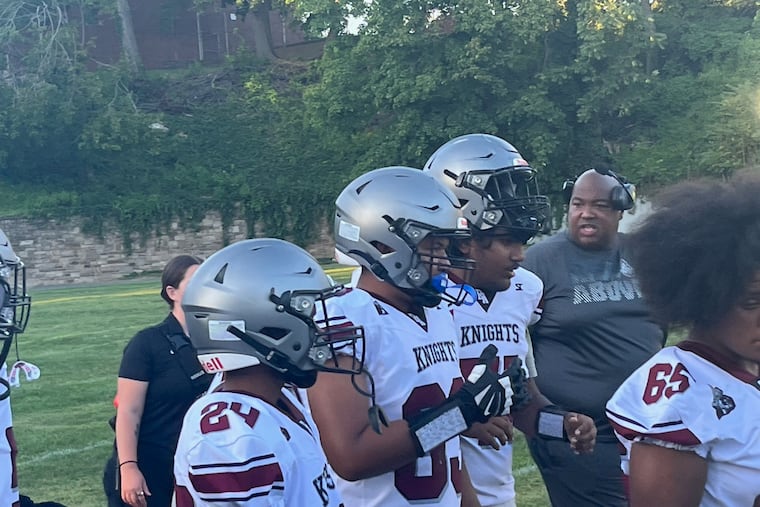
I feel bad for both the school administrators and staff and the students, as well, with the controversies that come up with dress codes, like the recent demonstration at the Philadelphia High School of Creative and Performing Arts.
As a principal, I’ve been through these, and sadly, unless the parents and the kids themselves help craft sensible codes, they will fail to achieve what they aim to.
What it boils down to is acknowledging that middle and high school kids are into appearance. They want to be comfortable and fashionable. They want approval and affiliation.
When a school sits down with parents and guardians and the students and asks them to craft a policy that maintains the dignity of the male and the female, and allows reasonable freedom of choice, something workable will result.
Otherwise, we are asking our school leaders to waste a lot of time and energy punishing and being punished.
Get back to learning and teaching — that’s what matters most.
Ernest Angiolillo, retired principal, Philadelphia School District
Religion in the classroom?
The Fifth U.S. Court of Appeals in New Orleans ruled that Texas can display donated posters of the Ten Commandments in every Texas classroom. Permission for Arkansas and Louisiana to do so can’t be far behind. Students should be asking questions. Early elementary student: “Teacher, what is adultery?” High school student: “Teacher, what does covet thy neighbor’s wife mean?” This could lead to interesting classroom discussion, although sex education doesn’t feature in the court’s reasoning.
This decision flies in the face of the founder’s intent, which was to allow for no establishment of religion by government. This court intends to reverse the Constitution’s First Amendment establishment clause and its 14th Amendment-based application of “equal protection of the laws” to all in each state. Not a surprising intent for the Fifth Circuit Court, but what will this U.S. Supreme Court do if an appeal reaches it?
Ann Burruss, Newark, Del.
Join the conversation: Send letters to letters@inquirer.com. Limit length to 150 words and include home address and day and evening phone number. Letters run in The Inquirer six days a week on the editorial pages and online.