Letters to the Editor | Oct. 24, 2025
Inquirer readers on the uneven quality of Philadelphia's neighborhood sports fields and the death of the pioneering journalist Michael Days.
A $230M shakedown
Donald Trump first extorted pro bono money from law firms, then extorted the return of grant money to universities, then extorted tariffs from foreign countries, and will now use a compromised U.S. Department of Justice to extort recovery of personal legal expenses. Legal expenses that were questionably covered by campaign contributions and used for legal maneuvering to prevent indictments from being heard in courts. Trump claimed to be innocent of the indictment charges, but went to great expense to prevent the cases from being heard by the courts, where he would have ample opportunity to disprove the charges. As far as funds recovered by the Justice Department going to a charity, please recall the Trump concept for a charity was the defunct Donald J. Trump Foundation, which was determined to have laundered money for improper personal, business, and political use. Trump has a history of using the courts for suspect personal profit. Trump will continue to playact the part of the Mafia don that he could never achieve in real life, and to flaunt illegal behavior until members of Congress grow spines and adhere to the intent of the Constitution.
Craig McBride, Coatesville
Seize closed properties
Watching Delaware County wrangle with a for-profit health company about how to resolve overdue taxes is like watching Godzilla vs. Kong in a wrestling match in which both creatures die.
The governor and Orphans Court need to take decisive action to relieve these assets in the public interest from private ownership in order to preserve whatever equity may be left.
The investor game play needs to simply forfeit whatever potential gain was sought, just as the public has lost a significant asset through this gamble for private gain.
Action for the public benefit now is needed. Let investors see how much it will cost to fund their attorney to continue this dispute. It’s the proper equipoise now that services for the community are depreciated to zero.
D. Druckman, Baltimore, ddruck@gmail.com
Where are they going to go?
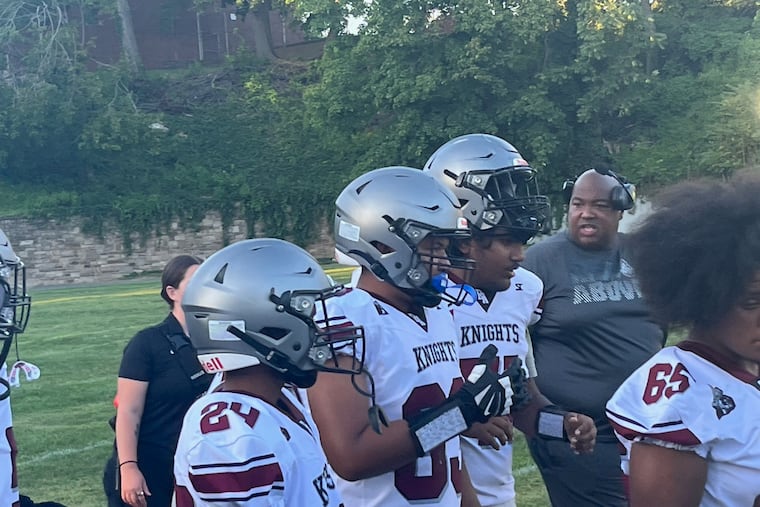
The study that was the basis of a recent Inquirer article, identifying racial disparities in the quality of sports facilities across our neighborhoods, confirmed what nonprofits and youth leaders have long known about access to opportunities for young people in our city.
The Greater Philadelphia YMCA is one of many organizations working to fill those gaps. Our branches and outreach sites meet kids where they are by providing programming designed to reach as many young people as possible. From soccer clinics, swim lessons, and gymnastics instruction to summer camps, technology training, and college readiness courses, we offer safe spaces, mentors, and chances to grow. No child is ever turned away. We also employ more than 1,400 teenagers and young adults annually, providing a variety of jobs and leadership opportunities.
Every day, I’m inspired by our branches and partners who are making a difference in our communities. However, this study demonstrates that in order to reach more kids, we must invest not only in our neighborhoods, but in the organizations doing this work.
If we believe what the research is telling us — that youth sports have the power to build stronger, safer communities — then doesn’t every child in every community deserve a place to play?
Shaun Elliott, president and CEO, Greater Philadelphia YMCA
Sloppy signage
Recently, I watched eight city workers using handheld roller brushes to repaint some crosswalks on Germantown Avenue with four big Streets Department trucks standing by; probably never seen such inefficiency nor such inept painting. A private contractor would be fired, stricken from the bid list, and not paid.
Their idea of safe traffic control, too, was chaotic. No traffic control hand paddles, nor caution lights, nor warning signs were used. Two confused men barked and waved their bare hands at each other to hold traffic, or to let the cars pass in the visual confusion of the gang of painters at the intersections, making a mess of the painting as cars drove through the crosswalks.
Instead of using the reflective highway tapes with straight edges that one worker could lay down, the Streets Department used eight workers for what a middle school art teacher would award an “F” for sloppy painting. Nothing squared, lines messy, corners not aligned, no pride in the work, and the painted guide markers were left visible where the painters did not cover them.
OK, yes, I agree completely that this is clearly very small potatoes in the grand scheme of our lives, when we have illiterate high school “graduates,” rampant crime, smash and grabs, gang racing on our roadways, all tolerated by our mayors and city councils, and we have a very dangerous law passed by this Council that prevents police from stopping drivers for many traffic offenses. However, the unacceptable workman’s standards to merely repaint a crosswalk are a cultural and departmental indication that no one is setting an example, and no one is demanding that we citizens/taxpayers receive what we pay high taxes for, in our own city, for heaven’s sake.
We should do much better; we are all able to do so much better … if our mayor, City Council, and department heads would raise the bar higher, instead of gleefully raising salaries and taxes higher each year for no benefit to taxpayers.
Gardner A. Cadwalader, Philadelphia
Model student
I thank Aiden Wilkins, the 8-year-old who is the youngest ever student at Ursinus College, for coming to my rescue. People think I am crazy when I say that we can have a quality education system, where students are self-directed — and not dependent on schools.
Then came Aiden, who entered Ursinus College this semester, studying to be a pediatric neurosurgeon. A reporter asked him who his teacher was prior to college. Aiden replied, “I taught myself.” The reporter then asked Aiden if he was worried. Aiden replied that he is only worried that he may not fit in the seat.
As we search around the world for models that may deliver a better educational experience, isn’t it about time we listened to the children? And when we come up with all kinds of excuses why our current education models don’t fit children in our classrooms, isn’t it ironic that the one worry of little Aiden is his fitting in the seat?
Leon Williams, Philadelphia
One of a kind
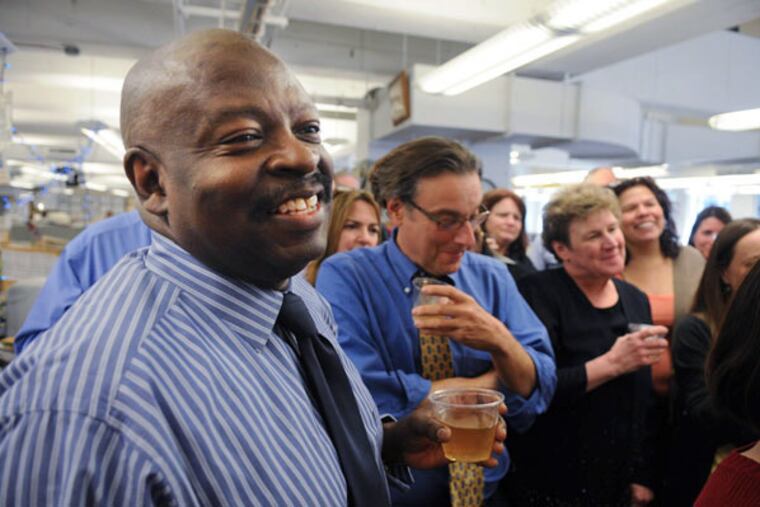
So often when someone passes, we almost automatically blurt out, “He will be missed!” The pioneering journalist Michael Days, who led the Daily News and served as a senior editor at The Inquirer, will really be missed because of his ability to handle the superdifficult job of being positioned between the legitimate concerns of the Black community regarding The Inquirer’s coverage and answering to the folks who paid his salary. Although he always would put a positive spin on whatever the crisis of the day was, I’m sure it took a toll on him.
I always felt very close to Michael over the decades of knowing him, no matter how our professional responsibilities changed. He was always accessible, warm, and supportive. He was genuinely a friend, and more importantly, he was a friend to his community as well as the broader community. We thank his family for sharing him with us.
Karen Warrington, Philadelphia
Join the conversation: Send letters to letters@inquirer.com. Limit length to 150 words and include home address and day and evening phone number. Letters run in The Inquirer six days a week on the editorial pages and online.