Letters to the Editor | Oct. 26, 2025
Inquirer readers on identifying moments of understanding after the Gaza ceasefire and the need to find common ground amid the state budget stalemate.
A moment of understanding
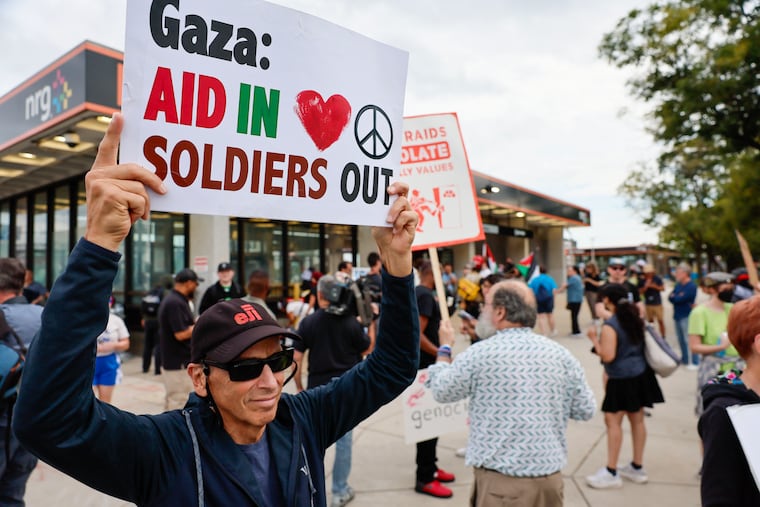
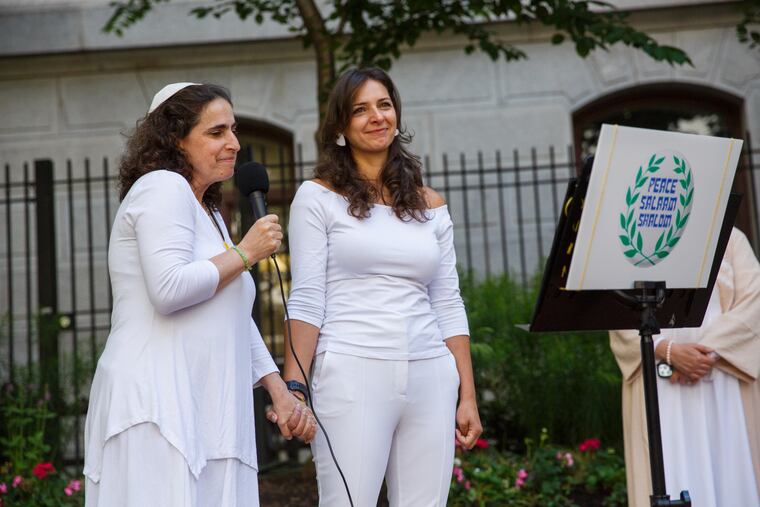
We refuse to be enemies. We refuse to hate each other. We are two mothers, one Jewish American and one Palestinian American, who have found in each other a friend with whom to cry, to dream, to learn, to laugh, to heal, and to grow.
Going against the grain of deep-seated conditioning requires vulnerability, an essential and universal human quality. Allowing ourselves to be vulnerable shatters the conception that another person is “enemy,” and opens us to seeing the other’s fears, insecurities, wounds, hopes, and needs.
We first met in May 2024 while planning a women’s peace vigil at City Hall sponsored by Sisters Waging Peace, a Philadelphia chapter of the Sisterhood of Salaam Shalom that brings together Jewish and Muslim women. The seed of friendship we have planted and watered with tears has taken root. We are actively creating a new “us” — one conversation, one peace vigil, one moment of understanding at a time.
Now that there is a ceasefire in Gaza, we can breathe for a moment, but we cannot rest. A ceasefire halts the bombs, but does not end the underlying structure of injustice. The work to end the occupation must continue with even greater intensity. We must remember that the status quo was not peace, and going back to it would bring us back to the cycle of destruction and loss.
Sisters Waging Peace, the Philadelphia chapter of American Friends of Combatants for Peace, and others will next bear public witness on Oct. 27, at City Hall from 4 to 5 p.m. Please come join us, wearing white, to pray for a just peace in Palestine and Israel, to bring a spirit of peace to our city, and to honor our humanity.
Samah Elhajibrahim and Rabbi Malkah Binah Klein, founding members, Sisters Waging Peace
Finding common ground
Pennsylvania’s diversity has always been one of our commonwealth’s greatest strengths, but it has also frequently played a prominent role during political disputes. Whether the divide is rural vs. urban, wealthy vs. struggling communities, or along racial and ethnic differences, these fault lines become flashpoints when difficult decisions must be made.
The recent battle over SEPTA funding provided a clear example.
During budget negotiations, as Philadelphia’s transit system faced devastating service cuts, Republican Senate Majority Leader Joe Pittman of Indiana County spoke on the Senate floor about his rural Western Pennsylvania upbringing, quoting John Mellencamp’s “Small Town” before stating: “Human nature suggests, why should I do anything to help? I don’t ever get any help for my region. Why should I do anything to help the southeast part of the state?”
This framing of regional interests in opposition to one another is nothing new to our statehouse. The tension runs deep and cuts both ways: a Democratic legislator responded by proposing to split state tax revenue by region, noting Philadelphia generates more revenue than it receives and subsidizes public services in counties that can’t afford them.
The best antidote to division in our politics is common understanding, and that’s precisely why the statewide reporting of Spotlight PA is so important.
As an independent, nonprofit newsroom, Spotlight PA seeks to better connect communities with what’s happening (or not) in Harrisburg, and to better connect communities to one another. The newsroom shares all its stories at no cost with more than 125 partner news outlets across the state dedicated to informing their local communities, including The Inquirer.
The less we understand about life across Pennsylvania — people’s challenges, economic conditions, and their daily realities — the more susceptible we all become to politics that emphasize our differences rather than our shared interests.
Finding common ground requires first understanding the ground others stand on — and that’s impossible without quality local news coverage from throughout the state.
Christopher Baxter, CEO and president, Spotlight PA
Join the conversation: Send letters to letters@inquirer.com. Limit length to 150 words and include home address and day and evening phone number. Letters run in The Inquirer six days a week on the editorial pages and online.