Letters to the Editor | Sept. 23, 2025
Inquirer readers on affirmative action programs and the memorial service for Charlie Kirk.
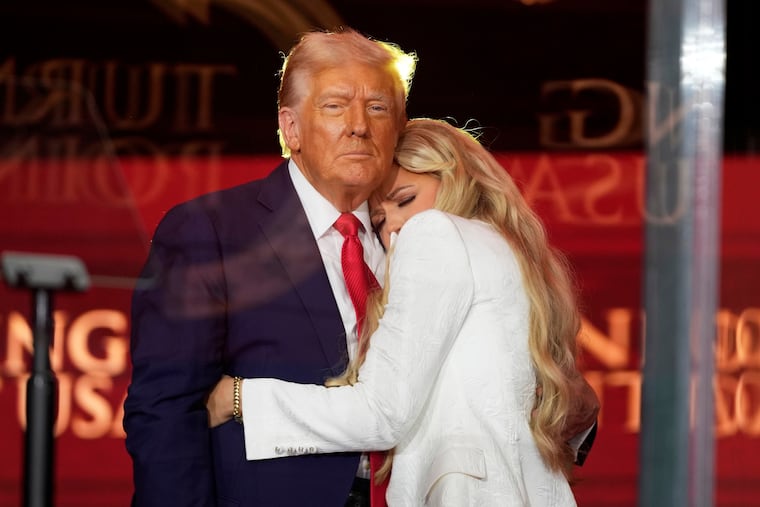
Political opportunism
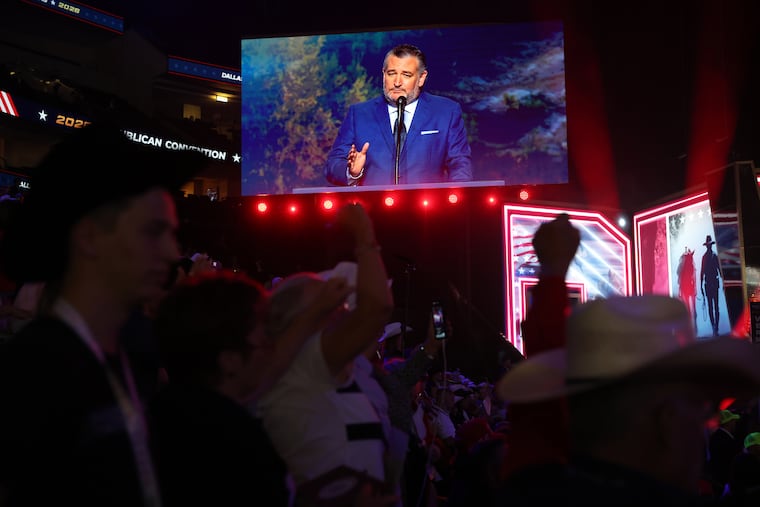
It seems that no event, not even the death of one of their own, is out of bounds for the Trump administration when it comes to seizing a political opportunity. It’s clear the assassination of Charlie Kirk has been weaponized to quell constitutionally protected dissent, yet I was beginning to question the validity of my own perceptions until I read Will Bunch’s recent column. He gave voice to my frustrations over the gaslighting about Mr. Kirk that seems to be ubiquitous nowadays. I recently saw a Facebook post praising Sens. John Fetterman and Dave McCormick for condemning Democrats who use the word fascism to describe the administration’s divisive moves over the last eight months. (The senators seemed to have no problem with the actions taken by the White House that have prompted some to use that word.)
Despite our political discord, empathy has the power to unite us as we mourn the violent passing of Mr. Kirk, a father and a husband. No one should demean this sorrowful event, least of all the Federal Communications Commission chairman, by parsing stand-up comedy for any imagined insult.
Jo-Ann Maguire, Norristown
Affirmative action
Public debate over affirmative action is often clouded by selective quoting and caricatures of opposing views. Charlie Kirk’s comments on the unintended effects of affirmative action illustrate this problem. Kirk repeatedly argued that affirmative action would lead people to have questions in the back of their minds about the qualifications of those who benefited from affirmative action. A high-profile example: Prior to nominating Justice Ketanji Brown Jackson, President Joe Biden said, “The person I nominate will be someone with extraordinary qualifications, character, experience and integrity — and that person will be the first Black woman ever nominated to the U.S. Supreme Court.” Such pledges risk creating a perception of unfairness and can inadvertently undermine confidence in the eventual nominee. Some critics argue that this approach, in and of itself, could be seen as a form of discrimination, since it excludes qualified candidates on the basis of group membership. Debates over affirmative action would be healthier if leaders stressed qualifications first and avoided identity-based pledges.
Brian Suckow, Palo Alto, Calif.
Cautionary tale
Kudos to Trudy Rubin for her insights into the recent conviction of Jair Bolsonaro by the Brazilian Supreme Court for attempting to overturn a fair and free election that he lost. As Ms. Rubin’s analysis demonstrates, there are many important lessons for the United States to learn from Brazil, despite the two nations’ wildly different experiences with democracy. Our U.S. Supreme Court has yet to show any kind of backbone when it comes to President Donald Trump’s authoritarian tendencies. Mainstream institutions are fighting the good fight, but meeting significant resistance from well-funded sycophants and self-promoters. There are also significant differences, as Bolsonaro is going to jail for 27 years, while Trump was elected to another term.
How did this happen in a democratic nation? Why did Attorney General Merrick Garland wait three years to prosecute Trump — a delay that allowed Trump to beat a slam-dunk conviction at the ballot box? How did Trump manage to convince the American public that he was somehow the victim of a false conspiracy?
Looking forward, we must identify the flaws in campaign finance laws and work to correct them. Sen. Jon Ossoff (D., Ga.) recently condemned the influence of money on our electoral process. Labeling our current system of financing elections one of the most corrupt systems in the civilized world, Ossoff called for a reexamination of the Supreme Court’s ruling in the Citizens United v. FEC case. That decision opened the floodgates for anonymous money to unjustly tilt the playing field in elections. Fair campaign finance rules shouldn’t be a partisan topic. All responsible people should recognize the potential dangers to our republic. Each election cycle breaks funding records, usually by a lot. We need bipartisan legislation to reform campaign finance laws now.
Angus Love, Narberth, anguslove76@gmail.com
Join the conversation: Send letters to letters@inquirer.com. Limit length to 150 words and include home address and day and evening phone number. Letters run in The Inquirer six days a week on the editorial pages and online.