Letters to the Editor | Nov. 21, 2022
Inquirer readers on Philadelphia's wage tax, Fetterman's stroke, and right-to-repair legislation.

Philly must attract more businesses
In 2023, Philadelphia is poised to elect the city’s 100th mayor and a new City Council. While our future elected public officials will consider many issues, we believe a comprehensive pro-jobs economic agenda must be part of the discussion to revitalize and grow our great city. To increase jobs, Philadelphia must grow and attract more businesses and talent. Too many employers choose to locate beyond Philadelphia’s borders to places such as Bensalem or Cheltenham to avoid the city’s “highest in the nation” wage tax and “double tax” from the business income and receipts tax. The good news is that the city can do something about this now. Philadelphia has substantial unspent revenue from the $1.4 billion it received from the federal American Rescue Plan, and has been experiencing better than expected revenue receipts. A portion of these funds should be dedicated to an annual reduction of business and wage taxes to grow and attract more employers and workers, to improve business interaction systems to make it easier to do business in and with the city, and to improve residents’ skills to be a part of today’s workforce.
Regina A. Hairston, president & CEO, African American Chamber of Commerce of Pennsylvania, New Jersey and Delaware, and Chellie Cameron, president and CEO, Chamber of Commerce for Greater Philadelphia
Rooting for Fetterman
I’ve never rooted harder for a political candidate than I did for John Fetterman. I’m not a Keystone State voter, but I am a person who struggled with an illness this year that temporarily caused physical disabilities and one lingering invisible one. There are 61 million, or 1 in 4 U.S. adults, who live with a disability, according to the Centers for Disease Control and Prevention. Fetterman’s victory for Pennsylvania’s U.S. Senate seat over TV personality Mehmet Oz is a win for the people of his state, but it’s also a huge achievement for people with disabilities. While TV pundits zeroed in on Fetterman’s debate performance last month — in which he struggled to finish sentences and skipped some words — I marveled at his bravery and determination to overcome a setback. Having watched my late father recover from a stroke twice, I know rehabilitation is possible. Every person with a disability deserves to be given an equal opportunity to serve their community whether they’re running for public office or not.
Carmen Cusido, Union City, N.J.
A right to repair
Consumers’ long-held right to repair their products is under attack from manufacturers who have made parts unavailable, prevented products from working, and added software everywhere. The harms are suffered by farmers who can no longer fix their tractors, doctors faced with idle ventilators, military officers who can’t repair broken equipment, and stranded motorized wheelchair users. Antitrust law has not been able to address these issues. I have a simple proposal. We should dust off Section 5 of the Federal Trade Commission Act. This law allows the FTC to challenge “unfair methods of competition.” And it can reach outside the narrow confines of antitrust. My application of Section 5 builds on a “gap-filler” rationale that applies when one of the elements of an antitrust claim is not satisfied. It would seem that antitrust courts’ unwillingness to find market power is addressed by indicators like market-wide restrictions, consumers’ lack of knowledge, and time-sensitive uses. In these cases, manufacturers practically have the ability to harm competition. Given repair restrictions’ questionable justifications and severe effects on lives and livelihoods, a competition-based tool promises real benefits. For farmers, medical professionals, military officers, and others, there is no time to waste.
Michael A. Carrier, Rutgers Law School professor
The meaning of impeachment
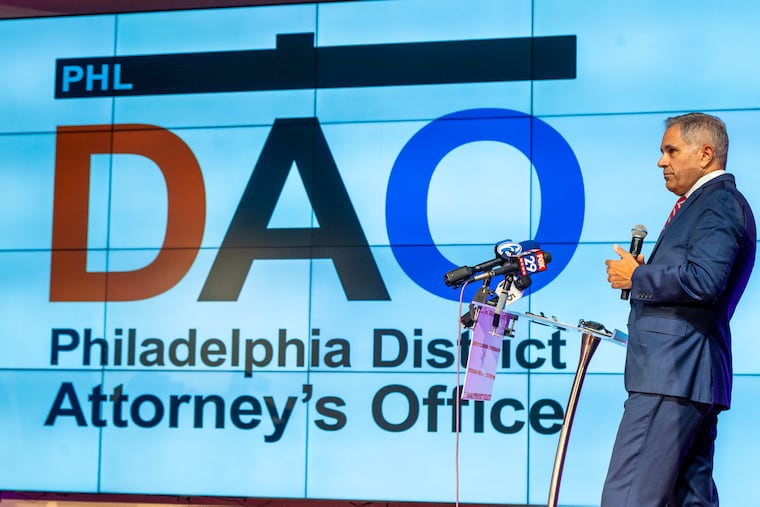
The Republican Party of Pennsylvania got out of its clown car Wednesday and impeached Philadelphia District Attorney Larry Krasner. As most people understand, impeachment is for politicians who commit crimes — for example, trying to get a bribe from a foreign country in exchange for military aid, or attempting to subvert an election by intimidating state officials, or siccing a mob on the U.S. Capitol when you can’t admit defeat. Krasner committed no crimes. All he did was get reelected with 70% of the vote. The GOP can’t seem to understand that most people in the state want them to concentrate on real problems. The reason Republicans just lost their majority is they put politics over performance. What a bunch of sore losers.
Jim Lynch, Esq., Norristown
Law is in best interests of children
Notably absent in the op-ed “A federal law has been destroying families for 25 years. Let’s get rid of it,” is a consideration for the best interests of children. The author mischaracterizes the Adoption and Safe Families Act as though this law — and not families that abuse/neglect children — is the reason for family separations. Only a small fraction of children who experience abuse and neglect enter the child welfare system (most stay in their families and receive support services). Of those in the child welfare system, nearly half are reunified with their parents or other primary caregiver. ASFA was passed as a bipartisan response to a crisis in which children were spending many years in foster care. If we care about the best interests of children, we cannot allow them to stay for unlimited periods of time in foster care. Instead of the irresponsible calls to repeal this law, we should be calling upon states to follow the law’s requirements.
Ryan Hanlon, president, National Council For Adoption, Alexandria, Va.
Keeping the youth vote
What do Trump voters and pro-choice voters have in common? The pollsters drastically underestimated them. Also similar to Donald Trump, I’m afraid abortion’s staying power as an issue that moves majorities to the polls might already be waning. So, how do Democrats keep youth turnout high when the only reason we went to the polls Nov. 8 was because of abortion? Easy. Focus on the issue that affects Gen Z’s freedoms, finances, and prosperity more than any other: the climate. That is the only issue with staying power that is guaranteed to grow. As the pessimistic climate reports released this month make clear: no matter what we do, this calamity will only get worse. So Democrats, act now, or risk losing the very bloc that saved your skin.
Jake Schwartz, Philadelphia
Join the conversation: Send letters to letters@inquirer.com. Limit length to 150 words and include home address and day and evening phone number. Letters run in The Inquirer six days a week on the editorial pages and online.