Trump wants to control Latin America, but he can’t even manage to sell oil to energy interests
If Trump removed Nicolás Maduro from power to gain control of Venezuela’s oil, the administration did not seem to give the plan much thought.
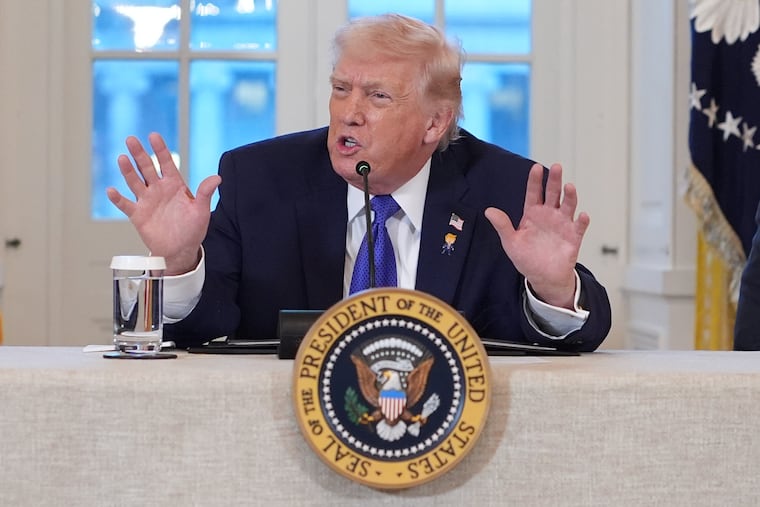
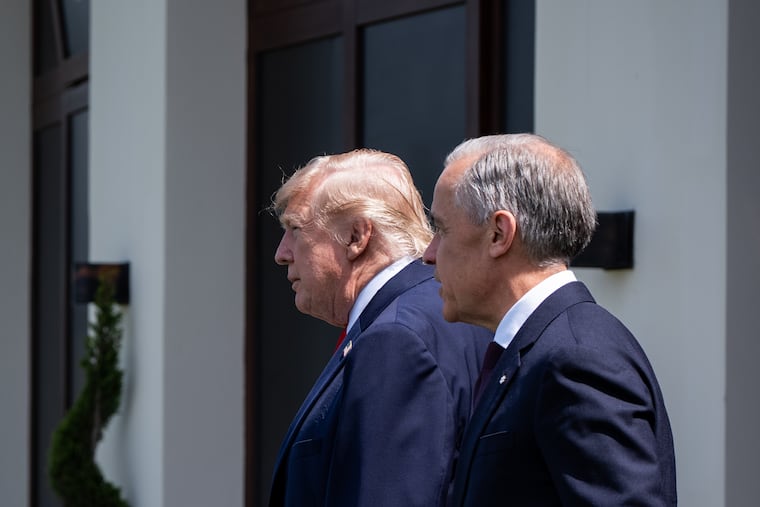
Donald Trump gathered U.S. energy executives on Friday to tell them of the nice crude, heavy oil he had procured for them by invading Venezuela — killing dozens of people and kidnapping President Nicolás Maduro and his spouse in the process — only for the men to respond that they couldn’t invest in that country because they’d spent all their money getting Trump elected.
It was a twist right out of an O. Henry story. Call it, The Gift of the Megalomaniac.
Well, not quite. While Big Oil did indeed spend at least around $500 million last year on the presidential campaign and other lobbying efforts, it fell short of the reported $1 billion Trump asked oil executives for during his run for the White House. And even that amount would hardly make a dent in industry profits, which in 2022 reached nearly $200 billion.
I’ll get to Trump’s deranged, illegal attack on Venezuela and its larger implications for Latin America — which plays less like literature and more like a bad ‘80s sitcom episode (“The Dumbroe Doctrine,” Season 2, Episode 1) — in a bit. First, let’s talk oil.
The reason why energy executives didn’t jump at Trump’s offer for them to spend $100 billion in Venezuela to boost oil production is that while there may be massive, untapped potential there, it’s going to take a long time to realize, said Harold York, a fellow at the Center for Energy Studies at Rice University’s Baker Institute.
To start, York told me, companies need a technical assessment of the state of the Venezuelan oil industry’s infrastructure, which is believed to be in serious disrepair. Then, the U.S. must help establish a credible and trustworthy legal and fiscal framework for international companies to participate in Venezuela. After that, executives will begin to figure out what a development plan looks like.
While some have pointed to the current low price of oil as a roadblock, York doesn’t believe that’s an impediment, since the decision to embark on a yearslong project would consider what the price will be in the future, not what it is now.
“I think there will be appetite precisely because they may not need the production today,” York said. “If you’re looking to keep your portfolio diversified, then Venezuela is something you would look at as one of your long-run assets.”
What will most likely temper that appetite is that the requirements that need to be met for Big Oil to return in earnest to Venezuela also depend on the kind of stability no one can guarantee. You don’t even need to get to the unknown unknowns, as one former failed nation builder once coined. In Venezuela’s case, it is the known unknowns that will get you first.
Trump is offering companies security guarantees, but can a president who routinely reneges on agreements promise a subsequent administration won’t do the same? Future leaders in Venezuela may decide to take back their oil with minimal compensation to U.S. companies, as the government did in 1976, and America could just shrug its shoulders. Or even a pro-U.S. Venezuelan government may decide it wants to renegotiate at some point.
All of that to say, if Trump removed Maduro from power to gain control of Venezuela’s oil, the administration did not seem to give the plan much thought.
What Trump was successful at, other than violating international law and the Constitution — no matter how coyly the administration insists that what it did was a law enforcement action and not an act of war — is in bringing the Monroe Doctrine back to bloody life.
As presented by President James Monroe in 1823, it was a warning to European powers to stay out of the Western Hemisphere, and an assertion of the United States’ sphere of influence. By the start of the 20th century, the doctrine was used as an excuse to exert power in Latin America to protect U.S. interests as Washington saw fit, including using the military.
Trump allowing Venezuela’s authoritarian regime to continue in every way except having Maduro at the top is in keeping with Cold War U.S. interventionism in Latin America, when U.S.-friendly forces were backed at the expense of civil rights and liberties.
Even before he ordered the kidnapping of Venezuela’s leader to kick off 2026, the president had already spent his first year back in the White House punishing his perceived enemies (imposing sanctions and tariffs on Colombia and Brazil, bombing alleged drug boats) and rewarding his friends (bailing out Argentina, paying for prisoners in El Salvador).
In retrospect, the escalation to full military invasion should not be that surprising, even as the long-term consequences remain uncertain, both for America as a continent and for the system of laws and alliances that has kept the world from war for 80 years.
After Venezuela, Trump threatened Cuba, Colombia, and Mexico. Hearing from friends from Latin America, the feelings that have emerged there in the last week over U.S. actions seem to be fear and loathing.
There is much more to say about this in a future column, but ultimately, neither sentiment is in America’s best interest.

Inquirer Opinion Newsletter