Unlike Boston and NJ Transit, SEPTA won’t gouge World Cup fans | Shackamaxon
Plus: The Philadelphia Housing Authority innovates, how red tape strangles new businesses, and Gov. Josh Shapiro’s floundering fashion.
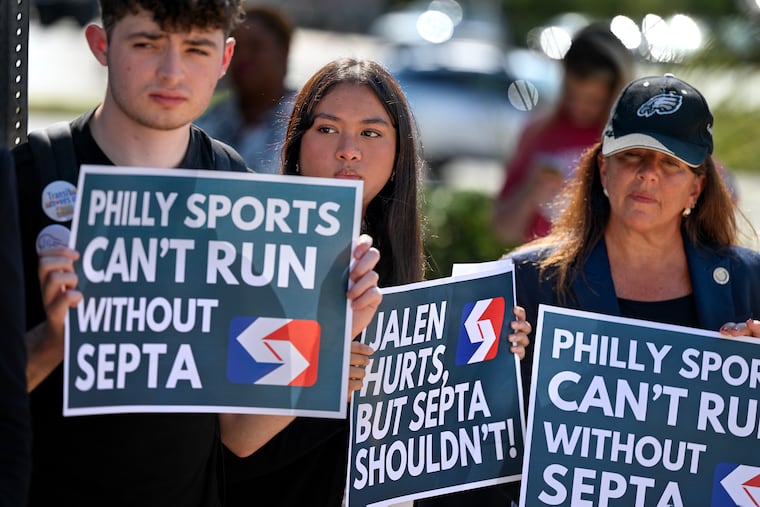
This week’s Shackamaxon looks at the Philadelphia Housing Authority’s apartment buying spree and SEPTA’s efforts to shrink its structural deficit.
PHA plays the market
Philadelphia used to be known as one of the most pioneering cities in the world, thanks to projects like the Fairmount Water Works. More recently, however, we’ve been more inclined to think inside the box. One local leader who has committed to changing that approach is Kelvin A. Jeremiah, the head of the Philadelphia Housing Authority. He’s turned the affordable housing provider into something no one expected: a real estate tycoon.
After City Council eliminated the 10-year property tax abatement in 2019, developers rushed to build before the measure took effect at the end of 2020. This led to a surge in new apartment units just as the city’s population sagged due to the pandemic. The result was an increase in vacancies. Some landlords reacted by offering lucrative concessions like two free months of rent. Others have begun marketing toward housing choice voucher holders.
Jeremiah has added another option to the list: Property owners can simply sell their buildings to PHA.
So far, more than 1,700 units have been transferred from private developers and landlords to the authority for almost $330 million. That puts the cost per unit under $200,000, less than one-third of the cost of ground-up construction through existing federal programs. PHA plans to rent some of its new apartments at market rate, creating an income stream that can help maintain units dedicated to affordable housing.
Often, American policymakers are too ideologically rigid to envision this kind of policy innovation. Many legislators who embrace the free market end up ignoring the need to alleviate poverty. Those whose hearts belong to the neediest tend to be so suspicious of the market that they are unable to harness it for their own means. The result is dysfunctional government in blue states and cities, and inadequate and precarious social support for the poorest across the country.
Still, it’s unclear if PHA will be able to keep this up forever.
Alex Armlovich, a national housing policy analyst, told me that without adequate market-rate development, PHA may be forced to rent a higher and higher portion of its units at market rate to cover its increasing acquisition costs. He also said that PHA’s willingness to act as a buyer should, on its own, incentivize some development, because it represents a potential escape valve should a project fail to earn its expected returns.
Of course, there is a way to help things along. City Council could relax zoning restrictions near transit corridors, as proposed by Mayor Cherelle L. Parker, and bring back the full version of the 10-year tax break. Clearly, that policy had more benefits for affordable housing needs than its critics assumed.
SEPTA’s frugal streak
Soccer fans have raised a stink about the exorbitant fares planned by transit in Boston and New Jersey for World Cup matches served by those systems. Boston is planning on charging $80 for round-trip train tickets, and $95 if you prefer taking the bus. According to the Athletic, NJ Transit is planning on charging $100 for a return fare, although a spokesperson has pushed back on the claim.
Both agencies have cited the high cost of providing special service for the influx of fans, most of whom are coming from countries with stronger transit systems and sports venues that are located in the heart of the cities, towns, and neighborhoods they represent, rather than on the outskirts of a particular region.
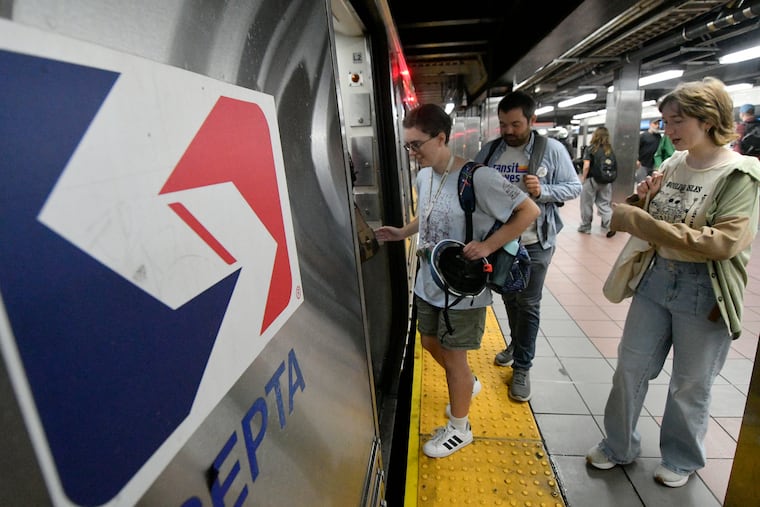
SEPTA, for its part, is not planning on gouging our visitors. A spokesperson cited the need to avoid burdening stadium workers and residents, and a desire to avoid setting a precedent or discriminating between different kinds of riders. While NJ Transit has cited a nearly $50 million cost to provide extra service, SEPTA expects to make do with the $5.5 million federal grant it received to help with hosting costs, plus sponsorships and ticket sales.
To be fair, both Gillette Stadium in Foxborough, Mass., and the Meadowlands Sports Complex in East Rutherford, N.J., are served by just one commuter line, which can make it difficult to provide adequate service. But these extreme ticket prices are a reminder that our own transit agency does better with our money than you might assume.
Another reminder is SEPTA’s shrinking structural deficit. Despite sky-high inflation, hiring more transit police, and a new labor contract, SEPTA’s costs increased by less than 2%. Meanwhile, its revenue has improved due to parking charges, advertising, and improved fare enforcement. All in all, this means its deficit shrank by just over $20 million.
Poster child
Out in Tulsa, Okla., they just hosted something called the Main Street Now Conference. Commerce directors, corridor managers, and business group representatives from across the country gathered to exchange ideas and best practices. They also shared some worst practices.
Specifically, one exhibit described just how hard it is to open a restaurant in Philadelphia. The convoluted process was outlined on a poster that looked like it was around six feet tall. And no, it isn’t that big because they used lots of images or enlarged the font. You had to walk up to the sign if you wanted to read it.
No matter how much City Council claims to want to grow businesses, it will be difficult to believe them until they take a serious look at shrinking regulations that now fill up a poster into something that can fit on a business card.
Dress for success, Guv
Gov. Josh Shapiro’s “dress sneaker” enthusiasm took another step this week. He started wearing a pair of all-white kicks that somewhat resembled the Air Force 1s that were popular back when I was in high school, alongside oversized white T-shirts and jean shorts that went down to the ankles.
This column typically sticks to policy and politics, not fashion, but it is time to make an exception. Shapiro should start wearing real dress shoes and preferably a tie. We already have one sartorially challenged statewide elected official in U.S. Sen. John Fetterman. We don’t need another.
It is true that life has gotten much more casual over the last few decades. But part of being the Ambitious Abingtonian is serving as an aspirational figure. That means wearing a suit and tie.
I’d argue that a commitment to always looking buttoned-up helped Zohran Mamdani go from a little-known assemblyman to mayor of New York City. Shapiro should swap in some pairs of American-made genuine dress shoes, from a company like Allen Edmonds or Alden. Alden is also a union shop, which would certainly warm the hearts of his friends in organized labor.
After all, I was always taught to dress for the job I wanted. Maybe the governor who wants to be president should, too.