Ale Ayiti: Philly’s Haitian Americans celebrate a rare World Cup bid
As the Haiti v. Brazil match in Philadelphia was announced this week, Haitian community members promised jubilation, tears and rara.
The first World Cup I remember was in 1970. I was a kid in Guatemala, and my brothers and I were so excited. It was the year the Brazilian seleção included Pelé, Jairzinho, Rivellino, Tostão, Gérson, and Zé Maria — there may be no more beautiful example of the sport of soccer than what they showed us.
The Guatemalan team was not in the World Cup that year (or ever 😢), but El Salvador was, and although they were unlikely to advance very far, we felt a lot of Central American solidarity and rooted for them — the underdoggiest of the underdogs.
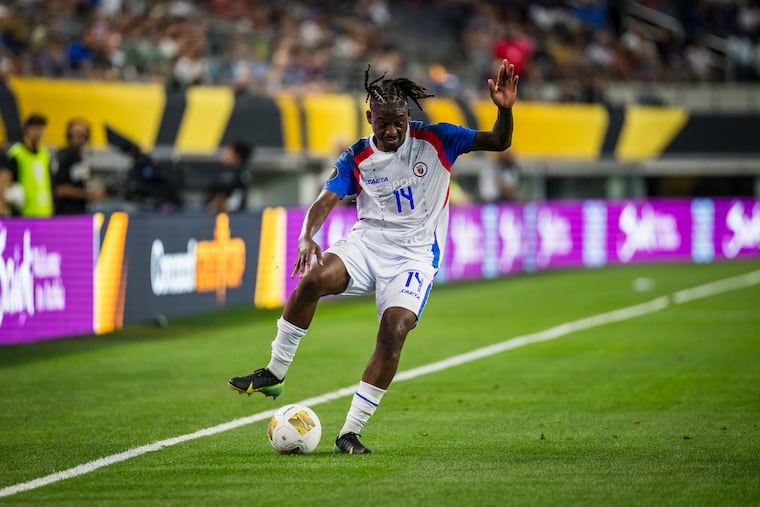
I expect to root for the underdog again next year, when Brazil and Haiti take the field in World Cup play in Philadelphia. Brazil is a five-time world champion; Haiti last competed at this level 52 years ago.
Philly’s Haitian community doesn’t care if it’s a little lopsided.
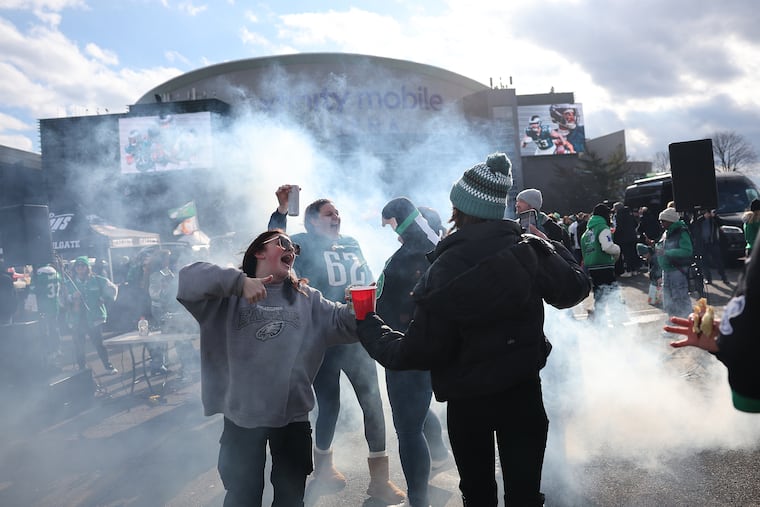
“Most Haitians adore Brazil,” the Rev. Dr. Josephys Dafils told me via email, “and now Haiti will face the mighty Brazil on American soil. This is the thrill and magic of soccer. Haitians and Haitian Americans will travel to be part of this historic moment. Many of us will gather for a tailgate celebration outside the stadium, even without tickets, which are extremely expensive. We will bring food, music, vendors, and a traditional Haitian band called rara.”
“Most Haitians adore Brazil.”
Numa St. Louis agreed: “For Haitian Americans, this event is more than just a game; it’s a moment of immense pride and emotion. As a Haitian American and die-hard soccer fan, the feelings that arise from witnessing Haiti step onto the world stage are overwhelming. It represents a long-cherished dream; a chance for a nation often faced with adversity to showcase its talent, passion, and spirit on an international platform.”
“The joy of supporting Haiti, coupled with the opportunity to share the occasion with Brazilian fans,” he told me via email, “underscores the camaraderie found in the beautiful game.”
Dafils, who at one time served as a youth soccer coach in Haiti, said that for the national team to make it to the World Cup at all, they had to overcome almost insurmountable obstacles.
“Armed groups have taken control of nearly 85% of [Haiti’s] capital, as well as major cities across the country. More than one million Haitians have been forced to flee their homes,” he said. “Many people no longer have access to electricity, clean running water, or food. Families are constantly moving from one neighborhood to another in search of safety. [And] amid this dire situation, the Haitian national soccer team has accomplished the extraordinary.”
An example of that? They had to play all the qualifying matches outside of Haiti.
“I have cried tears of joy since Nov. 18, 2025 — the day Haiti qualified for the 2026 World Cup,” Dafils told me. “Nov. 18 also marks the anniversary of the Battle of Vertières in 1803, when Haiti secured its independence from France. The symbolism is profound.”
St. Louis makes another historic connection: Next year’s tournament will also coincide with America’s 250th anniversary, adding another layer of significance.
The Haitian community has a long history in Philadelphia. Hundreds of white slaveholders and those they enslaved fled the Haitian Revolution, first arriving in Philadelphia in 1793; many of those enslaved people gained their freedom here in the years between 1793 and 1796. The community grew and saw waves of immigration throughout the 20th and 21st centuries, prompted by political turmoil and natural disasters.
It’s estimated that some 12,000 members of the community are currently legally residing under temporary protected status.
» READ MORE: Don’t believe Donald Trump’s racist — and absurd — slander against Haitians. We’re not eating pets. | Opinion
Those Haitian immigrants, like their peers across the U.S., have felt the impact of the singularly ugly lies JD Vance and Donald Trump fabricated about Haitians during the campaign, and after Trump became president, the decision to not renew protected status when it expires in February.
The shadow of Trump’s immigration policies “loom large” — even over an event like the World Cup match, according to St. Louis.
“The cancellation of the Temporary Protected Status program threatens to strip many Haitians of their legal ability to remain in the United States, leaving them vulnerable to deportation,” he said. “Furthermore, Haiti is among the 19 countries whose citizens are banned from entering the U.S., which will hinder potential visitors from attending the matches.”
“This match symbolizes hope, a celebration of cultural connections that transcend borders.”
But he and Dafils always return to the thrill and magic of the World Cup match.
“It has taken 52 years for Haiti to return to the World Cup. None of us know when we will see this again. I was not yet born in 1974, and I never thought I would witness such a moment,” Dafils said.
“This match symbolizes hope,” St. Louis said, “a celebration of cultural connections that transcend borders. Even amid political challenges and the looming impact of immigration policies, this gathering promises to foster unity among diverse communities, showcasing the power of sports to uplift and inspire.”
“As the day approaches, the anticipation grows for what promises to be an exhilarating clash, filled with heartwarming moments, passionate displays, and the acknowledgment of Haiti’s journey,” he added.
What a beautiful game. Ale Ayiti!